Trauma and healing
𝐋𝐚𝐜𝐮𝐧𝐚 | 𝑱𝒆𝒐𝒏 𝑱𝒖𝒏𝒈𝒌𝒐𝒐𝒌Trauma and healing are linked throughout the novel as ongoing, bodily processes: past violence returns through panic, guardedness, nightmares, anger, and self-destructive behavior, while recovery depends on safety, trust, and the possibility of speaking and acting without coercion. Shelby and Jungkook do not simply leave their histories behind when they become close. Their progress is uneven, shaped by relapses and triggers as well as by therapy, patient care, belief, and the decision to face harm directly.
Wounds and their returns
Shelby’s trauma first appears not as a complete account but through its effects. When a psychologist asks whether she wants to discuss the event that has made it difficult to open up and connect with other people, Shelby says she is not ready. The psychologist accepts that boundary, offers time, and reassures her that what she says will remain private. The exchange establishes a crucial condition for healing: Shelby may choose when and whether to tell her story.
The effects extend beyond what Shelby initially discloses. She later tells a friend that the event led to self-harm, an eating disorder, and cannabis use. Her friend listens with fear, anger, and sadness, then takes Shelby’s hands and gently strokes them. This response does not resolve the pain, but it makes care tangible and reciprocal: Shelby is heard rather than pressed for details.
Her distress also breaks into ordinary settings as sudden physical crisis. During an art class, pain, a racing and constricted heart, tears, and rapid breathing send her rushing out. Cassiopée follows, but loses sight of her and continues searching. When Cassiopée eventually finds Shelby in an isolated spot and touches her shoulders, Shelby recoils and cries out in pain. Cassiopée remains calm and tries to approach without demanding contact. Shelby is still hunched and overwhelmed when she looks up at her classmate. The scene shows that a well-meant touch can intensify a trauma response; care must attend to Shelby’s immediate limits, not assume that closeness is automatically reassuring.
Jungkook’s history is rooted in violence at home. As a child, he defends his mother when his father orders him back to his room. His father laughs, finishes a drink, and throws the glass across the room; a shard strikes Jungkook’s face. He then grabs the boy by the shirt and slaps him repeatedly. Fear and rage become tangled in Jungkook’s response. The episode gives context for the anger that follows him, but does not make later violence harmless or inevitable.
Safety, choice, and being believed
The novel distinguishes between touch that overwhelms and touch that becomes welcome. At a boxing venue, Jungkook finds Shelby trembling and crying in the shower. He turns off the water, crouches nearby, and, unsure what to do, stays beside her until she calms. He does not force an explanation or try to make her accept physical comfort. In a later moment, after seeing the severity of his own injuries in a mirror, Shelby slides down the bathroom wall and breaks into tears. Jungkook crouches beside her and places a hand on her knees; this time she is seeking comfort. The contrasting scenes make the meaning of contact depend on circumstance, choice, and trust.
Shelby’s disclosure to Jungkook is met with belief rather than interrogation. He brings her tissues, sits facing her, and gently takes her hands before telling her that he believes her. The response brings visible relief: Shelby cries, smiles with renewed hope, and thanks him. His belief matters because it answers the isolation and defensiveness that the trauma has produced without requiring her to prove her pain to him.
The relationship is not a substitute for professional care. Shelby has had a psychologist in Los Angeles and continues with another clinician after moving. Jungkook also recognizes that the agreement they made to learn to love one another cannot by itself banish his inner turmoil. When he returns to the Ares Garden ring in a kind of trance, drawn by an old vice, he later regrets the decision when he sees Shelby’s tear-streaked eyes. His account connects an apparently self-directed relapse to the damage it causes in a relationship, without presenting regret as repair in itself.
Triggers, relapse, and mutual care
A later panic attack makes the importance of recognizing a trigger especially clear. When Madison finds Shelby in a restroom, Shelby has collapsed, covered her ears, and begged not to be touched or harmed. Madison understands that Shelby believes she is in danger, leaves the room, and finds Jungkook. He hurries to Shelby and draws her close. Recognizing his familiar spring scent, Shelby puts her arms around his neck and buries her face against his shoulder. He strokes her back and speaks softly until, after several minutes, her breathing returns to normal and the frightening sensations recede. The sequence gives both characters agency: Madison creates distance rather than insisting on helping directly, while Shelby’s recognition and embrace make Jungkook’s touch a source of safety in that moment.
Trauma also returns in sleep. At 2:55 a.m. on Sunday, October 4, Shelby wakes sweating and crying from a nightmare in which Jungkook and Kayla are having sex while Shelby is tied to a chair and forced to watch. Her fear becomes a panic attack; Jungkook responds by holding her, stroking her back, and whispering reassurance until they have spent several minutes in each other’s arms. The nightmare is connected to the videos Shelby has learned about. When she asks Jungkook what happened, he tells her that he and Kayla used to film themselves during sex, though not every time, and that he now regrets it. His willingness to explain rather than conceal the history gives Shelby information she has been struggling with, but the dream shows that knowledge alone does not prevent the past from returning as terror.
Jungkook’s own struggle remains unresolved even amid intimacy. He acknowledges that his anger still follows him, and Shelby tells him she believes he can eventually loosen its hold because he is no longer alone. Her reassurance identifies their relationship as support and a source of self-understanding, not as proof that either person has been cured. The novel’s repeated movement between distress and consolation keeps recovery nonlinear: panic may return after earlier moments of calm, and care may help someone through a crisis without removing its underlying cause.
Witnessing, accountability, and the ending
Healing also involves what happens beyond private comfort. After seeing Robert Jefferson, Shelby says that he continues to haunt her and keeps her from sleeping. Jungkook responds with anger and considers how to act, doubting whether the police can be trusted because he suspects they may be influenced by money. When he confronts Jefferson, he invokes Shelby’s account and Madison’s accusation that her father raped her, and says he wants the women Jefferson traumatized to know he is behind bars. His confrontation expresses a desire for accountability, but the narrative does not treat threats or anger alone as the same thing as justice.
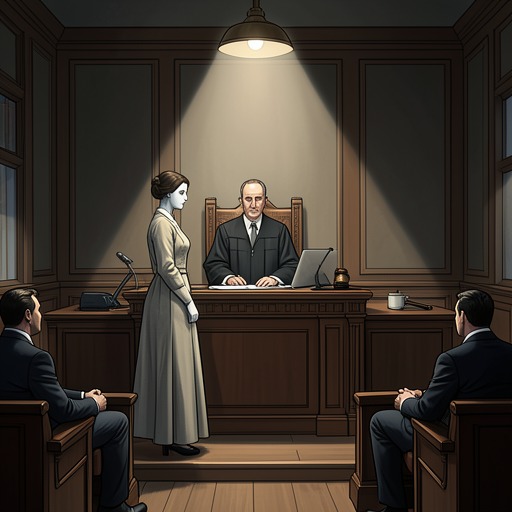
Shelby’s own action is to testify. Before the hearing, she admits she is anxious and asks Jungkook to stay with her. He takes her hand, reassures her, and promises not to leave. Shelby says she is ready to testify because she wants Jefferson to pay for what he did. The scene places her decision at the center: Jungkook offers support, but the testimony is hers. The account also situates her among other women who speak against Jefferson, including his secretary Sandy Sanchez, while Catherine Jefferson publicly defends her husband’s philanthropic reputation. Giving testimony becomes a form of witnessing that contests the power and social respectability Jefferson uses to deny the harm.
The ending does not claim that love erases trauma or that forward movement is easy. It describes learning to love oneself, another person, and life as uncertain work that may take months or years, and insists that each person must be allowed a pace that does not force them forward too quickly. Shelby and Jungkook have managed, separately and together, to move ahead while leaving some of their demons behind. The qualification matters: the past remains tenacious, but it no longer defines the only possible future. Trauma and healing therefore form a continuing arc of boundaries, recurrence, support, truthful speech, and chosen action—not a simple passage from damage to cure.