Ben Mears and Matthew Burke
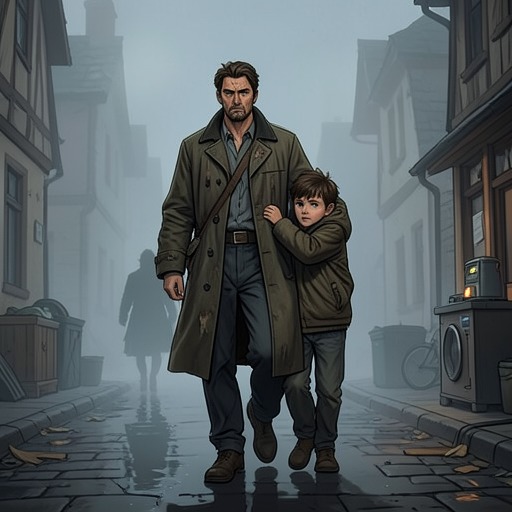
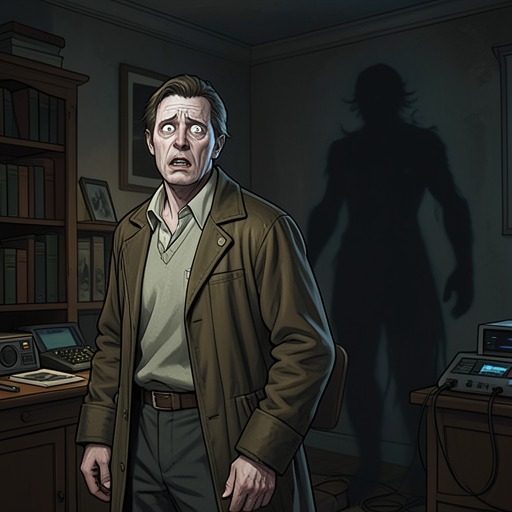
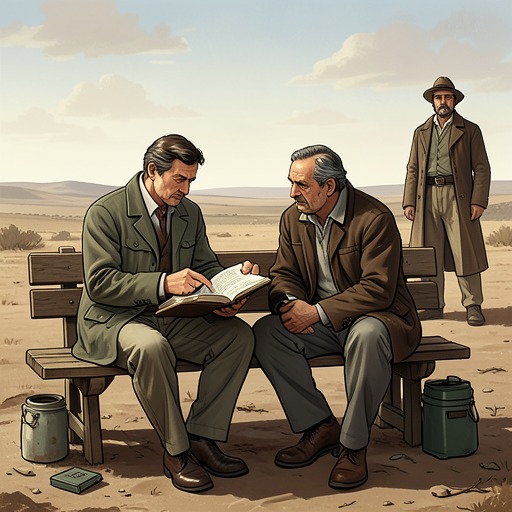
'Salem's Lot: A NovelBen Mears and Matthew Burke are bound together by an alliance that turns private unease into a deliberate investigation of the supernatural threat overtaking Jerusalem’s Lot. Their relationship is not merely one of friendship or mutual assistance: it is the novel’s principal meeting point between imaginative suspicion and rational inquiry. Ben brings the perspective of a returning writer whose fiction has begun to resemble the town’s buried history, while Matt brings the habits of an educated teacher who demands explanation, tests testimony, and resists conclusions that cannot be demonstrated. Together, they move from conversation about death and illness to recognition of vampires as an actual danger.
Identity and Initial Connection
Ben’s connection with Matt develops through the ordinary social texture of the town. When Matt invites him to supper, Ben enters a small gray house filled with rock music, an ancient Motorola television, a KLH sound system with quad speakers, and the smell of spaghetti sauce. Matt appears in a red-and-white checked apron and explains that he turns the music up because he is a little deaf. The domestic setting establishes him as approachable and eccentric rather than as a remote intellectual, while the casual meal gives Ben a setting in which guarded subjects can become personal.
At supper, Ben admits that his financial situation is unstable. His earlier novel, Conway’s Daughter, earned an advance of three thousand dollars and another three thousand in royalties, but the paperback arrangement is poor, and a film option acquired by Columbia was abandoned when Robert Mitchum could not be secured. This disclosure matters to the alliance because Ben is not presenting himself as an entirely confident outsider; he is a writer under pressure, returning to the place of his childhood while uncertain about his professional future. Matt becomes one of the people with whom he can discuss both material anxiety and the increasingly disturbing facts surrounding the town.
Their conversation also reveals an early imaginative bridge between Ben’s work and the Lot’s history. Ben describes a new novel about a town and its people, beginning with a series of sex murders and mutilations rendered in minute detail. Ralphie Glick’s disappearance interrupts that plan and gives the writer a disturbing sense that fiction has moved too close to reality. Matt recognizes that Ben’s imagined violence is connected to the township’s disappearances in the 1930s. The exchange makes their relationship structurally important: Ben’s literary imagination detects a pattern, but Matt’s local memory helps test whether that pattern belongs to fantasy, history, or something still active.
From Medical Mystery to Shared Suspicion
Matt’s first approach to the Glick case remains partly medical and partly speculative. He discusses Danny Glick with Jimmy Cody, who had treated the boy and had been present at the hospital when he died. Cody considers possible leukemia, noting that the available tests were general and inconclusive. Yet Danny had looked disturbingly healthy, as though he might rise and go out to play baseball. Matt then asks whether the boy had marks on his neck. Cody recalls two small scratches above the carotid vein, a detail that converts vague unease into a physical clue.
Matt’s response is deliberately provocative but also diagnostic. He recommends that Jimmy Cody read Bram Stoker’s Dracula, arguing that the boy’s symptoms resemble the vampire case described in that book. The joke cannot remain safely literary. When Ben later telephones Matt, Matt states the possibility directly: Danny Glick might be Undead and might have sucked Mike Bush’s blood. He lists sunlight, holy artifacts, and a stake through the heart as traditional means of stopping vampires, while acknowledging uncertainty about the details. The conversation marks a decisive value shift in their relationship. Speculation becomes shared danger, and the word “Vampire” moves from popular fiction and old legend into the vocabulary of an investigation.
Ben’s own movement toward belief is slower and more conflicted. He has already been forced backward toward the conclusion that what he is considering is madness, yet the evidence refuses to fit ordinary explanations. His literary habits initially make the vampire hypothesis easy to dismiss as genre thinking; he and Jimmy Cody had laughed over it when it first arose. The possibility that such laughter might itself deserve punishment gives his skepticism a moral and psychological edge. Ben eventually recognizes that the marks on Mike Ryerson’s body are not scratches but punctures, a distinction that turns an interpretive impression into a concrete medical sign.
Matt’s knowledge does not eliminate uncertainty; it gives uncertainty a disciplined form. He understands that medicine often works without fully understanding the mechanisms involved, and he compares clinical practice to a kind of white magic performed at the edge of ignorance. That position allows him to occupy a crucial middle ground. He does not abandon reason when confronted with the supernatural, but he also refuses to use reason as a shelter against evidence. Ben’s imagination and Matt’s skepticism therefore become complementary rather than opposed.
Evidence, Bodies, and the Limits of Denial
The alliance is strengthened by encounters with bodies that resist conventional medical categories. When Matt, Ben, Parkins Gillespie, and James Cody examine Mike Ryerson, Parkins asks whether he is certainly dead and whether anyone has tried to wake him. The question is grotesquely practical, but it also exposes how badly the scene violates ordinary expectations. Matt immediately connects the body to what Ben had said about the Glick boy, making the earlier conversation part of an accumulating chain rather than an isolated joke.
The examination of Marjorie Glick produces a similar disturbance. Jimmy Cody observes that her condition resembles Mike Ryerson’s: there is no surface lividity and no sign of rigor or incipient rigor. Her burgundy quilted housecoat, knitted slippers, and the Band-Aid on her shin preserve the appearance of domestic normality even as the body becomes evidence of an abnormal process. For Ben and Matt’s investigative world, the body is both a medical object and a challenge to the categories used to explain it.
The theft of bodies from the Cumberland County Morgue intensifies the stakes. The report sounds like something from Boris Karloff and Mary Shelley, but its institutional setting makes the horror concrete: corpses have been removed from an official repository in Portland. The event implies that the danger is no longer confined to a single family or unexplained death. It involves the handling, concealment, and possible reanimation of bodies, while the public systems responsible for death certification and investigation remain unable to name what is occurring.
The most dramatic confrontation with these limits comes when Mark Petrie and Jimmy Cody pull Roy McDougall from a crawl space. The evidence is not merely that a body moves. Under full white light, Roy writhes, emits steam and moisture through his pores, undergoes sagging and yellowing of the skin, rolls his eyes, bares doglike incisors, and crawls back into shadow. His Cheyne–Stokes-type respiration and the immediate cessation of the moisture and breathing changes once he is concealed from the light give the supernatural event a quasi-clinical precision. Such observations do not make the phenomenon ordinary; they demonstrate why Matt’s method matters. The alliance must collect exact signs even when no accepted medical explanation can contain them.
Communication, Belief, and Joint Purpose
Ben and Matt’s telephone exchange is a crucial stage in the alliance because it transforms scattered knowledge into confidential collaboration. Ben calls Matt after speaking with Carl Foreman, and Matt answers after a single ring. Their caution shows that the subject has become dangerous even before either man fully states it. Matt worries that others might overhear, and Ben recognizes that the fears are no longer distant or antique. The conversation is not a public declaration; it is a controlled transfer of knowledge between two men attempting to preserve judgment while confronting panic.
Matt’s language moves rapidly from possibility to protocol. He identifies Danny Glick as potentially Undead, links him to the blood of Mike Bush, and names the traditional vulnerabilities of vampires. His willingness to articulate practical methods—sunlight, holy artifacts, and a stake through the heart—gives the investigation an objective beyond interpretation. The question is no longer only what happened to Danny or Mike. It is how such creatures might be stopped before the condition spreads.
Ben’s role is to keep the conversation from collapsing into hysteria. When Matt’s voice rises, Ben tells him to settle down. This is not a rejection of the vampire theory; it is an attempt to make belief usable. The alliance depends on preserving enough composure to distinguish evidence from fear, to protect confidential information, and to act before the town’s ordinary explanations become another form of delay.
The partnership also contains an important asymmetry. Ben has the stronger emotional and imaginative connection to the Marsten House and to Jerusalem’s Lot, while Matt has the greater investment in local observation and rational classification. Neither perspective is sufficient alone. Ben needs Matt’s scrutiny to prevent private terror from becoming an untested theory, and Matt needs Ben’s willingness to follow implications that his own common sense initially forbids. Their shared investigation therefore develops through reciprocal correction rather than through one man simply persuading the other.
Narrative Significance
Ben Mears and Matthew Burke embody the novel’s larger conflict between knowledge and denial. The town’s institutions can record a child’s address, examine a corpse, discuss leukemia, and store the dead in a morgue, yet those procedures do not guarantee understanding. Medical language first offers plausible cover for the strange symptoms, then supplies the observations that expose the inadequacy of that cover. In this movement, Ben and Matt’s alliance becomes an epistemological instrument: it places literary memory, local testimony, clinical detail, and legendary knowledge into the same investigative field.
Their relationship also gives the supernatural plot a human scale. The vampire revelation does not arrive as an abstract myth but through supper, telephone calls, professional conversations, bodies on examination tables, and the strained effort to speak privately. Matt’s transition from joking reference to explicit warning parallels Ben’s transition from imaginative dread to committed belief. When Ben hangs up thoughtfully after the word “Vampire” has finally been spoken, the alliance has crossed its decisive threshold. The two men have not solved every mystery, but they now share the knowledge that defines the struggle: the threat is real, the dead may return, and disbelief is no longer a safe refuge.