Danny Glick’s Hospitalization
'Salem's Lot: A NovelDanny Glick’s Hospitalization is the first sustained medical crisis to follow the disappearance of Ralphie Glick, and it transforms a local search into a disturbing question about the condition of the surviving child. Danny is recovered alive but unable to explain what happened, then collapses at home several days later and is carried to Central Maine General Hospital. The doctors initially interpret his condition as delayed emotional shock, yet his unnaturally slow reactions and unexplained physical decline make the hospitalization an early marker of the supernatural disaster gathering over Jerusalem’s Lot.
From Disappearance to Medical Crisis
The crisis begins with Ralphie Glick’s disappearance in the woods. After the initial nighttime search, Parkins Gillespie, Nolly Gardener, Tony Glick, and Henry Petrie patrol the path and the shoulders of South Jointner and Brock streets, while the next morning brings a coordinated search by Cumberland and state police. The effort continues for four days, expanding through the wood lot and then to Taggart Stream and the Royal River. Tony and Marjorie Glick move through the woods and fields around the deadfalls left by the ancient fire, repeatedly calling Ralphie’s name, but no trace is found.
Danny’s testimony offers almost no usable explanation. He remembers darkness and then finding himself alone on the path, but he cannot remember falling, being attacked, or any event that would account for Ralphie’s absence. His inability to recover the missing sequence leaves the adults with a gap that ordinary investigation cannot close. The disappearance therefore remains both a practical emergency and a narrative wound: the boy who returned carries knowledge that he cannot articulate, while the missing child becomes the first unmistakable sign that the town’s buried history is becoming active again.
Collapse and Hospital Examination
On the morning of the fifth day, Marjorie Glick wakes Tony at four o’clock, terrified and hysterical because Danny has collapsed in the upstairs hallway, apparently while going to the bathroom. An ambulance takes him to Central Maine General Hospital, where the preliminary diagnosis is severe and delayed emotional shock. The timing matters: Danny does not simply emerge frightened from the woods; his condition declares itself only after a period of apparent survival, making the illness belated and difficult to connect to the original event.
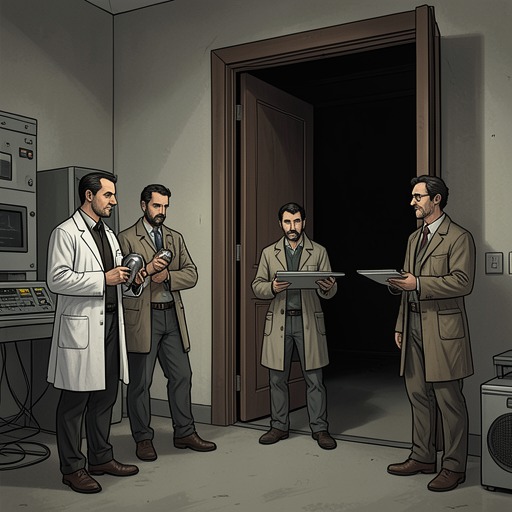
The doctor in charge, Gorby, questions Tony about asthma attacks, abnormal bleeding, bloody noses, bloody stool, scrapes, and bruises. Tony denies each possibility. Gorby then recommends keeping Danny in the hospital for tests, including X-rays, a marrow test, and a white count, because the boy’s reactions are very slow. The proposed procedures place the case within recognizable clinical practice, but they do not produce a convincing explanation. Medicine can catalogue symptoms and arrange examinations; it cannot yet account for the darkness Danny remembers or for the unexplained transformation implied by his condition.
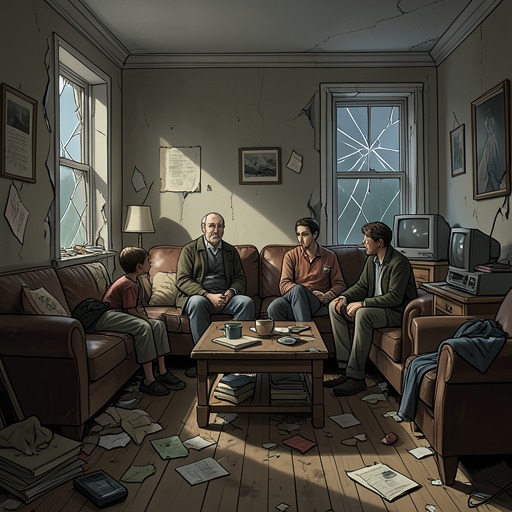
Marjorie’s fear turns the hospital scene from routine observation into family catastrophe. When she asks whether Danny has leukemia, Gorby tries to dismiss the conclusion, but she faints before reassurance can restore order. Tony, meanwhile, has aged dramatically during the week of searching and uncertainty. The parents’ reactions show how quickly a missing-child investigation becomes a crisis of helplessness: the family has lost Ralphie, cannot interpret Danny’s testimony, and now cannot trust Danny’s body to remain stable.
Medical Language and Hidden Causes
The hospitalization establishes a pattern that recurs throughout the novel: abnormal events are first processed through ordinary explanations such as shock, disease, or accident. This vocabulary is not presented as foolish. The doctors ask sensible questions and order conventional tests, and the family accepts the hospital as the proper institution for a child who has collapsed. Yet the clinical framework also delays recognition of the true threat by treating the consequences of the encounter rather than its cause.
Danny’s case later becomes part of a wider chain of disturbing evidence. The town’s old records already contain four unexplained child disappearances between 1928 and 1939, during Hubert Marsten and Birdie Marsten’s eleven years in the Marsten House. None of those children was ever found. The repetition makes Danny’s hospitalization more than an isolated medical episode: it echoes a suppressed local pattern in which children vanish, survivors cannot give a coherent account, and the town converts violence into rumor or incomplete record.
Jerusalem’s Lot is accustomed to preserving horror through collective memory without fully understanding it. The scandal surrounding the Marsten House occurred before the present generation was born, yet small-town memory passes its violence down ceremonially. The same culture that remembers the Marsten murders only imperfectly also struggles to interpret Danny’s condition. Later revelations about the town’s older mysteries, including the 1789 disappearance described in Robert Boone’s diary, show that the hospitalization belongs to a history of recurring concealment rather than to a single modern accident.
Consequences and Narrative Significance
Danny’s hospitalization raises the stakes of Ralphie’s disappearance while withholding the answer that would make the events intelligible. The missing boy is not recovered, Danny cannot remember what happened, and the adults’ explanations grow increasingly inadequate. His collapse also makes the danger intimate: the woods are no longer merely a place where someone may have become lost, because whatever happened there has followed the surviving child home.
The event prepares the later investigations into Mike Ryerson, Marjorie Glick, and the stolen bodies from the Cumberland County Morgue. When other corpses show strange similarities, Danny’s earlier illness can be reread as an initial manifestation of the same vampiric process. The hospital thus becomes an instrument of dramatic delay. It records the visible effects of the supernatural without naming them, allowing rational explanations to stand briefly before the accumulating evidence makes them impossible to sustain.
Most importantly, Danny’s hospitalization marks the point at which Jerusalem’s Lot begins to fail at the level of knowledge. Search parties, police, parents, and physicians all perform the correct recognizable actions, but each action yields only partial information. The event’s decisive significance lies in that contradiction: the town responds with organized care and investigation, yet the truth remains hidden inside a child’s damaged memory and an illness that ordinary diagnosis cannot explain. Danny returns from the darkness alive, but his collapse announces that the darkness has not released him.