Eva Miller
'Salem's Lot: A NovelEva Miller is the practical proprietor of Eva Miller’s boardinghouse and one of the figures through whom Jerusalem’s Lot becomes a lived social world rather than merely a haunted place. She maintains a crowded house, feeds and observes its inhabitants, carries news between neighbors, and senses the town’s danger before she can name it. Her importance is therefore double: she embodies the ordinary routines that make a small town habitable, and her fate shows how completely the vampire outbreak destroys the domestic network on which that ordinary life depends.
Identity and Domestic World
Eva Miller is a widow whose life is organized around work, food, cleanliness, and the management of other people. She rises early to cook an abundant breakfast of scrambled eggs, bacon, home fries, toast, jam, orange juice, and coffee, eating in solitude while planning the day’s labor. Her boardinghouse has three stories and seventeen rooms; with nine boarders, including Ben Mears, she must change linen, wash floors, scrub stairs, wax the banister, and turn the rug in the central common room. The scale of this routine establishes her as more than a landlady. She is the sustaining labor of the house made visible.
Her physical presence is described through motion and appetite, but the description also emphasizes discipline. Although she is a large woman, she works too hard maintaining the house to be merely idle or indolent. The eight-burner electric stove, the carefully planned meals, and the relentless cleaning all belong to a system of control through which she keeps disorder at bay. Even her basement preserves this impulse toward abundance and order: after spending much of September canning vegetables and sealing homemade jelly, she has more than two hundred neatly arranged jars, with mincemeat still to come as the season advances.
The boardinghouse also contains the memory of her dead husband, Ralph. Eva tells Jimmy Cody that Ralph’s ghost still seems to inhabit the house through objects that unexpectedly reappear in the attic or in bureau drawers. The pool table in the basement had been Ralph’s, and although it occupies space she could use for something else, she cannot bring herself to sell it through the newspaper or the local radio trading program. Her attachment to these objects gives the house a quiet continuity: grief is not expressed through grand confession but through the refusal to remove what belonged to the dead.
Social Knowledge and the Town’s Informal Network
Eva is embedded in Jerusalem’s Lot’s dense system of domestic and commercial contact. She knows the habits of her tenants, including Weasel Craig, whom she expects to help with the heavy work unless he is sleeping off a drunken spell. She also manages the small humiliations of communal living, complaining about boarders who leave their dishes unwashed despite the sign above the sink. Such details make her house a miniature version of the town: intimate, practical, repetitive, and held together by constant supervision.
The broader town is similarly connected by telephone lines, gossip, and observation. The humming wires are imagined as carrying voices across space, while Mabel Werts functions as a concentrated storehouse of local history and rumor, using her telephone and binoculars as the instruments of a communications web. Eva belongs to this same network, though in a less theatrical and more active form. Information reaches her through tenants, callers, errands, and visits, then becomes part of the house’s shared atmosphere.
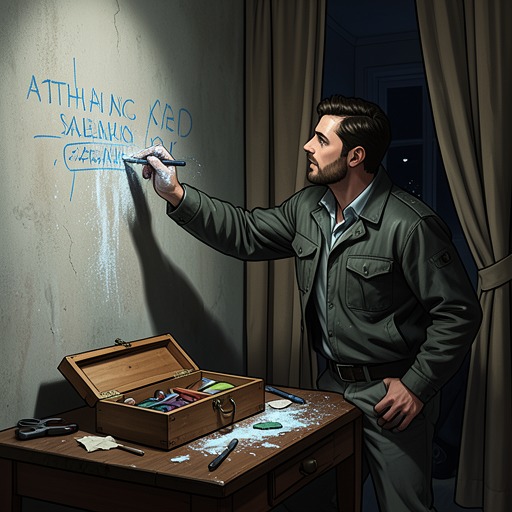
This social position makes Eva a witness to disturbances that others attempt to minimize. When Ben returns from an unexpected night drive, he finds her waiting in the darkness in a quilted housecoat, worried and undecided about whether she should intrude on her tenant’s affairs. Later, after hearing that Susan Norton has bad news, Eva recognizes the emotional tone immediately; the recognition links the present crisis to the bitter arguments of her own youth. She is not detached from the town’s events. She reads them through changes in voice, posture, clothing, and routine.
Encounters with the Developing Crisis
Eva initially approaches the strange events through the assumptions available to an ordinary resident. Susan reports that Ben had appeared dressed in an old-fashioned overcoat and a funny hat, with his hands in his pockets, and that he seemed unlike himself. Eva is also told that Floyd Tibbits has been locked in the drunk tank by Parkins Gillespie despite appearing not drunk but confused and vacant. The information is alarming precisely because it arrives as domestic news, mixed with the ordinary business of a boardinghouse and a waiting tenant.
Her response is cautious rather than heroic. She wants to know what is happening, yet she does not want to mix herself into Ben’s business. This restraint is part of her social intelligence: in a small town, curiosity is powerful, but boundaries are real, and a landlady’s authority depends on knowing when to press and when to stand back. At the same time, her concern repeatedly breaks through that caution. When Mark Petrie appears for Ben, Eva watches the boy and Ben drive away from the kitchen window, her brow furrowed. She feels that something bad is happening, comparing the obscure dread to what she experienced on the day her husband died.
Eva’s practical care continues even as the danger spreads. She goes to the cellar to gather two jars of corn for Ann Norton, who is reportedly in bed, turning the products of her seasonal labor into an act of neighborly assistance. She also receives messages for Ben: after Father Donald Callahan calls the boardinghouse and learns that Ben is absent, and later when Matt Burke telephones with a request for a return call, Eva remains one of the channels through which the threatened group attempts to stay connected. The house is a communications node even when its occupants do not fully understand the forces moving through it.
The Boardinghouse as a Site of Invasion
The boardinghouse’s ordinary structure makes its later corruption especially significant. It is a place of meals, rented rooms, remembered possessions, and repeated domestic tasks, but it also contains a cellar that becomes strategically important to the vampire occupation. Jimmy remembers a conversation with Eva from nearly four years earlier, when she explained that Ralph’s ghost still seemed to linger in the house and mentioned the pool table in the basement. That remembered basement, once associated with a husband’s possessions and the persistence of grief, later becomes the place where Kurt Barlow is identified as hiding.
The revelation is delivered with startling certainty. Ben wakes and says that he knows where Barlow is: in the basement of Eva Miller’s boardinghouse. The location changes the meaning of Eva’s house retroactively. Its cellar is no longer merely storage space or a repository of Ralph’s past; it has become a concealed center of the town’s supernatural threat. The same domestic depth that preserves memory also shelters the enemy, turning the boardinghouse into an image of how evil enters familiar structures rather than remaining outside them.
Eva herself does not appear to recognize the danger before it reaches her. When she misses Weasel Craig at breakfast, she is occupied with directing tenants to and from the stove and washing the dishes left by Grover Verrill and Mickey Sylvester. The scene preserves her characteristic concentration on work, but the reader knows that the absence she notices only in passing belongs to a much larger pattern. Her ordinary busyness becomes tragic dramatic irony: the household continues its routines while the household’s members are being removed from the world.
Death, Transformation, and Narrative Significance
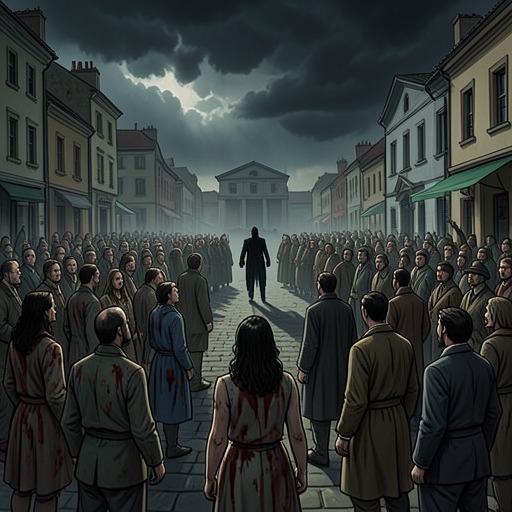
After Barlow’s defeat, Eva’s body is found among the people Ben had lived with and shared meals with. Her corpse lies in front of Barlow’s coffin, with Weasel Craig beside her and other familiar residents arranged along the approach. The placement turns the boardinghouse community into a procession of the dead. Eva is not an isolated victim; she is part of the destruction of the social household that had fed, sheltered, and connected Ben to Jerusalem’s Lot.
Yet Eva returns as one of the Undead. When Ben encounters her, she says, with apparent grief, that he has killed the Master and asks how he could have done so. Her words preserve the language of loyalty even after death has erased the person who once worried about tenants, canned vegetables, maintained seventeen rooms, and protected Ralph’s belongings from disposal. The transformation is therefore not simply physical. It converts care into allegiance, domestic memory into servitude, and the voice of a recognizable woman into an instrument of the vampire order.
Eva’s fate also clarifies the novel’s larger pattern. The vampire colony can spread easily through a bedroom community whose residents commute elsewhere, attend different churches, watch television instead of gathering, and remain only loosely observed by schools, workplaces, and institutions. Eva’s boardinghouse represents the older, more intimate form of communal surveillance: meals, telephone calls, errands, gossip, and the visible rhythms of household labor. When she is killed and raised, that network is not merely severed; it is turned against itself.
Her character consequently carries the tension between local knowledge and actual power. Eva knows people, remembers the dead, notices changes in behavior, and feels approaching catastrophe. But recognition alone cannot stop the invasion. She stands at the threshold between the ordinary town and the supernatural one, preserving the textures of daily life until the very place she has kept orderly becomes a hiding place for Barlow and, finally, a scene of her own annihilation. Through Eva Miller, the novel makes the collapse of Jerusalem’s Lot intimate: the catastrophe is measured not only in missing residents and ruined buildings, but in the loss of the woman who made breakfast, changed the linen, saved the jars, and kept the house alive.