Small-town gossip and collective memory
'Salem's Lot: A NovelSmall-town gossip and collective memory are not merely background features of Jerusalem’s Lot; they are the town’s informal system for recording, interpreting, and policing reality. Information travels through telephone lines, newspapers, tavern talk, library research, funerals, and domestic confrontations. The same network that preserves old disappearances and notices new anomalies also distorts them, converting incomplete knowledge into legend, moral suspicion, or social punishment. In the novel, communal memory comes close to recognizing the supernatural danger, but its habits of gossip and disbelief repeatedly prevent recognition from becoming effective action.
The Town as a Listening Network
The physical infrastructure of Jerusalem’s Lot gives gossip an almost material presence. The telephone wires hum on clear, cool days, as though the voices passing through them had left a residue in the wood and wire. Telephone poles lean beside paved and unpaved roads, marked by old linemen’s cleats from 1946, 1952, and 1969; the network therefore carries not only current conversation but traces of accumulated time. The image makes communication feel less like a neutral service than a communal nervous system, with voices moving invisibly across space while the town listens. The conversations themselves are fragmentary and recursive. One voice reports an old twenty-dollar bill, another speculates about R.T. Straker moving behind the Marsten House with a wheelbarrow, and another connects his arrival with the disappearance of the Glick boy before abruptly turning to a recipe. The wires hum again and again, transforming unfinished sentences into a form of collective consciousness. What the town knows is rarely organized into a report; it exists as overlapping suspicions, half-heard names, remembered details, and conclusions that no speaker quite accepts openly.
Memory, Rumor, and the Past
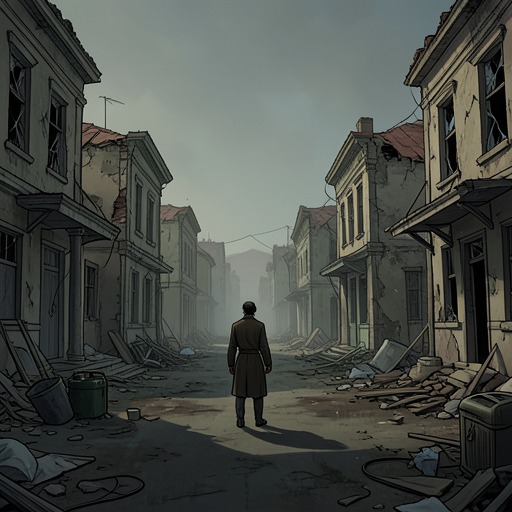
Collective memory becomes especially important when Ben Mears and Matthew Burke investigate the connection between the Marsten House and earlier child disappearances. Burke knows that older residents, including Mabel Werts, Glynis Mayberry, and Milt Crossen, have already begun making the connection. The crucial pattern is specific: when the house was last occupied, four children disappeared over ten years; after a thirty-six-year vacancy, it is occupied again, and Ralphie Glick disappears almost immediately. The memory of the earlier incidents does not vanish simply because the town has modernized or because the official record supplies alternative explanations. That memory remains unstable, however. Ben checks the Cumberland Ledger from 1939 through 1970 and finds three later child disappearances: one child ran away and was found working in Boston, another was recovered from the Androscoggin, and a third was found buried off Route 116 in Gates after an apparent hit-and-run. Each case has an ordinary explanation. The comparison shows how collective memory works through selection and resemblance: the old pattern is neither wholly confirmed nor erased, but its recurrence makes coincidence increasingly difficult to sustain. The wider region likewise turns the vanished population into legend. A newspaper feature asks whether Jerusalem’s Lot is a ghost town, while surrounding communities whisper that the town is haunted. Reports of colored lights over the Central Maine Power lines encourage UFO theories; other rumors blame a dark coven and black mass; still others recall young men who disappeared near Houston and were later found in mass graves. These explanations reveal a community trying to make an absence intelligible. The supernatural rumor is not simply foolishness, because the town is genuinely under supernatural assault, but it is mixed with sensational alternatives that blur the nature of the threat.
Gossip as Social Surveillance
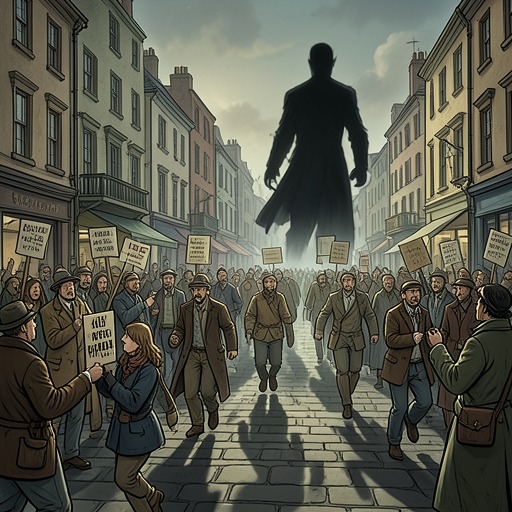
In Jerusalem’s Lot, gossip is also a mechanism of social control. When Ben considers telling others what he and Burke have discovered, he predicts that the town will ridicule Burke, treat his solitary life as evidence of mental instability, and invent humiliating stories about him. The anticipated response is not investigation but collective punishment: children would mock him with Halloween teeth, high-school students would circulate rhymes, colleagues would stare, and anonymous callers might claim to be Danny Glick or Mike Ryerson. Even Ben’s testimony would be weakened because he is an outsider. Gossip thus protects the town’s ordinary self-image by making the witness appear absurd. The same surveillance reaches into family life. Susan Norton recognizes the tone of her mother’s summons immediately because it recalls years of arguments about hemlines and boyfriends. Her mother’s hostility toward Ben is not an isolated opinion; it is part of the town’s moral atmosphere, where private relationships are watched and judged through inherited assumptions. A home with the television off and the mother knitting becomes an ominous stage for a familiar social ritual: the family’s authority asserting itself through remembered grievances and anticipated condemnation. Tavern conversation shows another form of rumor formation. At Dell’s, Floyd Tibbits initially dismisses the hanging of the dog as a children’s joke. Dell nevertheless points to a newspaper report about teenagers who desecrated a Catholic church in Clewiston, Florida, using animal and human blood. The article supplies a ready-made vocabulary of devil worship, allowing local unease to attach itself to a sensational external story. Rumor does not discover the truth directly; it imports explanatory templates and tests them against local anomalies.
Official Knowledge and Communal Denial
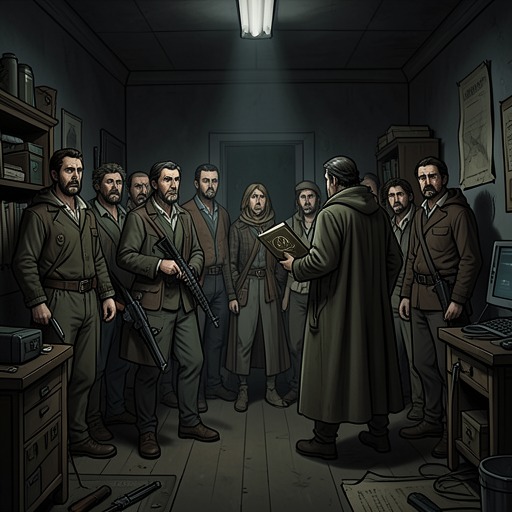
The town’s informal memory repeatedly approaches the truth before official institutions do. Parkins Gillespie notices the sequence of deaths and disappearances—the dog, Ralphie Glick, Danny Glick, and Mike Ryerson—and remarks that such events are an extraordinary run for a small town, while recalling his grandmother’s belief that things happen in threes rather than fours. His observation is both perceptive and limited. He recognizes recurrence as a statistical and folkloric problem, but the very language of “a year’s run” reduces a supernatural invasion to an unsettling local sequence. When Ben and Mark Petrie finally try to tell Parkins what has been happening, the constable refuses to hear it. His response shows the institutional form of the same resistance found in gossip: knowledge that threatens the town’s categories is rejected before it can be examined. The community possesses clues, witnesses, old records, and repeated patterns, but no shared interpretive framework capable of connecting them into an actionable account. The funeral of Danny Glick demonstrates how collective memory becomes public ceremony. A long procession travels up Burns Road with every car’s lights turned on despite the brightness of day. The procession gathers relatives, schoolmates, curious residents, officials, businesspeople, and habitual mourners, including Mark Petrie, Mabel Werts, Eva Miller, Loretta Starcher, Parkins Gillespie, and many others. The town’s memory is embodied in the crowd: people remember earlier funerals, repeat old associations, observe one another, and place the latest death inside a continuous local history. Yet the ceremony also creates the conditions in which the death can be absorbed as communal grief rather than recognized as evidence of a larger attack.
Narrative and Thematic Significance
The novel presents gossip as a form of distributed narration. No single resident possesses the whole story, and the reader receives the town’s reality through clippings, overheard exchanges, remembered incidents, private fears, and official refusals. The result is a mosaic in which truth appears first as a pattern of partial perceptions. The discourse often withholds the decisive explanation while allowing the underlying story to accumulate in advance: the Marsten House is associated with earlier disappearances, Straker’s arrival coincides with new danger, and the town’s wires carry speculation before the protagonists can formulate a theory. This structure gives collective memory a double force. It preserves what formal history leaves behind, including the old scandals and disappearances, and it allows Burke to recognize that Ralphie Glick’s disappearance repeats the house’s earlier pattern. At the same time, communal memory is vulnerable to gossip’s distortions. It can turn the missing into UFO victims, devil-worship suspects, or objects of lurid legend; it can stigmatize the witness; and it can treat a sequence of deaths as mere bad luck. The town knows about darkness without knowing how to name or confront it. The contrast with the confident rationalism associated with Bram Stoker’s Dracula is significant. In that earlier model, modern records, scientific instruments, and organized cooperation help the vampire hunters defeat an ancient evil. Here, communication systems and public information exist everywhere, but they produce fragments, surveillance, and noise. The telephone wires hum, newspapers circulate, and medical instruments measure the corpse, yet none of these technologies automatically produces understanding. Jerusalem’s Lot is therefore defeated not by a lack of information alone, but by the social habits that govern information: gossip spreads quickly, memory repeats selectively, authority refuses disruptive testimony, and the community protects normality until normality has already collapsed.