The 1928–1939 child disappearances
'Salem's Lot: A NovelThe 1928–1939 child disappearances are the central unresolved pattern linking the Marsten House’s first known period of occupation to its later return as a source of terror. Four children vanished in Jerusalem’s Lot between 1928 and 1939, during the eleven years Hubert Marsten and Birdie Marsten lived in the house. No bodies were recovered, no ordinary explanation completed the record, and the old disappearances become the historical shadow against which the renewed horror of Jerusalem’s Lot is measured.
Historical Setting and Concealment
Jerusalem’s Lot had been incorporated in 1765 and had already celebrated its bicentennial with fireworks and a park pageant before the missing-children pattern became part of the town’s inherited darkness. The town’s official identity is thus respectable and civic, while its collective memory preserves older scandals in fragments. Small towns, the narrative observes, carry horrors ceremonially from one generation to the next, and the Marsten House’s history functions as the Lot’s closest equivalent to a skeleton in its closet.
The disappearances occurred after Hubert Marsten and Birdie Marsten retired to Jerusalem’s Lot in 1928. Hubert had previously been the president of a large New England trucking company, and rumors connected the company’s most profitable business with the nighttime transport of Canadian whisky into Massachusetts. His criminal history was more severe than the town’s softened legend suggested: in 1927 he had been questioned in connection with a gangland killing and separately concerning the murder and evisceration of an eleven-year-old boy in Malden. His employers protected him, after which he moved quietly to the Lot as a supposedly retired official receiving a monthly check.
The Missing Children and the Record
Ben Mears reconstructs the pattern by examining old copies of the Ledger from 1928 through 1939. Four children disappeared during that period. In isolation, each disappearance might have been dismissed as a rural misfortune: a child could become lost, die of exposure, or be buried by a gravel-pit slide. Yet none of these four children was ever found. There was no later discovery of a skeleton by a hunter and no accidental recovery by a contractor excavating gravel for cement.
The absence of remains is what separates the cases from the town’s other, more easily rationalized accidents. When Ben compares the earlier record with the years from 1939 to 1970, he finds only three missing children, each with an explanation: one sixteen-year-old ran away and was later found working in Boston, another was recovered from the Androscoggin a month after disappearing, and a third was found buried off Route 116 in Gates after an apparent hit-and-run. The contrast makes the 1928–1939 cases distinctive not because rural children never vanished, but because these four left no conclusive physical trace.
Recurrence Through Ralphie Glick
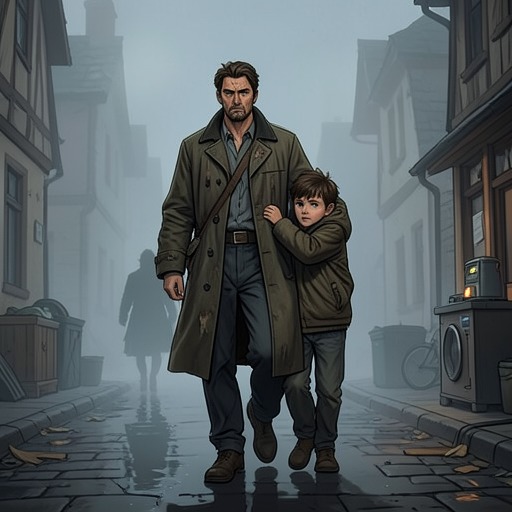
The old pattern acquires immediate force when Richard Straker and Kurt Barlow reoccupy the Marsten House after a thirty-six-year interval. Ralphie Glick disappears almost at once. Ben recognizes the structural resemblance: the last time the house was occupied, four children disappeared over ten years; now it is occupied again, and a child vanishes “right off the bat.” The recurrence converts archival suspicion into a present danger, even while Ben cautiously acknowledges that coincidence remains possible.
The pattern is already known among older residents. Mabel Werts, Glynis Mayberry, and Milt Crossen remember the disappearances of the 1930s, and some have begun making the connection between the former occupants, the house, and Ralphie’s disappearance. Their knowledge demonstrates how local memory works in the Lot: the facts survive in conversation, but the meaning of those facts remains partly suppressed, disputed, or deliberately left unspoken.
The Marsten House and Buried Violence
The child disappearances stand beside other violence that the town knows only incompletely. Residents know that Hubert Marsten killed Birdie Marsten, but they do not know what preceded the shooting or that Birdie begged him to do it. They know that old Albie Crane’s wife supposedly ran away with a traveling man, while the concealed truth is that Albie killed her, weighted her body, and dropped it into an old well. The town’s public stories are therefore not simply incomplete records; they are defensive narratives that make atrocity appear ordinary enough to endure.
The Marsten House’s hidden history extends beyond the murder-suicide. Older women remember that Larry McLeod found charred papers in an upstairs fireplace, but they do not know that the papers were twelve years of correspondence between Hubert Marsten and an Austrian nobleman named Breichen, begun through a peculiar Boston bookseller who later died violently. Hubert burned the letters one by one before hanging himself. The missing children belong to this same layered history: their disappearances are visible in the newspaper record, but the force behind them remains hidden behind the town’s habits of silence.
Narrative Consequences and Significance
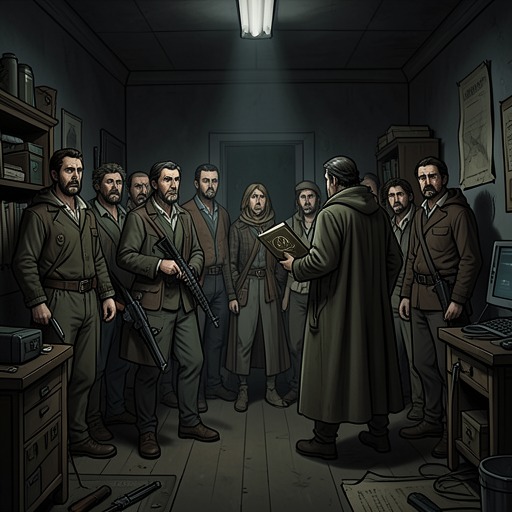
The disappearances give Ben’s investigation a historical method. He does not treat Ralphie Glick’s vanishing as an isolated tragedy; he places it against a comparative chronology of disappearances, recoveries, and unexplained absences. That act of comparison challenges the town’s preferred explanations and makes recurrence itself evidence. The past becomes active rather than finished, with the Marsten House serving as the spatial point where old violence and new violence meet.
The pattern also intensifies the legal and practical dilemma surrounding Danny Glick’s body. Jimmy Cody notes that Danny is the only corpse for which the investigators have a marker, while all the others have disappeared into thin air. Without recoverable bodies, the earlier cases cannot easily be tested through exhumation, medical examination, or ordinary criminal procedure. The missing children are therefore not merely victims in the backstory; they are the reason the present investigation begins with a nearly impossible evidentiary deficit.
The broader history of Jerusalem’s Lot confirms that disappearance repeatedly exceeds official explanation. Robert Boone’s coded diary records that the older settlement vanished catastrophically in 1789, while later documents attribute Charles Boone’s account of that history partly to recurring brain fever, madness, and forgery after the death of his wife. That uncertainty does not erase the town’s past; it shows how records, family memory, rumor, and insanity compete to preserve or distort it. Within that continuum, the 1928–1939 child disappearances mark a recurring form of evil: children vanish, the town continues, and the absence is gradually absorbed into local memory until a new disappearance makes the old one visible again.