Bloody Pirates
'Salem's Lot: A NovelThe Bloody Pirates are an exclusive boys’ club in Jerusalem’s Lot, remembered less for formal organization than for the social power of belonging and the dangerous initiation imposed on Ben Mears. Their importance lies in the way a childhood game converts the Marsten House from a notorious local landmark into a permanent source of memory, fear, and narrative knowledge for Ben.
Nature and Social Function
The Bloody Pirates are presented as a selective local club of boys who guarded membership through references and an initiation test. Ben recalls that admission required at least three references, and that the older boys’ exclusivity intensified his desire to belong. He was younger than the established members by a year or two, and his persistence marked the club as a miniature hierarchy in which status depended on acceptance by those already inside.
The club’s name and rules belong to the ordinary culture of childhood in Jerusalem’s Lot, but its social atmosphere is not harmless. Ben’s recollection contains old bitterness beneath the attempted humor: membership had been the one thing he wanted that summer. The Bloody Pirates therefore represent both the appeal of local fellowship and the coercive pressure of juvenile institutions, where proving courage becomes more important than recognizing danger.
The Marsten House Initiation
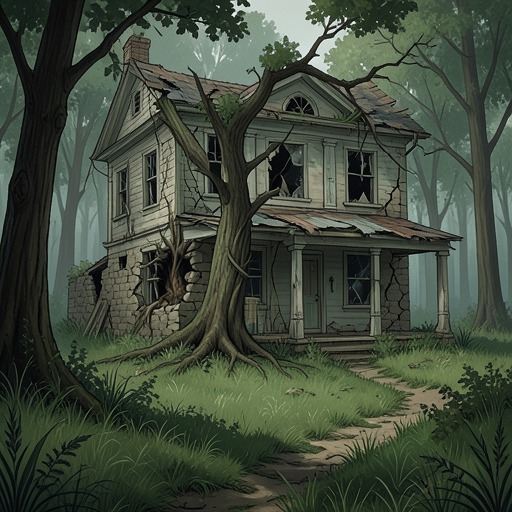
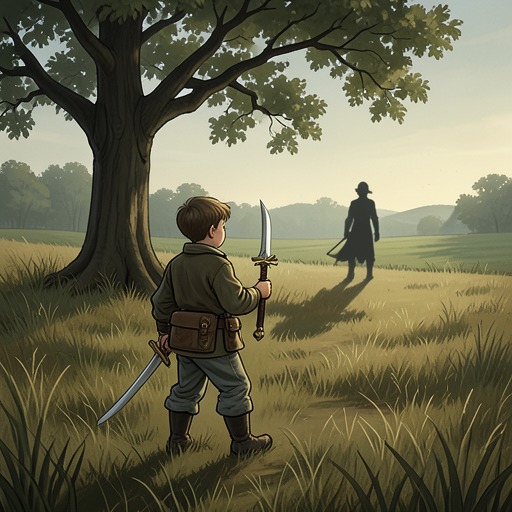
The initiation was devised when the club finally agreed to let Ben join. The boys were going to the Marsten House, and Ben was ordered to enter it and bring something out as booty. The assignment transformed a notorious site of adult scandal into the stage for a boyish test of nerve, while also binding Ben’s personal history to the house long before his later return to Jerusalem’s Lot.
Ben entered through a window. The house was still filled with abandoned objects, although newspapers had apparently been removed during the war and much of the remaining junk left behind. Among the objects was a snow globe on a table in the front hall, containing a little house and artificial snow. Ben put the globe in his pocket, but he did not leave immediately: he wanted not merely to complete the theft but to prove himself.
His decision led him upstairs, to the place where Hubert Marsten had hanged himself. The initiation thus exceeded the club’s apparent goal of retrieving a trophy. The stolen snow globe provided the childish surface of the adventure, while the upstairs room confronted Ben with the house’s history of suicide and violence. The Bloody Pirates’ ritual inadvertently made him a witness to the emotional force of the Marsten House, an experience that remained available to memory when he later discussed the place.
Memory, Local History, and Violence
Ben’s recollection of the Bloody Pirates occurs within a town whose past is transmitted ceremonially from generation to generation. The Marsten House scandal had happened before the younger characters were born, yet small-town memory preserved it as a communal skeleton in the closet. The club’s initiation belongs to that same process: children inherit an adult horror, recast it as a dare, and reproduce its power through play.
This pattern reflects the broader structure of Jerusalem’s Lot. The town was incorporated in 1765 and later celebrated its bicentennial with fireworks and a park pageant, but civic ritual coexists with suppressed violence and persistent rumor. Stories of the Marstens, missing children between 1928 and 1939, and other concealed crimes remain embedded in local knowledge even when their full circumstances are unknown. The Bloody Pirates’ expedition shows how such history reaches children indirectly, through landmarks, dares, and rules of belonging rather than through an official account.
The club’s initiation also anticipates the novel’s larger contrast between ordinary explanations and supernatural realities. Residents know fragments of the Marsten story, just as they know that four children disappeared during the Marstens’ years in the house, but they do not possess the whole truth. The Bloody Pirates do not understand what the house contains; their ritual supplies a social reason for entering it without reducing the house’s danger. In that sense, childhood play becomes an imperfect but consequential method of approaching a hidden past.
Narrative Significance
The Bloody Pirates are important because their apparently minor club culture produces a decisive memory in Ben Mears’s life. The initiation gives him a concrete history with the Marsten House: he has not merely heard local stories or inherited a town legend, but has physically entered the building and stood in the space associated with Hubert Marsten’s suicide. That earlier encounter helps explain why the house exerts such a persistent claim on his imagination.
The club also establishes a recurring pattern in the narrative: communal rituals that appear playful, civic, or customary can lead directly toward concealed evil. The boys seek booty and recognition, yet the expedition brings Ben into contact with the town’s most charged site. Their game therefore functions as a threshold between childhood and the adult history of Jerusalem’s Lot, between local folklore and lived terror, and between the desire to belong and the solitary knowledge that follows from entering the forbidden place.