Calvin McCann
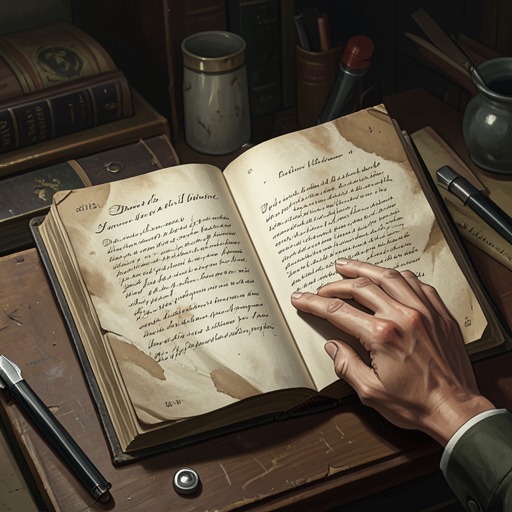
'Salem's Lot: A NovelCalvin McCann is the dependable companion whose loyalty anchors the Chapelwaite narrative while Charles Boone’s confidence in his own perceptions deteriorates. Known as “Cal” in Charles’s papers, he combines practical competence with reserve: he manages household necessities, investigates the locked and coded materials of the Boone family, and accompanies Charles into danger even when the evidence has become terrifying. His importance lies less in supernatural power than in his insistence on shared responsibility. When Charles tries to confront the darkness alone, Calvin refuses to let him do so; that act of solidarity leads to his death and becomes the central trauma through which Charles’s final testimony must be judged.## Identity and Place in the Boone HouseholdCharles presents Calvin as “practical, silent, and as dependable as ever,” a description that establishes him as both servant and trusted intimate rather than a decorative attendant. At Chapelwaite, he helps restore order to a house whose rooms, furniture, dust, and neglected affairs overwhelm its new occupants. Charles expects him to arrange necessary deliveries from town and engage cleaning women, while Calvin’s presence makes Charles claim that he is “fine and happy” despite the isolation and the disturbing events already gathering around them. His competence is domestic, but it also becomes investigative: he is the person who handles locks, journals, and physical evidence when Charles’s curiosity turns toward inherited secrets.## Investigation and DiscoveryCalvin’s decisive contribution is the recovery of Robert Boone’s diary. He forces the lock that binds the book shut before Charles rises, observes that the writing is in cipher, and begins trying to break it. His pocket journal records the work in a restrained, methodical voice, including his concern that Charles’s health may not withstand the discoveries taking place in the house. The deciphered diary reveals that the first Boone entries run from June 1 to October 27, 1789, immediately before the catastrophic disappearance associated with Jerusalem’s Lot. It also connects the Boone family, the town, and the book resting in the desecrated church, turning local rumor into a genealogical and historical threat. Calvin’s labor therefore supplies the documentary foundation for Charles’s interpretation of Chapelwaite. Without his persistence, the ancestral mystery would remain a collection of frightening impressions rather than a traceable record.## Loyalty Under ThreatCalvin’s loyalty becomes clearest when Charles attempts to leave secretly. Charles tells him that they must depart and sends him toward Tandrell to hire a trap, hoping to avoid notice; once Calvin is out of sight, Charles prepares to escape by himself. Yet Calvin has understood the danger and returns to confront the attempted abandonment. Charles turns and finds him standing there, grim and resolute. Calvin tells him that he will not go alone, making companionship an ethical decision rather than a matter of convenience. The scene reverses their apparent roles: Charles is the one trying to evade responsibility, while Calvin becomes the steadier guardian who recognizes that the danger cannot be escaped through secrecy. His silence is not passivity. It is a form of judgment expressed through action.## Death and the Collapse of Charles’s AccountCalvin accompanies Charles into the subterranean horror beneath Jerusalem’s Lot and Chapelwaite, where Charles encounters a rotted, animated figure associated with James Boon, the Keeper of the Worm. Charles’s final papers say that the figure came to take him down into darkness, but the crucial consequence is Calvin’s death. Charles later claims that he fled and left the body of his lifelong friend unheeded, running back to the tainted house and collapsing there. The horror of the encounter is intensified by recognition: the dead face appears to Charles to bear a family resemblance to James Boon, and Calvin’s death becomes proof, in Charles’s mind, that the Boone bloodline has opened a path to an ancient evil. Charles then concludes that he is the last gateway and must die to break the chain. Calvin’s loss thus changes the narrative from investigation to self-condemnation.## Reliability, Forgery, and Narrative SignificanceThe frame narrative sharply complicates Charles’s version of Calvin’s fate. It assumes that Charles’s recurring brain fever, originally associated with the death of his wife in 1848, caused him to lose his sanity and murder his companion. It further identifies the entries attributed to Calvin’s pocket journal as forgeries, probably created by Charles to reinforce his paranoid delusions. Calvin is therefore both the narrative’s most trustworthy-seeming investigator and the victim whose apparent testimony may have been manufactured after death. This contradiction preserves his importance while denying the reader a secure supernatural verdict. The coded diary may genuinely expose the older history, yet Calvin’s supposed final records cannot be accepted simply because they bear his name. His character occupies the painful boundary between evidence and invention: a practical man whose loyalty is presented as real, whose death is reported through a compromised consciousness, and whose memory continues to structure the reader’s uncertainty about what happened at Chapelwaite.