James Boon
'Salem's Lot: A NovelJames Boon is the founder and first spiritual ruler of Jerusalem’s Lot, a dour religious fanatic whose influence turns the town’s history into a genealogy of secrecy, sexual corruption, ritual violence, and supernatural evil. His importance is not confined to the distant past: through the Boone bloodline, the ruined church, and the entity known as The Worm, his presence reaches into the later narrative as a force that survives burial, fire, and the destruction of a single book.
Founder of Jerusalem’s Lot
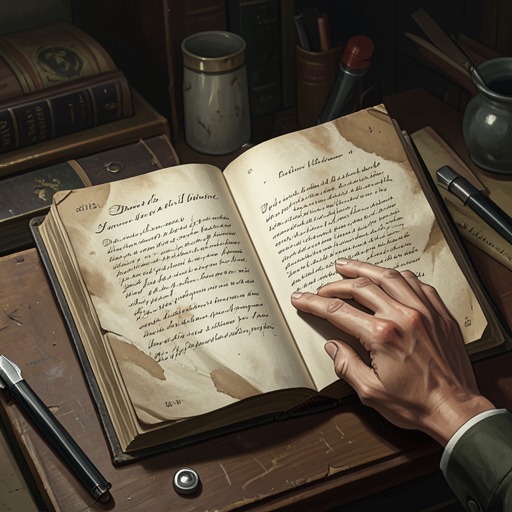
According to Robert Boone’s diary, Jerusalem’s Lot was founded in 1710 by a splinter group of the Puritan faith headed by James Boon. The settlement was built around the church where Boon preached—or, more ominously, held court—so religious authority and civic authority were fused from the beginning. When the travelers later approach the abandoned settlement, they find the church’s spire rising beyond the weed-grown thoroughfare, its peeled paint and tarnished, leaning cross giving the place an atmosphere of preserved menace rather than ordinary historical decay.
Boon’s town preceded both Chapelwaite, built in 1782, and Preacher’s Corners, then known as Preacher’s Rest and founded in 1741. Its age therefore gives the surrounding landscape a disturbing historical depth: Jerusalem’s Lot is not merely an old village but the earliest visible expression of a separate, corrupted religious community. The later town’s apparently ordinary roads and social divisions conceal an origin in which doctrine, bloodline, and domination were already inseparable.
Religious Authority and Corruption
Robert Boone’s account presents James Boon as a half-mad preacher whose twin gospels were the Bible and de Goudge’s sinister Demon Dwellings. The community he controlled practiced regular rites of exorcism, while incest and the resulting insanity and physical defects became part of its social history. Boon’s authority was also sexualized: his descendants report that he claimed intercourse with women from the town was God’s will, and Robert later sees him surrounded by women as though by a sultan’s harem.
This combination of piety, erotic domination, and ritual transgression makes Boon more than a conventional religious hypocrite. He represents a local order in which sacred language legitimizes bodily violation and communal control. The church therefore becomes the architectural container of the town’s suppressed history, while Boon’s body and bloodline carry that history forward. The contrast between the church’s outward Christian signs and the rites conducted within it gives the setting its specifically gothic force: the institution meant to protect the community has become the chamber in which its corruption is preserved.
The 1789 Revelation
In 1789 James Boon was already ancient. Robert Boone, writing that year, estimates that if Boon had been twenty-five when the town was founded, he would have been one hundred and four. Robert’s first meeting with him is consequently described as an encounter with an unnaturally enduring figure: Boon is white-bearded, dressed in a black cassock that seems obscene, and still sexually active despite his extreme age. His longevity transforms a historical founder into something approaching an undead or preternatural presence.
The diary links Boon directly to the book later identified with the supernatural evil beneath the town. Robert sees him as the older relative’s unhealthy associate and observes the magnetic power with which Boon unsettles those around him. The entries end only days before the cataclysmic disappearance of Jerusalem’s Lot’s inhabitants, making Boon’s influence part of the immediate background to the town’s first recorded collapse. The discovery thus changes the meaning of the settlement’s history: the disappearance is no longer an isolated mystery but the apparent culmination of a long-running religious and occult infection.
Keeper of the Worm
James Boon’s most terrible identity is revealed in the church when the book is about to be destroyed. As the blood-stained pages seem to glow, a chant rises from the walls, the floor trembles, and the boundaries of sane space and time appear to twist. In the resulting vision, Boon is seen misshapen and cavorting around a woman’s supine body while Philip Boone, wearing a black hooded cassock, stands behind him with a knife and a bowl. Boon’s religious authority is therefore refigured as participation in sacrifice and invocation.
When the apparition or corpse finally rises from the darkness, it wears a rotted cassock, its half-skull crawling with beetles and its living eyes staring with an inhuman emptiness. The figure identifies itself through resemblance rather than ordinary recognition: the witness realizes that the ruined face belongs not to Philip or Robert but to James Boon, Keeper of the Worm. The title defines Boon’s ultimate narrative function. He is not simply the town’s founder or a remembered tyrant; he is the human custodian of the force that has contaminated the town and the Boone family.
Bloodline and Continuing Threat
Boon’s connection with the Boone family gives the supernatural history a hereditary structure. The diary suggests that one of his illegitimate children escaped south and may have begun the later lineage. Kenneth Boone, whose wealth built the ancestral home, may therefore have descended from James Boon while fleeing his father’s madness. His sons Philip and Robert later built Chapelwaite, unknowingly placing the Boone house less than two miles from the beginnings of the older settlement. The geographical proximity turns family inheritance into a form of return: the blood that fled the original evil has built its home beside it.
The final revelation is that James Boon still lives somewhere in the twisted, lightless passages beneath Jerusalem’s Lot and Chapelwaite, and that The Worm still lives as well. Burning the book has thwarted the entity but has not destroyed it, because other copies exist. Boon’s survival consequently exceeds the limits of a single apparition. He persists as an underground presence, a family resemblance, and a historical chain that threatens to continue unless the last Boone dies. His legacy makes descent—into the church, beneath the town, and backward through ancestry—the decisive movement of the story, while the apparent destruction of the text provides only a temporary interruption rather than a final victory.