Matt Burke's heart attack
'Salem's Lot: A NovelMatt Burke's heart attack is the decisive physical consequence of his encounter with the returned Mike Ryerson and a turning point in the investigation of the vampire threat. What initially appears to be a medical emergency becomes evidence that supernatural terror has entered the bodies and institutions of ordinary Jerusalem’s Lot: Burke survives, but his collapse marks the cost of recognizing that the dead are no longer safely dead.
The Crisis at Matt Burke’s House
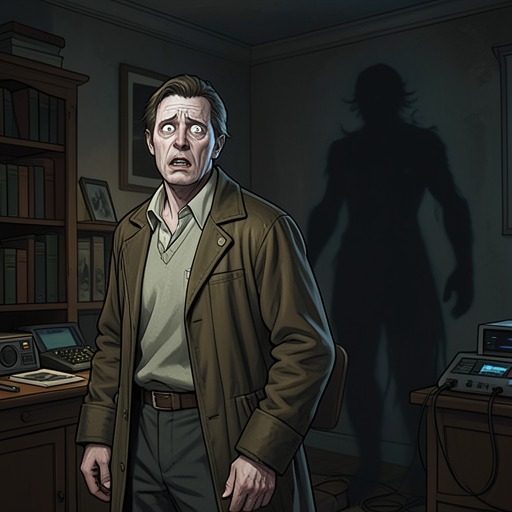
Matt Burke experiences the attack immediately after Mike Ryerson’s vampiric apparition has confronted him. Mike’s pale body falls backward into the night, while a suspended pattern of motes below the window briefly gathers into a hideously humanoid shape before dispersing. The phenomenon gives the scene an unstable boundary between body and atmosphere, presence and absence: Mike vanishes, but the terror remains materially active in the room. Burke turns to run, clutching his chest as pain moves up his arm in steady, pulsing waves. The crucifix swings beneath his eyes as he leaves the house, linking the medical symptom to the religious object that has just served as his protection. His doctor is James Cody, and Burke identifies the emergency as a possible heart attack before collapsing facedown in the upper hall.
Hospitalization and Medical Explanation
Susan Norton later tells Ben Mears that Burke is in Intensive Care one floor above them. She identifies the diagnosis plainly as a heart attack, while James Cody reports that Burke’s condition is stable but still serious during the first forty-eight hours. The hospital therefore supplies an official vocabulary for an experience that exceeds ordinary medical explanation, translating supernatural shock into a recognized clinical emergency. Burke’s later account makes the diagnosis more precise. Cody’s EKG shows a minor heart attack with no clot formation, and Burke jokes that he would sue the young doctor for malpractice if the attack had resulted from a recent examination. Yet Cody has also said that such cases can be brought on by massive shock. Burke keeps silent about what he has seen, correctly recognizing that the truth would sound less credible than the medical label.
A Witness Between Rationality and Horror
Before the attack, Burke’s house functions as a domestic and intellectual refuge. When he invites Ben Mears to supper, the visitor finds an unexpectedly noisy home: an ancient Motorola television, a KLH sound system with quad speakers, Early American Junk Shop furnishings, and Burke in a red-and-white checked apron with spaghetti sauce cooking in the kitchen. The details establish a familiar, even comic human environment, making the intrusion of Mike’s corpse-like return more violent. The heart attack is the point at which that ordinary domestic world can no longer contain what Burke has learned. The attack also changes Burke’s role in the investigation. He is not merely someone who hears a strange story; he is a direct witness whose body records the encounter. His fear becomes a form of testimony, although it cannot yet be presented in acceptable medical or legal language. The gold cross Ben later hangs around his neck gives him comfort, despite having been bought from a remainder shelf at Woolworth’s, and its modest commercial origin contrasts with the intensity of the protection Burke needs.
Consequences for the Investigation
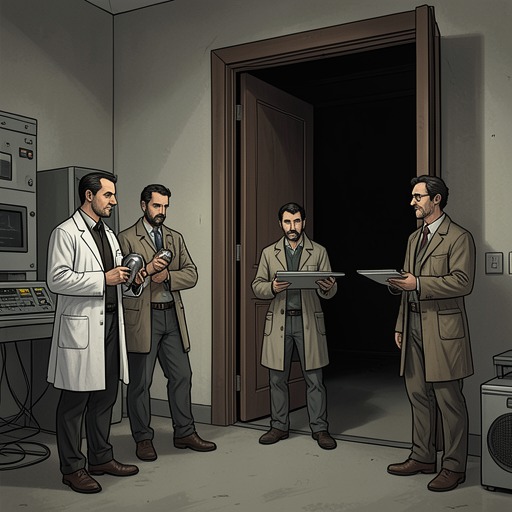
Burke’s hospitalization does not remove him from the struggle. He remains available as an informed ally while Ben and Susan prepare to tell James Cody everything and seek his cooperation. Burke even offers to confront Cody if the doctor refuses to act, combining professional skepticism, dark humor, and a growing willingness to treat the vampire evidence as real. His crisis occurs within a widening chain of medical and forensic anomalies. Parkins Gillespie has already examined Mike Ryerson’s body and questioned whether the man is truly dead. Later, the bodies of the dead are stolen from the Cumberland County Morgue, while Marjorie Glick’s corpse displays the same absence of surface lividity and rigor that characterized Mike’s body. Cody’s medical knowledge thus moves from possible explanation toward detection: the clinical irregularities do not solve the mystery, but they identify a pattern that ordinary death cannot explain. The investigation also confronts legal obstacles. Susan asks whether an exhumation order requires the Glick family’s permission, and Cody explains that resistance could force a hearing, delaying action by two weeks to a month. Danny Glick is the only corpse with a known marker; the others have vanished. Burke’s heart attack helps make the danger immediate, but institutional procedure still threatens to slow the response while the dead continue to disappear.
Narrative and Thematic Significance
The event produces a sharp value shift from domestic safety to bodily vulnerability. Burke begins in a protected interior, armed with knowledge and a crucifix; after Mike’s disappearance, he is reduced to pain, cold lips, crossed arms, and a collapse on the floor. The scene makes terror contagious without requiring a full explanation: the supernatural does not merely frighten Burke psychologically but travels through his chest, arm, breath, and failing strength. At the same time, the heart attack preserves an unresolved tension between medical narration and vampire mythology. Cody can classify the physical event as a minor infarction and attribute it to massive shock, but that explanation cannot account for the apparition that precipitated it. Burke’s survival allows him to carry both accounts forward. He becomes a living witness to a world in which clinical language remains useful yet insufficient, and in which the body itself announces that the town’s darkness has crossed into everyday life.