St Andrew’s Church
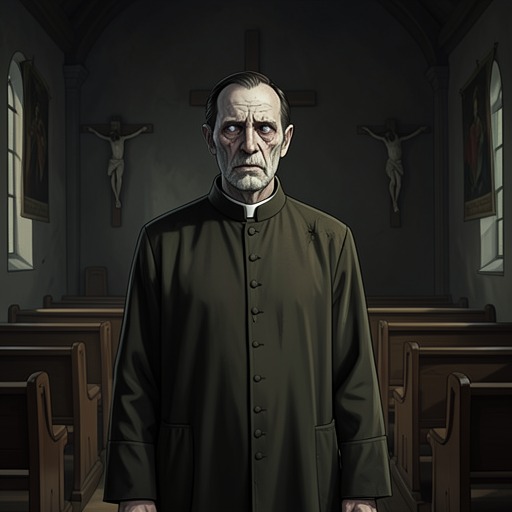
'Salem's Lot: A NovelSt Andrew’s Church is the Catholic sanctuary and parish center that anchors religious life in Jerusalem’s Lot, but its significance extends far beyond local worship. It is the setting for Father Donald Callahan’s confrontation with an impossible evil, the place where sacred objects are prepared for resistance, and the site where Callahan’s expulsion makes visible the collapse of an institution that should have offered protection. The church therefore traces a decisive movement from confidence in ritual authority to spiritual fracture and abandonment.
Parish Center and Local Memory
St Andrew’s belongs to the town’s ordinary civic landscape as much as to its religious one. Father Donald Callahan is identified among the local people whom state police wish to locate or question after the disappearance of Jerusalem’s Lot, alongside civic and social figures such as John Groggins, pastor of the Jerusalem’s Lot Methodist Church, Mabel Werts, Lester and Harriet Durham, and Eva Miller. That inventory places St Andrew’s within the network of institutions through which the town is normally known, administered, and remembered.
Yet Jerusalem’s Lot is not a place whose history remains safely in the past. The town was incorporated in 1765 and later marked its bicentennial with fireworks and a pageant, but its public celebrations coexist with older violence and rumor. The Marsten House’s scandal is remembered ceremonially from generation to generation, and the town’s unexplained condition generates competing explanations: haunting, colored lights over the Central Maine Power lines, UFO abductions, a supposed dark coven, and memories of mass graves elsewhere. St Andrew’s stands inside this culture of collective interpretation, where religious language is one of the means by which hidden events are named.
The Rectory and the Crisis of Belief
The rectory becomes the principal setting for Callahan’s attempt to process the vampire threat. When Ben Mears, Mark Petrie, and a doctor bring him up to date, they do so in the rectory’s cool, spacious sitting room. Sunlight enters through the large front windows in bars, and dust moves through those shafts; Callahan’s mind associates the scene with an image of a cleaning woman who has accidentally swept away part of her own shadow. The image captures his predicament: he has been confronted with an impossibility that now has corroboration from a writer, a seemingly levelheaded child, and a respected physician, yet his habits of reason and theology still resist accepting it.
Callahan responds first through the forms his office provides. He invites the men to follow him across to the church so that he can hear their confessions. The movement from rectory to sanctuary is not merely practical. It shifts the investigation from private testimony to religious procedure, suggesting that the group must pass through an established sacred order before confronting the supernatural threat.
That confidence briefly produces a powerful reversal in Callahan himself. After an encounter with the evil surrounding the town, he walks back toward St Andrew’s exhilarated, renewed, sober, and free of his craving for alcohol for the first time in years. The experience seems to restore both bodily control and spiritual purpose. He returns to the rectory and telephones Eva Miller’s boardinghouse in an attempt to reach Ben Mears, but the exultation fades like a bad echo of pride. Terror then strikes him—not fear for his life, honor, or reputation, and not fear that his housekeeper will discover his drinking, but a deeper terror he had never imagined, even during the tortured days of adolescence. The church’s proximity thus frames a spiritual rise followed by a more devastating collapse.
Sacred Equipment and the Threshold of the Church
St Andrew’s becomes the staging point for the group’s organized resistance. Near one o’clock, Jimmy Cody drives the others toward the danger while Callahan wears his full gown, surplice, and white stole bordered with purple. He gives each participant a small tube of water from the Holy Font and blesses them with the sign of the cross. A small silver pyx containing pieces of the Host rests on his lap. These objects and gestures transform the expedition into a ritual undertaking: the group does not enter the darkness as an ordinary search party, but carries the church’s sacramental authority outward.
Later, Ben Mears, Mark Petrie, and Jimmy Cody return to St Andrew’s. They pull up before the church at quarter of six, with shadows lengthening from the building across the street toward the rectory like a prophecy. Ben empties Jimmy’s bag in the church’s vicinity, finding several small ampoules and discarding their contents while keeping the bottles. The action shows the investigators using the church as a secure point from which to sort and prepare their materials, even as the ominous shadows make the building appear less like an uncomplicated refuge than a place awaiting judgment.
Inside, the church is cool and gray, filled with what Mark experiences as an endless pregnant pause common to empty altars of faith, whether white or black. Two ranks of pews divide around a broad central aisle, and plaster angels flank that aisle while cradling bowls of holy water. Their faces are calm and sweetly knowing, bent as if they might catch their own reflections in the still water. The sanctuary’s visual order—aisles, angels, holy water, and vacant altar—presents faith as a material arrangement that can be entered, touched, and tested.
The test becomes physical when Callahan’s absence and the church’s compromised condition are confronted. As one of the men touches the church, a blue flash throws him backward; pain travels through his back, head, chest, stomach, and shins as he tumbles head over heels down the granite steps to the walk. St Andrew’s is therefore not simply a background for supernatural action. Its threshold becomes an active boundary, registering a conflict between sacred authority and the force that has invaded Jerusalem’s Lot.
Callahan’s Departure and the Empty Sanctuary
The consequences are made explicit inside the church. Rhoda Curless, Callahan’s housekeeper, sits in the first pew twisting a rosary helplessly between her fingers. Her black dress is disordered, her slip hangs below its hem, and her hair is in disarray from repeatedly running her fingers through it. When Ben tells her gently that Father Callahan is gone, she urges the others to proceed rather than wait. She then walks down the central aisle in black, described as the solitary mourner at a funeral that has not been held there.
That image gives St Andrew’s its final emotional shape. The building remains standing, but its priest has vanished, its housekeeper mourns without a completed funeral, and its surviving defenders must act amid the vacant forms of worship. Callahan’s departure is not only the loss of an individual ally; it marks the failure of the institution to contain the evil it was meant to oppose. The church’s holy water, Host, vestments, angels, and altar retain their ritual presence, yet the narrative places them beside fear, silence, and a violated threshold.
Narrative Significance
St Andrew’s Church embodies the division between sacred space and the dark social world surrounding it. It offers confession, blessing, holy water, the Host, and a vocabulary for confronting evil, but it cannot guarantee safety merely by existing. Callahan’s temporary sobriety and renewed exhilaration suggest that contact with sacred purpose can restore him, while the terror that follows reveals how fragile that restoration is. The church’s power depends on the faith and condition of the person who carries it, not simply on stone walls or consecrated objects.
The location also concentrates the novel’s concern with collective memory and public denial. Jerusalem’s Lot preserves old crimes through rumor, ceremony, newspapers, police inquiries, and local storytelling; St Andrew’s converts that accumulated history into ritual response. When the investigators enter the gray sanctuary, they bring the town’s hidden crisis into a space designed to make evil legible and resistible. When Callahan is gone and Rhoda becomes a mourner before any funeral, that same space records the limits of explanation. St Andrew’s is both refuge and witness: a place where faith is enacted, challenged, and finally left standing amid the consequences of its failure.