Susan Norton
'Salem's Lot: A NovelSusan Norton is a young painter, the daughter of Ann Norton and Bill Norton, and Ben Mears’s principal emotional connection in Jerusalem’s Lot. She enters the story as an independent woman with artistic ambitions and a definite desire for Ben, but the vampire outbreak turns that romance into a chain of separation, transformation, and irreversible loss. Her fate binds the domestic world of the Norton family to the Marsten House and makes the destruction of the town personal for Ben.
Identity, Family, and Independence
Susan is identified early through her connection with Ben and through the Norton household. Her relationship with her mother is marked by friction: Susan recognizes that Ann does not care for Ben, and she directly asks him whether her mother dislikes him. That question places her romance within a family structure governed by maternal judgment and local expectations rather than private feeling alone. Susan nevertheless speaks and acts with unusual decisiveness. When Ann challenges her intentions, Susan answers that she knows exactly what she wants: Ben Mears.
Her independence is also material and artistic. After returning from Portland, Susan carries three crackling department-store bags because she has sold two paintings for just over eighty dollars and spent part of the money on two new skirts and a cardigan top. The detail gives her a life beyond romance and horror: she is a working artist whose modest success permits a small act of self-fashioning. The purchases are not merely decorative. They show Susan choosing how she will appear and how she will inhabit the future she imagines for herself.
Relationship with Ben Mears
Susan and Ben’s attachment develops through ordinary social encounters that acquire emotional weight because the town watches everyone. On September 25, Ben takes dinner with the Nortons. Bill grills franks outdoors, Ann’s kidney beans simmer in molasses, and the four sit at a picnic table afterward, smoking and discussing Boston’s fading pennant chances. This domestic scene places Susan and Ben’s courtship inside the routines of a recognizable community, before the supernatural crisis makes every household vulnerable.
After dinner, Ben asks Susan to walk down the hill with him for a soda at Spencer’s. Their intimacy advances through such small invitations rather than through grand declarations. Susan eventually tells Ben that she likes him very much, and when she leaves his arms she asks him to do something important for her. The request gives their affection an ethical dimension: Susan does not treat love as a private refuge from the town’s danger, but as a bond that carries obligations.
Susan also becomes a bridge between Ben and the people whose trust he must earn. Her mother’s suspicion creates a pressure point in the relationship, while Susan’s own confidence counters it. Her statement that Ben is precisely what she wants makes her an active chooser rather than a passive romantic reward. Yet the novel later reverses that agency. The woman who once names her desire clearly becomes someone whose voice and appearance can be appropriated by the enemy.
From Courtship to Investigation
Susan’s life intersects with the arrival of Richard Straker and the reopening of the Marsten House. When Straker opens his store, Susan and Ann are among the women who visit to look at the merchandise, part of the town’s collective curiosity about the elegant, bald, graceful, charming new shopkeeper. The visit is outwardly social, but it also places Susan near the commercial façade masking the vampire operation. The antique shop and the Marsten House are thus connected to Susan before she understands their danger.
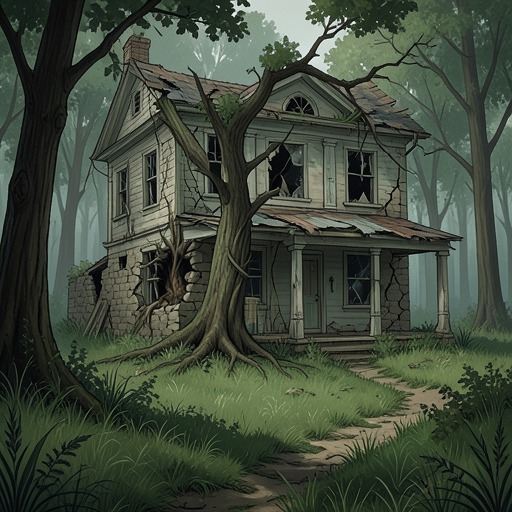
As reports of supernatural activity spread, Susan becomes involved in the investigation alongside Ben Mears and Mark Petrie. She and Mark enter the Marsten House while planning to kill Kurt Barlow. This action makes her a participant in the resistance rather than merely Ben’s endangered companion. The house is presented as a site of accumulated evil, and Susan’s decision to enter it places her directly across the threshold between the town’s ordinary life and its hidden history.
Her courage does not eliminate fear. When she recounts the encounter involving Matthew Burke, she describes his terror, his hearing someone upstairs, and the moment when he tried to revoke his invitation. She folds her hands tightly in her lap as though they might fly away. Susan therefore functions as both witness and interpreter: she helps transmit knowledge of the vampire rules while showing the bodily cost of knowing them. Her account makes the danger concrete through hesitation, incomplete understanding, and frightened restraint.
Capture, Transformation, and Death
Susan disappears after Kurt Barlow takes her at the house. Mark tells Ben that Susan is one of them and that Barlow got her at the house, while also reporting that he killed Straker, or believes he did. The revelation changes Susan’s role in the conflict. She is no longer simply a member of the human resistance; she has become evidence of Barlow’s ability to penetrate the group and convert someone emotionally central to Ben.
Her transformation is later represented through the distortion of her voice. A recording preserves the same cool, clear accents and faint Maine inflection, yet the sound is described as a travesty, a husk, and a bad imitation speaking in Susan’s voice. This contrast separates identity from appearance and speech. The vampire can reproduce recognizable surfaces while leaving behind something morally and spiritually counterfeit. Susan’s voice survives as an instrument of menace, but the person Ben loved does not.
The resistance eventually finds Susan in the Marsten House. She lies motionless in the center of a raised dais, illuminated by Jimmy Cody’s flashlight and covered from the shoulders to the feet in simple white linen. The others are struck silent by the sight. The scene combines bridal and funerary imagery, turning the object of Ben’s love into a ceremonial display within the enemy’s house. Susan’s body is not discovered in an ordinary room but staged at the center of the supernatural stronghold, where intimacy has been converted into spectacle.
Ben raises a hammer and brings it down, killing Susan in her transformed state. The act is both a necessary part of vampire destruction and a personal catastrophe. The later recollection that Susan is dead places her beside Matthew Burke and Miranda in Ben’s register of losses. Her death therefore does not close a single subplot; it becomes one of the wounds through which Ben continues to understand the cost of the outbreak.
Narrative Role and Significance
Susan’s arc tests the novel’s romance against its horror. Her courtship with Ben begins in meals, walks, clothing, art, and openly stated desire, while her end is marked by disappearance, counterfeit speech, white linen, and the hammer blow that ends her undead existence. The contrast is not simply between love and violence. It shows how the vampire crisis takes the forms of ordinary human attachment and turns them against the living.
She also embodies the novel’s recurring conflict between agency and contamination. Susan chooses Ben, earns money from her paintings, enters the Marsten House, and participates in the plan against Barlow. Her transformation does not erase the earlier evidence of independence; it makes the violation more severe because the enemy must overwrite a developed self rather than animate an empty role. The false Susan heard on the tape is consequently more frightening than a wholly unfamiliar monster: it is a recognizable identity emptied of its former personhood.
Susan’s fate finally gives Ben’s resistance its emotional center. Barlow’s attack on the town is experienced through missing residents and spreading vampirism, but Susan’s capture makes the invasion intimate and forces Ben to destroy what he loves. Her death confirms that the struggle cannot preserve the old social world unchanged. Even where the human side prevails against individual vampires, the relationships, memories, and futures that defined that world have already been damaged beyond recovery.