The Night of the Vampire Fall of Jerusalem’s Lot
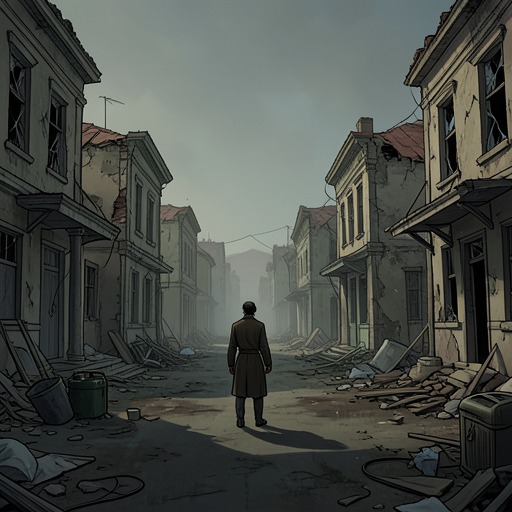
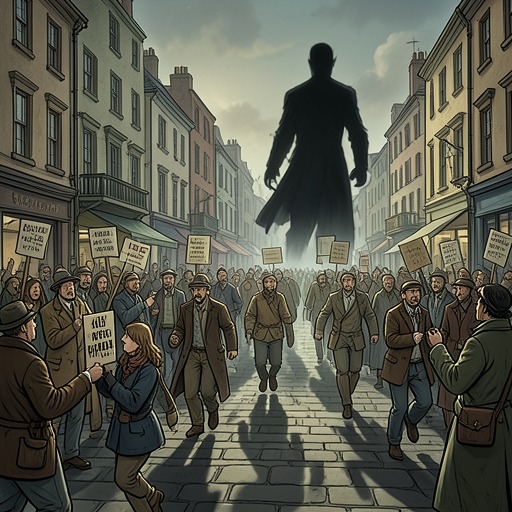
'Salem's Lot: A NovelThe Night of the Vampire Fall of Jerusalem’s Lot marks the town’s effective conquest by the vampire outbreak. It is not presented as a single public battle with a clearly announced victor. Instead, the fall occurs through a sequence of disappearances, feedings, transformations, and nightly returns, while daylight preserves the outward appearance of an ordinary New England community. By the time anyone could have named the catastrophe, Jerusalem’s Lot was already functioning as a dead town whose inhabitants did not know that they had been defeated.
Causes and Historical Ground
Jerusalem’s Lot is especially vulnerable because its history has trained its people to preserve secrets rather than confront them. The town was incorporated in 1765 and celebrated its bicentennial with fireworks and a pageant, yet its civic surface conceals older violence and inherited stories. The Marsten House remains the town’s principal remembered horror: the scandal surrounding Hubert Marsten and Birdie Marsten occurred before the living residents were born, but the community passes it down ceremonially, keeping the house present through collective memory even when exact knowledge has disappeared.
The town’s buried history reaches further back. A later account of Robert Boone’s coded diary dates the final entry to October 27, 1789, four days before the unexplained disappearance associated with the old settlement. That diary links Jerusalem’s Lot to James Boon, a religious fanatic who founded a sectarian community in 1710 and to the book kept in the desecrated church. The historical record is uncertain and partly mediated through documents, rumor, and retrospective interpretation, but the pattern is clear: the town’s supernatural crisis is layered over earlier forms of religious extremity, secrecy, and violence rather than arriving in an untouched social world.
The Town as a Vulnerable Space
The town’s geography gives the fall a concrete structure. Brock Street and Jointner Avenue cross at right angles through a nearly circular township, while the Royal River forms an eastern boundary. The wooded northwest quadrant rises toward the Marsten House; the northeast opens into river land and farms; the southeast contains Schoolyard Hill and prosperous agricultural property; and the southwest Bend is crowded with trailers, junked cars, improvised housing, children, pickup trucks, and bars. These are not merely scenic divisions. They map differences in wealth, mobility, visibility, and exposure, allowing the outbreak to move through homes, roads, fields, workplaces, and marginal districts without being recognized as one connected event.
The Bend produces much of the town’s scandal, while the telephone system’s two-, four-, and six-party lines ensure that everyone has someone to discuss. Gossip creates a dense social network, but it does not create reliable knowledge. Residents know fragments of old crimes, such as the story of Albie Crane’s wife, whose remains may still lie hidden in an abandoned well, and they know that Hubert Marsten killed his wife without knowing the circumstances that preceded the shooting. This distinction between knowing a story and knowing the truth becomes central to the vampire fall: Jerusalem’s Lot is observant, but its attention is dispersed among rumor, habit, and denial.
For that reason the town treats national crises as distant spectacles. War, political upheaval, drug use, alcoholism, and fatal automobile accidents reach the community mainly as televised or local incidents. Except for such disturbances, the town believes that nothing truly terrible can happen there. Its confidence in its own immunity becomes an instrument of the invasion. The town’s familiar roads and routines make the supernatural appear at first as illness, family trouble, truancy, or an isolated disappearance rather than as a coordinated occupation.
The Night’s Course
The decisive night follows the established rhythm of autumn darkness. An almanac records sunset on Sunday, October 5, 1975, at 7:02 p.m., sunrise the next morning at 6:49 a.m., and a total period of darkness lasting eleven hours and forty-seven minutes. The moon is new. The precise astronomical timetable gives the catastrophe an impersonal frame: the vampire night is measured like weather, while human beings remain unaware of what the darkness is permitting.
The fall is already visible on the morning of October 6, though no one recognizes it. No one declares Jerusalem’s Lot dead, and no one knows that it is dead. The bodies of the previous days have left the town with every outward semblance of life, and ordinary people continue toward work without understanding the night’s consequences. Ruthie Crockett disappears, but the disappearance goes unreported. Larry Crockett mistakes the absence of his daughter for a decision to attend school, feels weak and lightheaded, recoils from sunlight, and returns to bed without understanding that his own condition has changed.
The same pattern reaches the Griffen family. Charles Griffen assumes that two boys have run away, but Danny Glick has found and fed upon Jack Griffen. Jack has then gone to his brother Hal’s room, and both boys lie dead in the upper mow among loose hay, chaff, pollen, and mice. The domestic setting makes the violence more disturbing: the vampire invasion does not begin by destroying an abstract population, but by converting rooms, beds, barns, and family assumptions into parts of its feeding system.
Susan Norton’s visit to her mother demonstrates another stage of the process. Because Susan has been invited inside, she can now enter and leave as she pleases, and the visit becomes preparation for a renewed hunger that will return each night. Invitation is therefore not a minor supernatural technicality; it changes the spatial rules of the town. A private home, once a refuge governed by family boundaries, becomes accessible territory for the vampire presence.
Darkness and daylight divide the occupation into alternating phases. When light spreads over the land, evil things sleep, and Jerusalem’s Lot experiences a beautiful, crisp autumn day filled with sunshine. The town goes to work, still unaware of the night’s work, while the days shorten toward Halloween and winter. At night, however, the vampire’s time comes. The invasion therefore hides inside the ordinary calendar: every sunrise seems to restore life, but each sunset reopens the channels through which the town is emptied and remade.
Collective Response and Aftermath
Those who remain awake during the crisis do not understand its cause, yet they behave as if some buried knowledge has reached the body before the mind. Houses are fully lit, particularly in the graveyard of morning, while people search bureau drawers, attic boxes, and bedroom collections for religious symbols. They move from room to room slowly and avoid their windows. The most striking fact is not simply that they turn on every light, but that they do not look outside. Their instinctive use of religious objects suggests a residual defensive tradition, while their refusal to see reveals how thoroughly fear and supernatural pressure have disrupted ordinary perception.
The town’s response is thus both ritualized and incomplete. Its people reach for symbols without possessing a shared explanation, and private defensive acts replace public recognition. No civic announcement, official investigation, or communal declaration gathers these fragments into a coherent account. The same community that has preserved old scandals for generations cannot interpret the immediate catastrophe because its habits of secrecy have made collective knowledge unreliable.
The fall also exposes the limits of ordinary explanations. Illness, anemia, heart trouble, truancy, family conflict, and unexplained absence can each describe one symptom, but none accounts for the pattern. Earlier disappearances reinforce that failure. Between 1928 and 1939, four children vanished from the area; none was ever found, and the uncertainty surrounding those cases becomes retrospectively ominous when set beside the Marsten House’s eleven-year residence in the town. The later outbreak does not erase this history. It makes the old gaps in the record look like earlier manifestations of the same concealed violence.
Narrative and Thematic Significance
The event transforms Jerusalem’s Lot from a mapped community into an organism of mutual exposure. The roads connect neighborhoods, the telephone lines circulate scandal, the cemetery preserves inherited memory, and the Marsten House stands on the wooded high ground as a concentrated emblem of the town’s accumulated evil. When vampires occupy the town, these existing connections become channels of spread. Geography is rewritten by predation: the home becomes penetrable, the family becomes a site of transmission, the night becomes an operating schedule, and the familiar town becomes complicit in its own concealment.
The event’s deepest irony is that the town’s death is socially invisible. The morning remains bright, jobs continue, cars pass through, and an outsider might see only scattered illuminated houses and assume a fire or accident before driving on. The appearance of normality is not a temporary disguise placed over an otherwise healthy community; it is the final form of the occupation. Jerusalem’s Lot has fallen precisely because its routines continue after the people inhabiting them have ceased to understand what they are.
The vampire fall also completes the book’s contrast between historical memory and living knowledge. Residents remember that the Marsten House is creepy, remember that Hubert Marsten murdered Birdie, and inherit fragments of the 1789 mystery, yet the decisive truth repeatedly exceeds what the town can say. Its history is full of events that were half-recorded, misremembered, or explained away. The outbreak makes that condition fatal. What once functioned as small-town folklore becomes a defense failure, allowing evil to recur inside the very structures that were supposed to preserve communal identity.