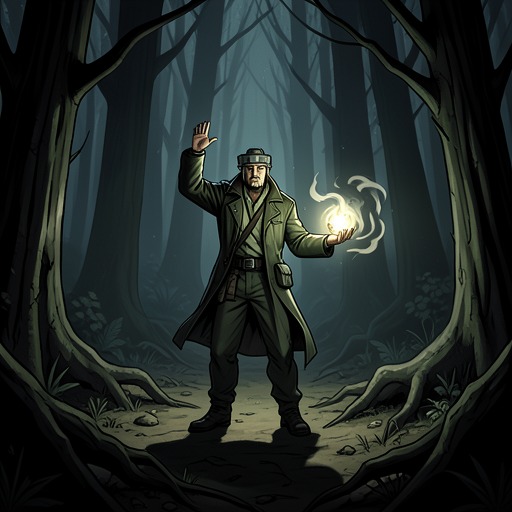
Vampire weaknesses
'Salem's Lot: A NovelVampire weaknesses form the novel’s practical supernatural system: the undead are not invulnerable, but can be stopped by sunlight, holy artifacts, or a stake through the heart. The rules are first articulated as old legend and then tested through increasingly direct encounters with Danny Glick, Mike Ryerson, and Barlow. Their importance lies not merely in explaining how vampires die, but in converting fear into action: the living must identify the danger, select the proper ritual or weapon, and accept the risk of confronting a creature that still appears vividly alive.
Definition and Sources
The rules are presented through Matthew Burke’s attempt to interpret the evidence surrounding Danny Glick. He identifies three traditional remedies—sunlight, holy artifacts, and a stake through the heart—and adds that other religious traditions might provide equivalent protection. His reasoning remains tentative because the town has not yet openly acknowledged vampirism, but the possibilities are concrete enough to direct the investigation. The proposed remedies also establish an important distinction between ordinary violence and supernatural destruction: the body may look alive, yet it must be attacked through a specific weakness.
The novel repeatedly connects these weaknesses to ritual. A consecrated place is associated with a dark figure’s appeal to the “Lord of Flies,” while Father Callahan’s faith gives a crucifix active power against the evil concentrated in the Marsten House. Jimmy Cody’s instruction to Ben Mears to bless an improvised cross makes the principle explicit: the object is assembled from tongue depressors and Red Cross tape, but its effectiveness depends on the act of blessing rather than on craftsmanship. In this system, religious faith is not decorative symbolism; it is part of the mechanism by which resistance becomes possible.
Sunlight
Sunlight is the most visibly decisive weakness because it strips away the vampire’s false appearance of health. When Ben Mears and Mark Petrie expose Barlow’s coffin, Barlow initially appears to be a young man with vibrant black hair, ruddy cheeks, glowing skin, and teeth that seem almost aggressively alive. The scene therefore begins by presenting undeath as counterfeit vitality rather than decay. The light reverses that illusion at once: Barlow’s eyes open, his chest draws in air, and his body convulses as though the life displayed in the coffin were being violently withdrawn.
The destruction proceeds as a rapid dissolution rather than a conventional death. The skin yellows, roughens, blisters, and cracks; the eyes cloud and sink; the hair turns white and falls; the flesh shrivels until only bones remain. Even the clothing loses its human support, collapsing around a body that has become a skeleton. The transformation ends the vampire’s ability to imitate ordinary life and makes visible the corpse that had been concealed beneath its apparent youth. Sunlight thus functions both as weapon and revelation: it destroys Barlow while exposing the fraud of his living appearance.
The Stake Through the Heart
The stake is a physical counterpart to sunlight, requiring close contact and deliberate force. When Jimmy Cody examines Randy McDougall, he finds no heartbeat, yet the child’s body still twists, gnashes at the air, and moves with predatory intent. The absence of a heartbeat supplies medical evidence of death; the continuing motion supplies evidence that death has not ended the threat. Jimmy brings the stake down in the name of God, and the body jerks, opens its eyes, and then settles into stillness.
The result confirms that staking is not simply an act of bodily injury. After the blow, the remains rapidly revert toward the condition of a dead child: the cheeks sag, the eyes fall inward, and the body swells with the physical consequences of having been dead for a week without embalming. The procedure removes the animating force that had made the corpse dangerous. Its ritual wording and its exact placement therefore work together, joining medical observation, violence, and religious authority in a single act of eradication.
Holy Artifacts and the Work of Faith
Holy artifacts operate through a different kind of force from sunlight or the stake. Their power is neither merely physical nor automatic; it depends on religious conviction and on the person who invokes it. Jimmy Cody’s improvised cross makes this limitation visible. He constructs it from two tongue depressors bound at right angles with Red Cross tape, then asks Ben Mears to bless it. When Ben protests that he does not know how, Jimmy tells him to make it up, placing the burden on the writer to become, in effect, a metaphysician. The scene treats belief as an urgent practical decision rather than as settled institutional knowledge: the cross is crude, but the act of consecration may make it effective.
Father Callahan demonstrates the more forceful version of the same principle at the Marsten House. As the group approaches, he feels an old eagerness seize him, and the house seems to exude evil through its cracked paint. He is not calmly applying a procedure; he is being driven toward a confrontation in which religious authority must become physical action. Invoking God the Father, he commands the evil to leave and strikes the door with his crucifix. The result is material and violent: light flashes, ozone fills the air, the fanlight explodes, the bay window sheds its glass, and the new Yale lock is welded into an unrecognizable mass. The episode establishes that faith can breach the vampire’s defended space, but it also shows that holy protection is enacted through courage, ritual speech, and direct contact with evil rather than possessed as a passive charm.
Rules in Practice and Narrative Consequences
The vampire weaknesses become fully meaningful only when the characters move from speculation to repeated application. Matthew Burke’s formulation gives the group a working theory, but the later encounters turn that theory into a sequence of tests: a corpse that moves despite having no heartbeat, a coffin whose seals split when Ben Mears and Mark Petrie touch them together, and a seemingly living body that sunlight reduces to dust. Each test narrows the distance between folklore and observable fact. The rules therefore function as an investigative method, allowing the living to distinguish vampiric animation from ordinary illness, grief, or fraud, and to choose an appropriate response before the danger spreads further.
The system also imposes limits on courage. Sunlight destroys Barlow, but only after Ben Mears and Mark Petrie locate and open his coffin; the stake requires Jimmy Cody to approach Randy McDougall’s convulsing body and strike with enough force to end its movement; and the crucifix becomes effective only when Father Callahan carries it toward the Marsten House despite the evil pressing outward from the building. These actions convert the supernatural conflict into embodied risk. A weakness is useful only if someone is willing to stand close enough to exploit it.
The rules create a sustained contrast between appearance and condition. Danny Glick’s coffin contains a face that seems vividly alive, while Randy McDougall’s body continues to writhe although medical examination finds no heartbeat. Barlow’s youthful skin, ruddy cheeks, lustrous hair, and strong teeth conceal the corpse beneath the illusion. The established weaknesses break that illusion in different ways: the stake stills the animated body, holy power repels or damages the evil defending its territory, and sunlight forces the counterfeit life to collapse into bodily dissolution. What looks like vitality is thus revealed as a temporary mask maintained by the undead state.
Their ritual dimension prevents the rules from becoming ordinary technical instructions. The cemetery scene places sacrifice and consecration beside the language of the “Lord of Flies,” while the improvised cross and Father Callahan’s crucifix oppose that corrupted invocation with competing sacred authority. Jimmy Cody’s demand that Ben Mears bless the crude wooden emblem is especially important because it shifts the burden from the object’s material quality to the actor’s faith and intention. The novel’s supernatural logic consequently treats belief as an active force: holy artifacts can be fashioned, carried, and wielded, but their authority must be enacted by human beings.
The vampire weaknesses also determine the novel’s value structure. The undead possess apparent strength, mobility, and the power to corrupt the living, yet their existence is bounded by precise vulnerabilities. The living, by contrast, are physically fragile and often uncertain, but they can recover agency through knowledge, collective action, and ritual commitment. That reversal makes the rules more than background lore. They provide the practical grammar of resistance, turning terror into a sequence of choices in which recognition must become preparation, preparation must become confrontation, and confrontation must be completed by an act capable of ending undeath rather than merely injuring a body.
Narrative Function and Limits
The rules also impose a discipline on the novel’s supernatural imagination. They do not make the undead easy to defeat; instead, they make defeat intelligible only after the living accept that ordinary categories have failed. Matthew Burke’s interpretation begins with uncertainty, but the evidence gradually converts inherited legend into a usable body of knowledge: the open eyes and apparent vitality in Danny Glick’s coffin, the lack of a heartbeat in Randy McDougall, the seals that split when Ben Mears and Mark Petrie approach Barlow together, and Barlow’s final dissolution under sunlight all establish that the same threat can require different forms of recognition and response. The weaknesses therefore organize the movement from denial to resistance. They also preserve moral and physical stakes, since every remedy demands proximity, preparation, or faith, and none allows the living to remain passive observers. In that sense, Vampire weaknesses are the novel’s practical grammar of hope: evil may be powerful, recurrent, and capable of disguising itself as life, but it is not without limits, and those limits become effective only when human beings learn them and act upon them.