
Jack Reed’s Revolutionary Commitment
1919This flow traces Jack Reed’s movement from privileged literary playboy to committed revolutionary journalist and early martyr.
increasing Bearing strength in each event
 decreasing
Bearing strength in each eventdecreasingThe Harvard Playboy

The Harvard Playboy
Privilege and appetite
Jack Reed arrives at Harvard from a prominent family and embraces books, sport, social life, and writing with equal energy.
A widening conscience
His comfort does not prevent him from noticing working people’s hardship. The tension between inherited privilege and observed injustice becomes the beginning of his political transformation.
The Paterson Strike
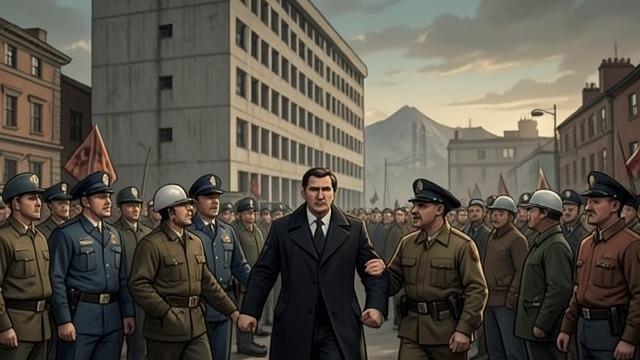
The Paterson Strike
Reporting becomes participation
Jack Reed goes to Paterson to cover a textile strike but is arrested alongside the workers. He refuses to let an editor simply bail him out.
A principle made concrete
He learns through imprisonment and the strike pageant that journalism can expose conflict, but also that witnessing can draw a reporter into the struggle being described.
Mexico and the Front

Mexico and the Front
Learning to report
Jack Reed travels to Mexico to write about Pancho Villa and encounters a revolution rooted in land, water, and schooling.
War destroys distance
As a correspondent in Europe, he reports from the German front and other battle zones. His work resists the safe abstractions of patriotic journalism even as the conflict escalates.
Witness at Petrograd

Witness at Petrograd
A decisive political turn
Jack Reed witnesses the revolution in Petrograd and writes Ten Days That Shook the World. The experience replaces adventurous reporting with a sense of historical participation.
Commitment beyond observation
He works for the new workers’ government, accepting danger and exhaustion as part of the revolutionary project. His identity shifts from journalist to political actor.
Death in Moscow
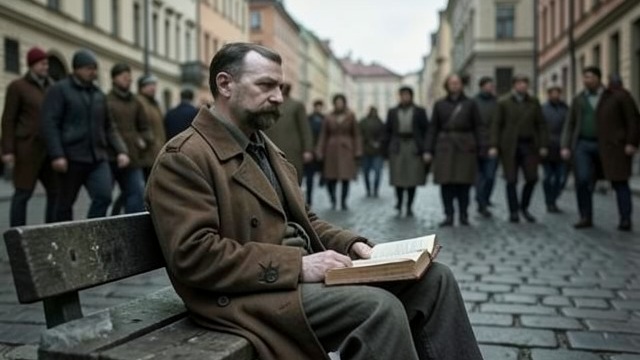
Death in Moscow
Work to the end
Jack Reed undertakes missions and works until illness overtakes him. He dies in Moscow before seeing the outcome of the revolution he embraced.
A political afterlife
His death makes his life a symbol of commitment, while the novel’s account preserves the cost of turning belief into total service.
Before Jack Reed’s reporting career
In 1913
After the Paterson reporting
During the October Revolution
After the October Revolution
