
Woodrow Wilson’s Idealism and Defeat
1919This flow tracks Woodrow Wilson’s ascent as a reformer, wartime transformation, and diminished authority at the peace settlement.
increasing Bearing strength in each event
 decreasing
Bearing strength in each eventdecreasingA Politician of Words
A Politician of Words
Formation in language
Woodrow Wilson grows up in a religious household and builds a career as a scholar, teacher, and persuasive public speaker.
Reform as authority
His mastery of political language helps him present himself as a guide to the common good. The novel emphasizes the distance between that public ideal and the interests that surround him.
The New Freedom
The New Freedom
A reforming promise
Woodrow Wilson campaigns against privilege and speaks of democratic renewal. Progressive language makes him attractive to voters dissatisfied with established power.
Compromise beneath reform
His administration also acts in ways that complicate its public promises, including intervention abroad. The contradiction foreshadows a broader split between moral rhetoric and state practice.
From Neutrality to War
From Neutrality to War
A reversal of posture
Woodrow Wilson moves from neutrality and reelection assurances to American entry into the war. The language of restraint gives way to demands for force and national mobilization.
The state expands
War administration brings corporate managers into government and turns dissent into a threat. Wilson’s leadership becomes inseparable from the machinery he once seemed poised to reform.
The Paris Bargaining Rooms
The Paris Bargaining Rooms
Public principles, private bargaining
Woodrow Wilson arrives in Europe identified with peace and self-determination, but the negotiations shift from broad public forums into smaller councils dominated by powerful leaders.
Ideals narrowed
As decisions are made over territory, mandates, and resources, Wilson’s principles are compromised. The Treaty of Versailles embodies an outcome far less ideal than the hopes he helped create.
Stroke and Political Decline
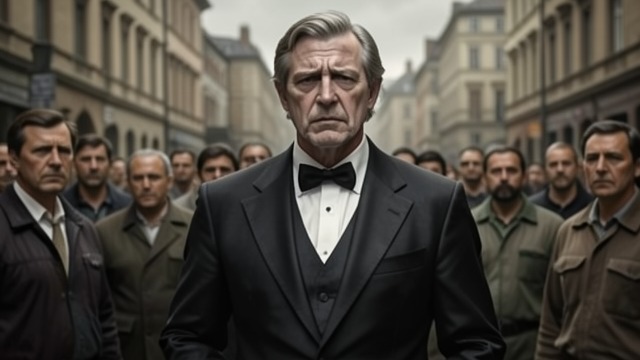
Stroke and Political Decline
A final appeal
Woodrow Wilson tours the country to defend the League of Nations and his account of the peace. His speeches reveal a leader trying to preserve faith in his own words.
A broken body
He suffers a stroke and loses the capacity to continue the campaign. His decline parallels the failure of his political project to command the institutions and public forces it sought to guide.
Before his presidential campaigns
During Wilson’s rise to the presidency
In 1917
Early 1919 at the peace conference
During Wilson’s 1919 speaking tour
