
The Camera Eye and Private Memory
1919This flow follows the Camera Eye’s shifts between personal sensation, war experience, and the effort to hold memory against public history.
increasing Bearing strength in each event
 decreasing
Bearing strength in each eventdecreasingGrief in Spring

Grief in Spring
Private loss enters the book
The Camera Eye recalls a death through telegrams, train sounds, flowers, and travel between places. Memory arrives as sensation rather than a fully explained biography.
A counterpoint to reportage
The fragment places personal grief beside Joe Williams’s practical attempts to escape service. It establishes an intimate register that public headlines cannot contain.
A Soldier’s Skull
A Soldier’s Skull
Bodily knowledge
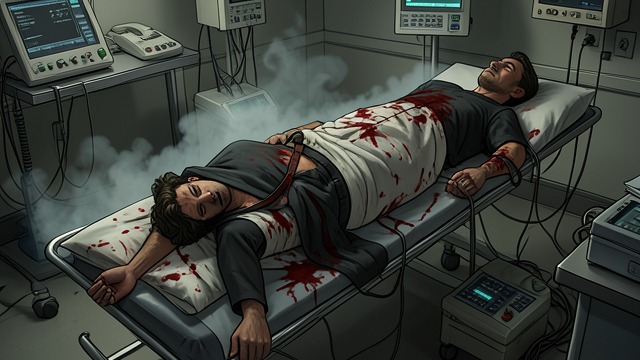
The Camera Eye remembers wounded men, shattered flesh, and the smells of gas and explosives. The war enters consciousness as immediate physical damage.
Ideas tested by suffering
Arguments about liberty and democracy become difficult to sustain beside the wounded. The fragment’s sensory intensity challenges the abstractions used to justify the war.
Crossing Back to Civilian Life
Crossing Back to Civilian Life
A private escape
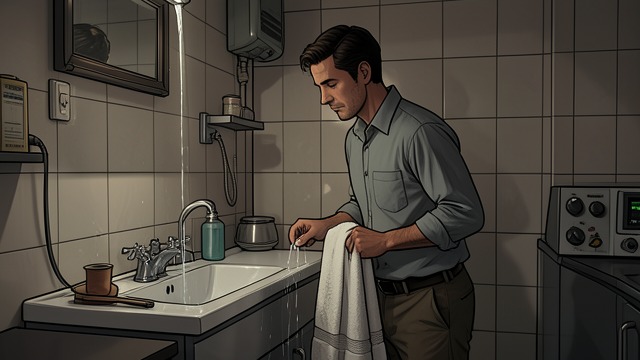
The narrator recalls going absent without leave, changing a movement order, and finally bathing out of uniform.
Identity in transition
The act of becoming an anonymous civilian is both relief and evasion. The body leaves military clothing behind, but the war’s habits and memories remain.
A General Strike in Paris
A General Strike in Paris
Witness among the crowd
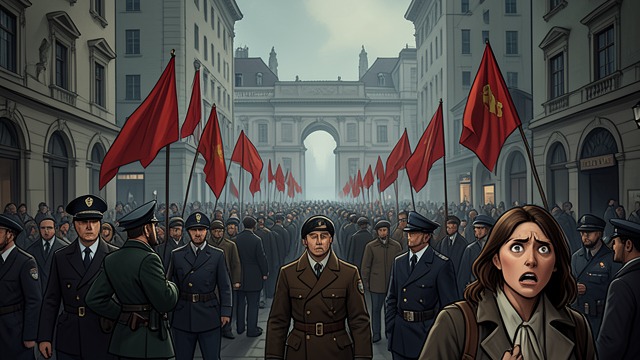
The Camera Eye records street demonstrations, red flags, frightened bystanders, and police violence as the strike spreads through Paris.
History at street level
The first-person witness moves with the crowd rather than observing from a secure distance. Private memory and political conflict merge in an account of danger and uncertainty.
A World of Scrap
A World of Scrap
The residue of war
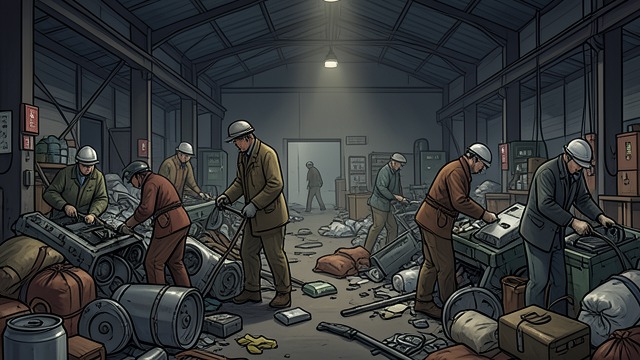
The Camera Eye describes soldiers and casual workers sorting damaged equipment, lost records, and discarded supplies after the fighting has ended.
No clear homecoming
The work continues without a clear path home. The fragment closes on material waste and institutional confusion, questioning what victory has delivered to ordinary men.
In an early Camera Eye passage
During the ambulance service in France
After the narrator’s wartime service
During the 1919 Paris general strike
During postwar demobilization
