
The Meaning of Patriotism
1919This flow follows the transformation of patriotism from a promise of democratic solidarity into a tool for defining and policing dissent.
increasing Bearing strength in each event
 decreasing
Bearing strength in each eventdecreasingThe Neutral Citizen
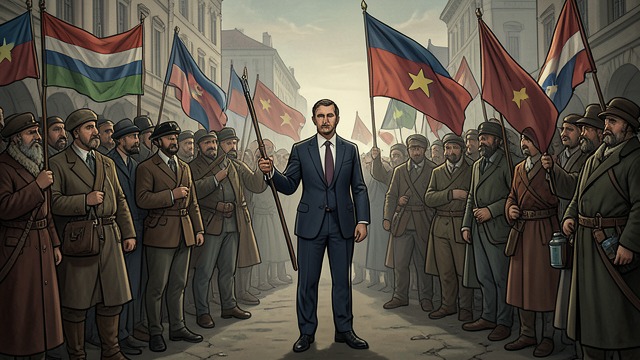
The Neutral Citizen
A promise of restraint
Public figures present neutrality as a principled alternative to European conflict. Americans can imagine that citizenship includes the right to judge whether war is necessary.
The pressure of identity
As propaganda intensifies, neutrality is increasingly cast as weakness or disloyalty. The novel introduces patriotism as a claim that can be used to narrow legitimate opinion.
The Hundred-Percent Test
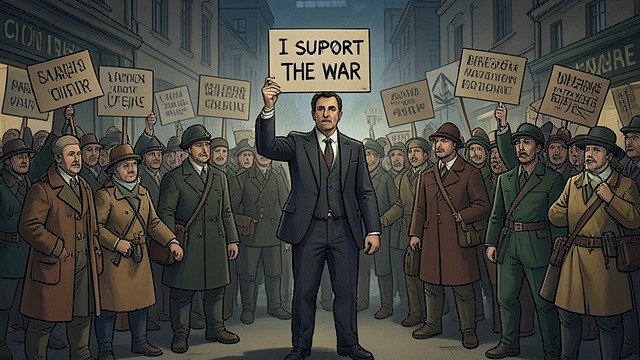
The Hundred-Percent Test
Loyalty measured publicly
The press, employers, and officials demand visible support for the war. Bonds, enlistment, and patriotic speech become measures of acceptable citizenship.
Dissent recoded
Those who refuse are labeled slackers, pro-German, or traitorous, regardless of their reasons. Belonging becomes conditional on obedience.
The Parade and the Protester
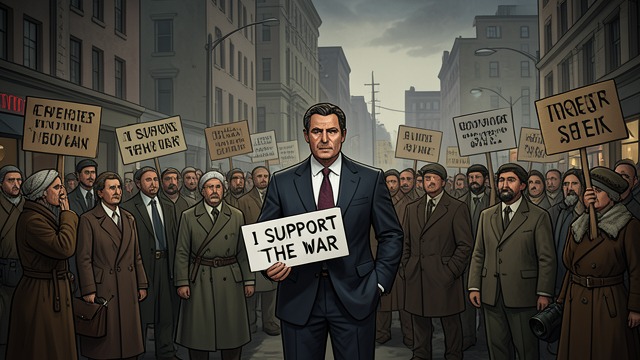
The Parade and the Protester
Victory in public
Military parades and celebrations invite citizens to identify with victory and the state. The spectacle makes dissent appear out of place.
A competing public
Workers and radicals continue to organize, often facing police violence and surveillance. The public sphere becomes a struggle over which voices count as patriotic.
The Arrested Organizer
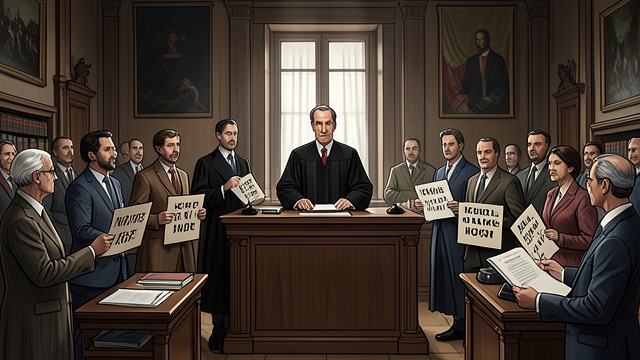
The Arrested Organizer
Speech treated as danger
Ben Compton’s political address is prosecuted in a climate that treats revolutionary speech as a threat to national security.
Legal conformity
The courtroom turns patriotism into a standard against which dissent is punished. His sentence shows how civic language can coexist with the removal of political rights.
The Unknown Soldier’s Flag

The Unknown Soldier’s Flag
A unified symbol
The flag and ceremonial honors present the Unknown Soldier as proof of national unity and sacrifice.
An unsettled meaning
The novel’s account of anonymous workers and soldiers complicates the ceremony. Patriotism can honor sacrifice, but it can also conceal who ordered the sacrifice and who benefited.
Before American entry into the war
After the United States enters the war
During postwar demonstrations
During Ben Compton’s postwar trial
At the burial ceremony in Arlington
