
The Labouring Body at War
1919This flow connects the physical toll of war to the exploitation and vulnerability of the workers who sustain it.
increasing Bearing strength in each event
 decreasing
Bearing strength in each eventdecreasingThe Forecastle
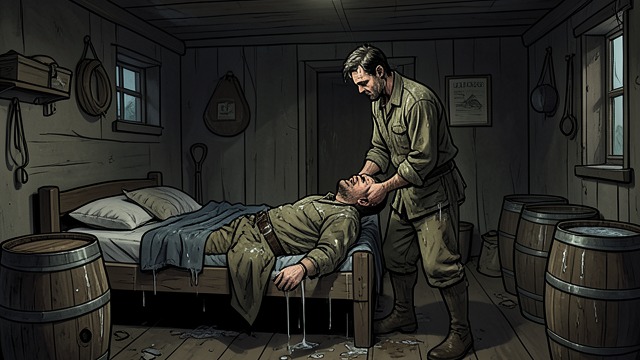
The Forecastle
Work in cramped conditions
Joe Williams shares filthy sleeping quarters and exhausting labor with sailors whose wages and comfort are controlled by ship officers.
The working body
The body absorbs the cost of maritime commerce through fatigue, illness, and exposure. The ship’s hierarchy remains visible in who gives orders and who bears the discomfort.
The Ambulance Load
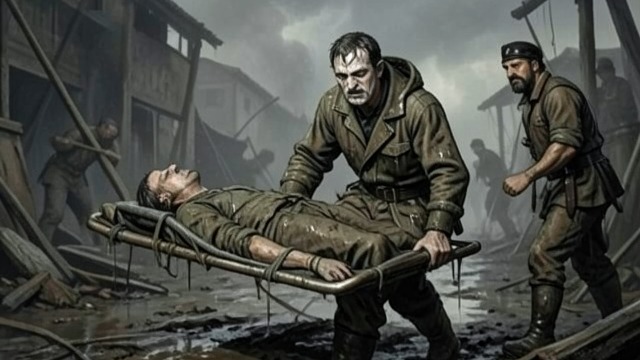
The Ambulance Load
Repeated exposure
Richard Ellsworth Savage and other drivers carry wounded men toward medical stations, sometimes returning with men who have died on the journey.
A human cost without glamour
The work counters heroic war narratives with repetitive care and bodily damage. Service provides no reliable moral distance from violence.
The Draft Inspection
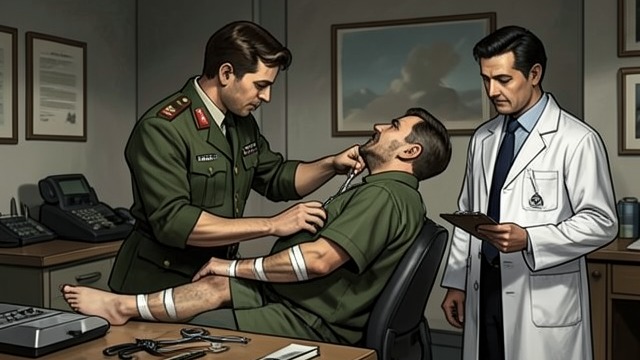
The Draft Inspection
The body examined
The novel describes soldiers subjected to intimate medical inspections, measurements, and classification before receiving uniforms and numbers.
Person becomes equipment
This process turns the individual body into a military resource. The examination scenes echo the wider treatment of workers as units of labor and soldiers as units of force.
The Casuals’ Scrap Work
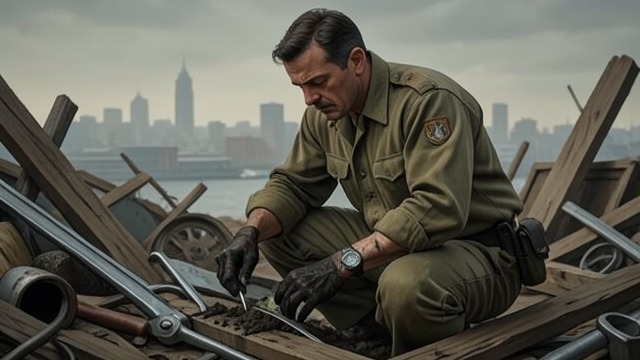
The Casuals’ Scrap Work
Labor after victory
Men who cannot easily return home sort heaps of damaged equipment and waste. Their days remain physically demanding after the war has supposedly ended.
No meaningful reward
The men lack records and clear destinations. Their bodies are still useful to the institution, even as the institution loses track of their identities.
The Timber Worker
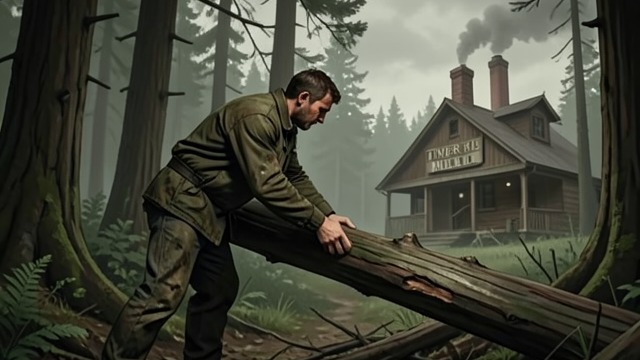
The Timber Worker
Work beneath the forest empire
Loggers labor in wet, cold conditions for owners who control the region’s timber and employment.
A struggle for dignity
Organizing demands decent food, housing, wages, and hours. The worker’s body becomes the ground on which corporate profit and industrial democracy conflict.
During Joe Williams’s early merchant voyages
During the fighting near the front
During wartime military processing
During postwar military demobilization
During postwar labor conflict in the Pacific Northwest
