
A Sailor’s Encounters with Race and Empire
1919This flow traces how Joe Williams’s maritime travels expose racial hierarchy and the imperial assumptions of the men who profit from it.
increasing Bearing strength in each event
 decreasing
Bearing strength in each eventdecreasingThe Trinidad Invitation
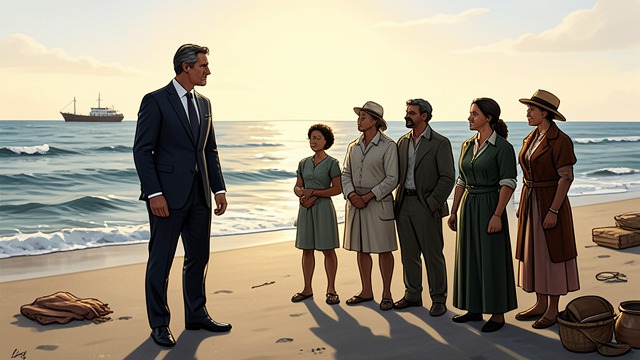
The Trinidad Invitation
A tourist’s contempt
Joe Williams meets an American traveler who speaks warmly of adventure while expressing racist contempt for local people. Joe does not fully challenge the man, but recognizes the ugliness of his assumptions.
Class and racial privilege
The scene shows an American tourist able to treat the island as a spectacle, while Joe’s own life is defined by low-paid labor and dependence on shipboard authority.
The Banana Wharf
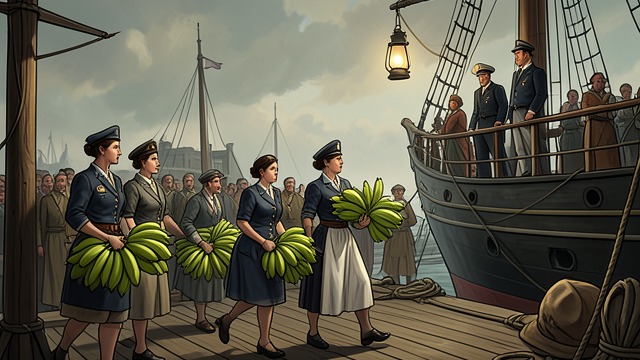
The Banana Wharf
Labor under spectacle
Joe Williams watches women carry banana bunches onto a ship while the crew treats their bodies as entertainment. The loading scene links commodity trade to gendered and racialized labor.
Unequal exchange
The cargo moves efficiently while workers remain poor and exposed. The sailors’ gaze reproduces a hierarchy that turns laboring people into scenery.
The United Fruit Monopoly
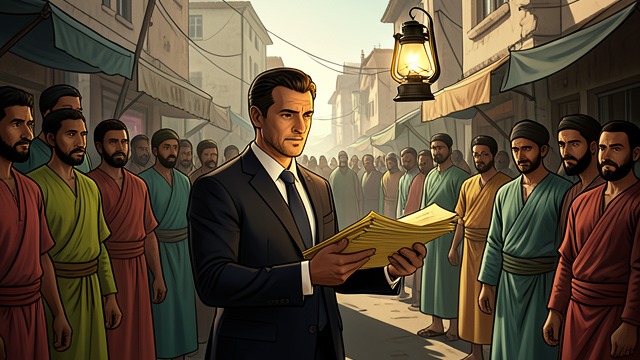
The United Fruit Monopoly
A critique from an American expatriate
Joe Williams and a shipmate meet a man who condemns the company that controls the fruit trade. He describes a monopoly that can dictate prices and leave local produce to rot.
Commerce as coercion
The encounter suggests that imperial power operates through ownership and access to markets, not only through soldiers or officials.
The Port Dispute
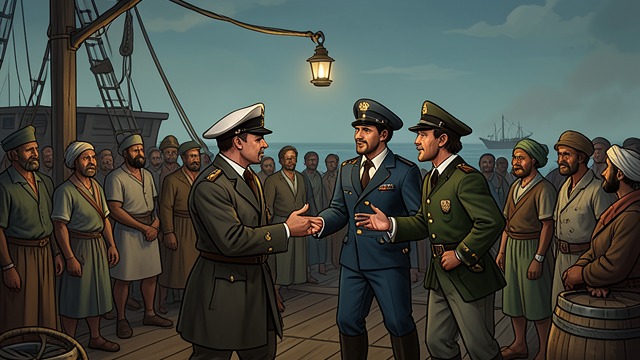
The Port Dispute
Sailors and local authority
Joe Williams and another sailor resent delays and quarrel with local people over shore access and trade. Their irritation reflects assumptions that the port should serve the ship’s convenience.
A narrow perspective
The sailors’ freedom to move through the port depends on local workers and authorities they dismiss. Their complaints reveal how imperial attitudes persist in ordinary encounters.
A Fire Seen from the Harbor
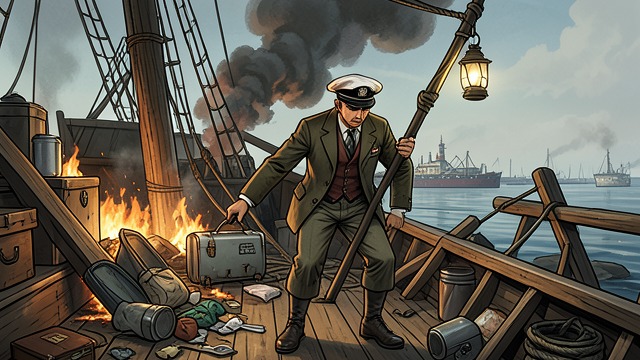
A Fire Seen from the Harbor
War commerce in view
Joe Williams boards an abandoned Standard Oil tanker burning outside the harbor and takes useful goods from it. The spectacle makes the scale and danger of commercial shipping visible.
An ordinary scavenger
He regards the burning ship as an opportunity, not a symbol. That practical response connects imperial commerce to the everyday survival strategies of sailors.
During Joe Williams’s first voyage through Trinidad
During Joe Williams’s voyage through the Caribbean
During Joe Williams’s voyage on the Callao
During a stop at Roseau
During Joe Williams’s arrival in Genoa
