
Paul Bunyan and the Timber Workers
1919This flow follows the symbolic Paul Bunyan from an exploited logger to a figure in the confrontation over industrial democracy.
increasing Bearing strength in each event
 decreasing
Bearing strength in each eventdecreasingThe Forest Empire
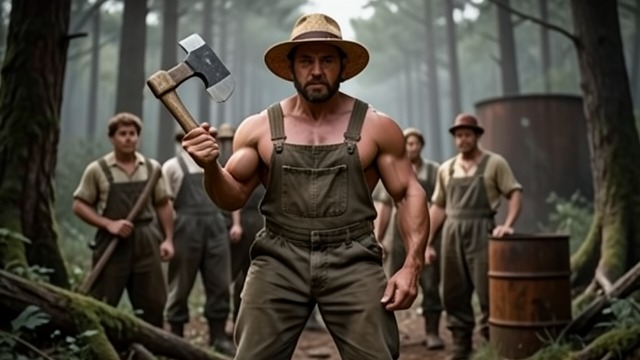
The Forest Empire
Concentrated ownership
A handful of interests control enormous quantities of timber in the Pacific Northwest. The resource’s scale contrasts with the insecure lives of the workers who harvest it.
The worker as folk figure
Paul Bunyan represents the lumberjack whose labor is immense but whose share of the wealth is small. The legend becomes a way to narrate class relations.
The I.W.W. Organizes
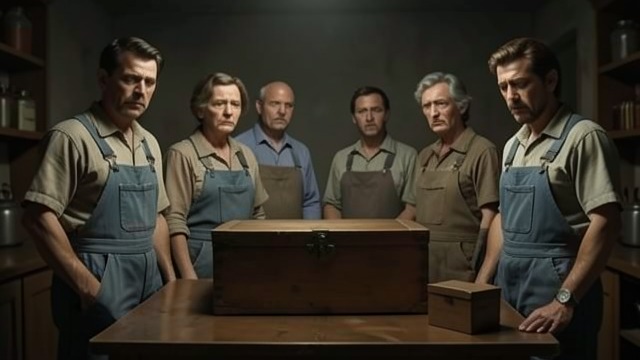
The I.W.W. Organizes
Demands for dignity
Organizers demand decent pay, clean bunkhouses, adequate food, and an eight-hour day. They imagine workers controlling the industries that depend on them.
A challenge to ownership
The demands threaten not only wages but the authority of timber owners. The conflict turns practical living conditions into a struggle over who should govern production.
The 1918 Hall Raid
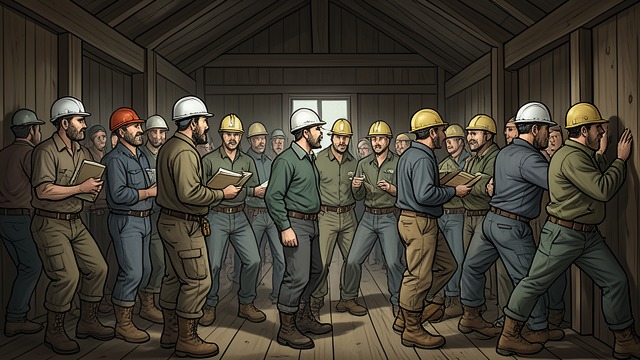
The 1918 Hall Raid
Violence against organizers
Patriotic groups raid an I.W.W. hall, attack workers, and destroy radical materials. Officials and business interests present the assault as defense of the community.
A recurring warning
The raid demonstrates that the workers’ organizational space can be destroyed without resolving their complaints. The union nevertheless continues to grow.
The Armistice Day Attack
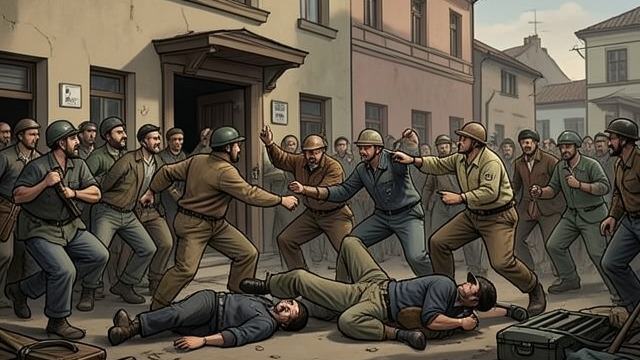
The Armistice Day Attack
A renewed confrontation
The celebration of the armistice becomes the setting for a raid on the union hall. Wesley Everest and other workers defend themselves as the attack unfolds.
Patriotic power turns coercive
The clash exposes the tension between public celebration and the suppression of labor. The end of the war has not ended political violence.
The Legend’s Bitter End
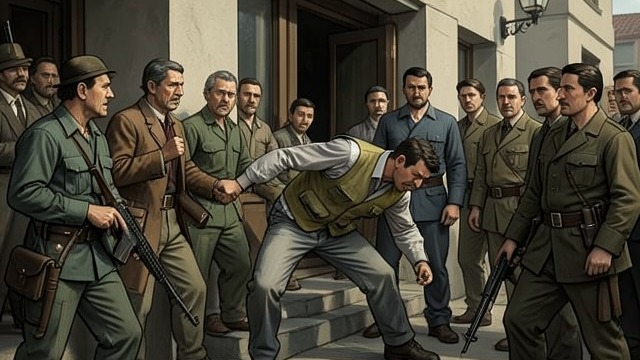
The Legend’s Bitter End
A worker’s martyrdom
Wesley Everest is murdered by a mob, while other loggers are imprisoned. Official accounts attempt to conceal the violence.
Folk hero, real victims
Paul Bunyan’s symbolic world is no longer a story of harmless strength. It is tied to actual workers whose courage cannot protect them from organized power.
Before the labor confrontations of 1918
During labor organizing in the logging camps
On Memorial Day 1918
On Armistice Day 1919
After the Centralia killings
