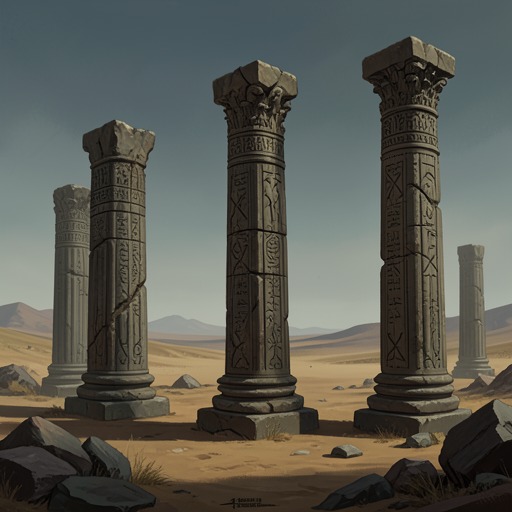
Agartha is plundered by surface powers and seals its gates
5 Centimeters per SecondAgartha’s plunder by surface powers and the later sealing of its gates explain why a visit from the surface is treated as a threat rather than a welcome. The elder recounts that centuries of extraction and war devastated Agartha, leaving only a handful of villages; the Clavis-sealed doors were a defensive answer to that history.
Historical Background
As the elder leads Morisaki and Asuna through the village, he warns that visits from Topsiders are considered a bad omen. He traces that distrust to a long period in which the emperors and kings of the surface repeatedly entered Agartha to take its wealth and techniques. Their incursions continued for several centuries, making the relationship not a single episode of contact but a prolonged pattern of exploitation.
Plunder and Ruin
The surface rulers sought Agartha’s knowledge and riches to strengthen their control over the surface. In return, the elder says, they brought one war after another. The consequence was the destruction of Agartha’s cities, which had once surpassed any on the surface in magnificence. Its population dwindled until only a few villages remained, turning a flourishing civilization into an isolated remnant.
Sealed Gates and Their Legacy
In response to the devastation, the Agarthans used the Clavis to close and lock the doors so that Topsiders could no longer enter. The sealing is presented as a protective measure born of accumulated harm: the gates preserve separation because earlier contact brought seizure, conflict, and ruin. The elder’s account therefore gives the present-day suspicion of surface visitors a historical basis, while showing that Agartha’s isolation was not simply a custom but a defense shaped by its past.