Agartha’s two-thousand-year decline
5 Centimeters per SecondAgartha’s two-thousand-year decline is framed as both a long aftermath of lost prosperity and a continuing danger: the people hope to dissolve into Astral, yet fear that reopening the gate would expose them to another Topsider invasion. The decline is not only a fading of former greatness; it has left Agartha vulnerable and shaped the obligations inherited by the living.
Prosperity and the Long Twilight
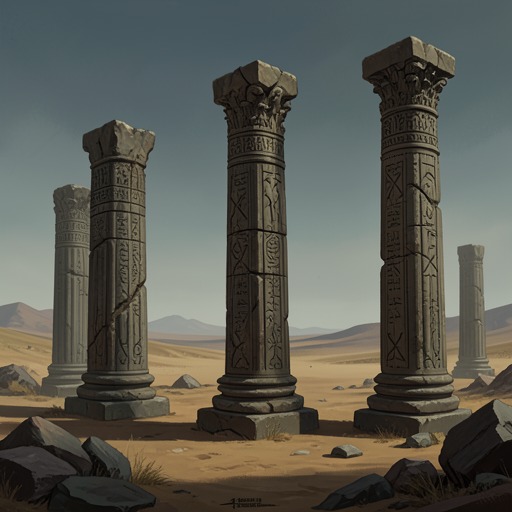
The matriarch describes Agartha’s former prosperity as a distant memory and its present as a long twilight. This image makes decline feel less like a single catastrophe than an extended condition, one in which the people live with the absence of what they once possessed. Their stated desire is to dissolve into Astral, understood as the endpoint of all life. That aspiration exists alongside a practical fear: if the gate opens, Topsiders will flood into Agartha again and destroy its peace.
Invasion and Vulnerability
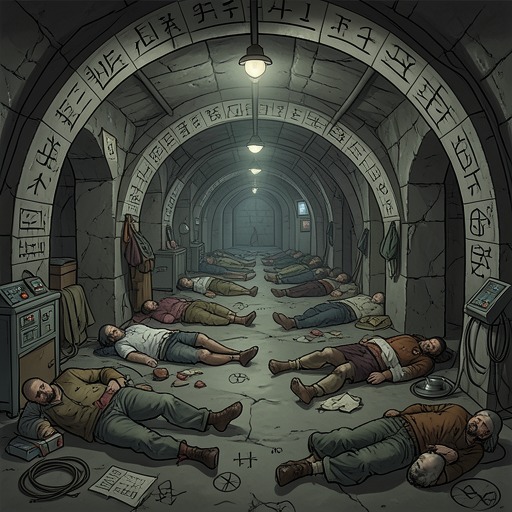
The fear of renewed invasion rests on bitter history. Agartha’s people lack the military strength to defend themselves against the surface powers and have relied instead on wisdom. They have been shot, murdered, and robbed; what they lost is described as rarer than military might, though its nature is not specified. The contrast makes the decline more than a loss of military capacity: it includes the destruction or taking of something precious, while leaving the survivors with few means of preventing a repetition.
The gate therefore stands at the boundary between the wish to reach an ending in Astral and the danger of renewed violence. Opening it would not simply permit passage; in the matriarch’s account, it would bring the Topsiders back in force and imperil the peace Agartha still has. The long twilight persists under this double pressure: the old prosperity is gone, but the threat associated with its loss remains consequential.
An Inherited Burden
The decline also reaches into the conflict between Shin and his brother Shun. Shin says he is being forced to clean up the mess Shun left; Asuna understands this as connected to his duty to retrieve the Clavis that Shun took aboveground. The exchange presents the Clavis as part of a present burden linked to the breach between Agartha and the surface, without resolving the full circumstances Shin has in mind. His resentment gives the decline a personal dimension: the consequences of the older conflict are not confined to the matriarch’s account of invasion, but persist as an obligation passed between brothers.