Gate of Life and Death
5 Centimeters per SecondThe Gate of Life and Death is an important place in Agartha whose meaning emerges through both written clues and direct encounter. First found as a name in an old library, it later appears as a black sphere floating in empty space; entering it leads Ryuuji Morisaki, Asuna Watase, and Shin to a starry plain where the limits of resurrection and the burden of loss come sharply into view.
Identification and Discovery
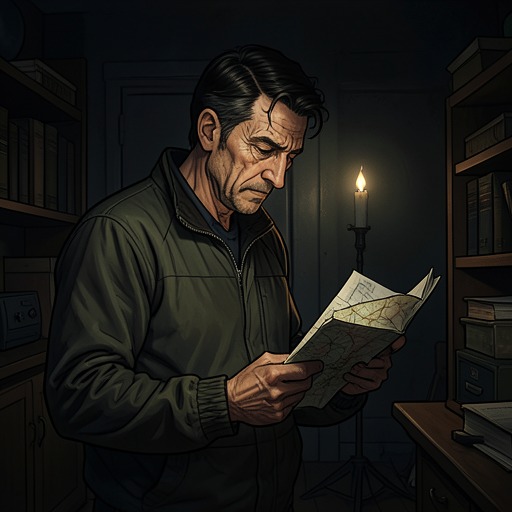
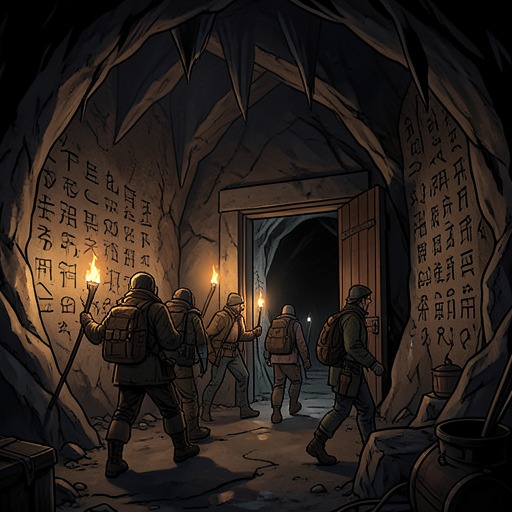
While searching the village for books, Ryuuji Morisaki finds several volumes written in Agartha’s language. He cannot decipher them completely, but the fragments are useful: they identify both Finis Terra and the Gate of Life and Death as important places to the people of Agartha. The reference gives Morisaki a lead on the difficult journey he and Asuna are undertaking, even before he knows what the Gate will demand of him.
Resurrection and Its Cost
The Gate’s significance is bound to Agartha’s prohibition against resurrecting the dead. When the subject comes up again, Asuna recalls that this prohibition is the reason for their arduous journey. The rule makes resurrection more than a private hope: it is a forbidden act with consequences that the travelers must confront.
Nami gives that danger a personal history. She tells Morisaki that her lover was Eve and that she herself died five years earlier. When Morisaki asks whether the price of her return explains Eve’s absence, Nami confirms it: the price was Eve’s life. She also says that what must be paid varies according to the time, situation, and individual. The Gate is therefore associated not with a simple restoration, but with an exchange whose cost can fall on someone the returned person loves.
The Black Sphere and the Starry Plain
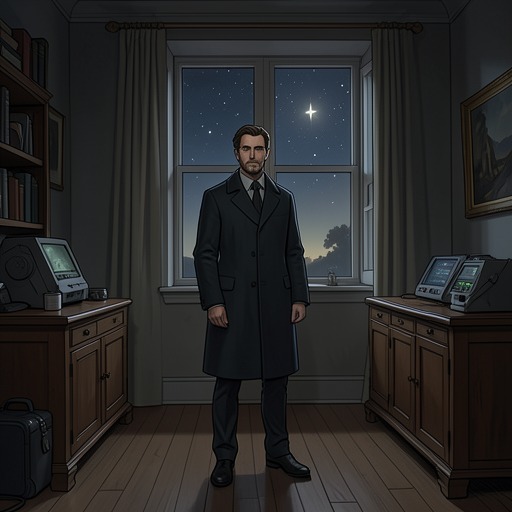
At last, Morisaki reaches a black sphere floating in empty space. Remembering the library texts, he recognizes it as the Gate of Life and Death and tries to touch it. Later, Asuna and Shin approach the sphere and are drawn into it as Morisaki was; all three arrive on a plain beneath a star-filled sky. Asuna identifies it as the night sky, while Shin recognizes the points of light as stars.
The scene makes the Gate a threshold between the travelers’ immediate surroundings and a space that presents the night sky directly before them. Its appearance also links Morisaki’s search through old writing to an encounter he cannot keep at the distance of research: the place named in the books becomes the setting in which he must face what resurrection has cost.
Loss and the Gate’s Significance
After the events at the Gate, Morisaki, in tears, asks Shin to kill him. Shin refuses and says that his brother spoke to him, conveying the instruction to embrace loss and keep living. As the sky turns clear blue and Shakuna Vimana flies away between the clouds, Asuna slowly opens her eyes; she then gently embraces Morisaki as he weeps.
The Gate’s narrative role thus turns on a distinction between bringing someone back and continuing to live after losing them. Its name promises the possibility of crossing between life and death, but the revelations surrounding Nami and Eve show that return cannot undo loss without imposing another. The closing exchange inside the Gate shifts the focus from overcoming death to bearing its consequences: Shin’s words offer a way forward, while Asuna’s embrace responds to Morisaki’s grief without pretending that what has been lost can simply be restored.