Lisa
5 Centimeters per SecondLisa is Ryuuji Morisaki’s beloved partner, whose death remains the defining absence in his life and whose earlier acceptance of mortality exposes how unprepared he was to lose her. In a dream about a fever from his past, she sits beside his bed playing a hand-cranked music box, with a bag of pills nearby. Her tenderness is inseparable from her practical awareness of death: she asks Morisaki to care for himself after she is gone, while he still imagines that a future journey and a cure might keep them together.
Identity and the remembered sickroom
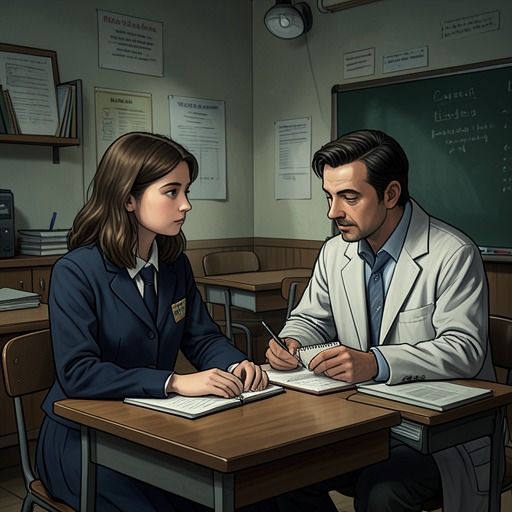
The novel presents Lisa through Morisaki’s memories and through the brief appearance he later seeks to bring about. In the dream, she is raven-haired and seated by his bed, quietly playing the music box. Morisaki has opened his eyes, and she notices. Her first response is teasing: he almost never gets sick, she says, while collapsing is usually her role. The exchange places their intimacy in ordinary care and familiar humor rather than grand declarations. Morisaki apologizes; Lisa giggles and turns that apology into a request.
The objects around her sharpen the scene’s meaning. Lisa sets the music box on the desk beside a paper bag full of pills. The scene does not identify the medicine or specify her diagnosis, but it makes illness part of the room’s visible reality. Music, medicine, and bedside conversation occupy the same small space: the music box offers a quiet, repeated sound, while the pills mark the bodily condition that neither affection nor optimism can simply remove. Lisa’s composure does not mean that she is untouched by illness; it means she can speak about what Morisaki cannot yet face.
Love, illness, and the knowledge of death
When Lisa asks Morisaki to promise that he will take care of himself even after she is gone, he only then understands that she had already been preparing for her own death. The realization reverses the balance between them. In the sickroom banter, she had been the one who usually collapsed; in the memory’s present, she is the person able to name the future, while Morisaki is the one caught unprepared. The narration suggests that he might have been the only one who had not anticipated her death.
Morisaki answers her request with a plan for a shared future. He says the next mission will be over quickly and proposes that they go to his country together afterward. He begins to assure her that her illness will—before Lisa interrupts him. Her voice remains kind, but she refuses the premise that a future destination or an eventual cure can exempt them from mortality. All people die someday, she tells him; there are no exceptions. The interruption is both gentle and decisive. Lisa does not reject his love or his wish to care for her. She distinguishes that wish from the promise he can actually make: he can continue living and caring for himself, but he cannot bargain his way out of death.
Morisaki’s attempt to bring her back
After Lisa’s death, Morisaki admits that he has never forgotten her, not for a moment. He says he once tried to get over her death, but could not, and that he can find no meaning in a world without her. At the Gate of Life and Death, he makes his wish with all the fervor in his heart, calling for Lisa to return. The clavis shines, and a glowing rift opens before the god. Lisa’s appearance follows the wish directly: what emerges is the shape of the woman Morisaki loves, and he asks whether it is really her before trying to touch her.
The scene gives his longing a visible answer, but it does not establish a settled restoration of the life they shared. Lisa appears in the charged interval opened by the clavis; the narrative emphasizes Morisaki’s recognition and attempted touch rather than a return to ordinary life. The difference matters. His wish can produce a reunion, but it cannot undo the earlier sickroom conversation or make his promise to survive on her behalf unnecessary. The attempt to reverse loss brings him face to face with what he has spent the story resisting: the distance between wanting Lisa back and being able to keep her.
Final exchange and narrative significance
As liquid covers Lisa from head to toe, Morisaki cries that he loves her and that he loved her. Lisa gives him a troubled smile and finally says that she is glad. The sequence places his declaration at the edge of her disappearance. Its shift from the present tense to the past tense registers the impossible timing of his words: the love is still present, but the life in which the two could share it has passed. Lisa’s response does not erase that loss. It is a final acknowledgment between them, arriving as the liquid finishes covering her.
Lisa’s role in the narrative is therefore more than the object of Morisaki’s grief or the goal of his attempt at resurrection. Her earlier request gives his survival a meaning that is independent of whether he can recover her: she asks him to care for himself after she is gone, and he initially answers with a plan that depends on her continuing to live. At the end, his belated confession and Lisa’s gladness bring their relationship to a close without turning death into a problem that love can permanently solve. The music box and medicine in the sickroom, the remembered promise, and the clavis-lit appearance at the Gate of Life and Death mark different stages of the same conflict: Lisa had accepted that life ends, while Morisaki could only understand the cost of that knowledge after losing her.