Morisaki’s Music Box
5 Centimeters per SecondMorisaki’s Music Box is a hand-cranked keepsake that connects Ryuuji Morisaki’s present actions to memories of Lisa and to the years he has spent focused on her. It appears first on his desk, is carried close in his pocket, and is ultimately crushed beneath his foot during a violent moment involving the Shakuna Vimana. Its path from desk to pocket to ground gives the object a quiet narrative arc: it begins as a detail that arrests Morisaki’s attention, becomes a private link to Lisa, and ends physically broken amid the danger of his pursuit.
Form and First Appearance
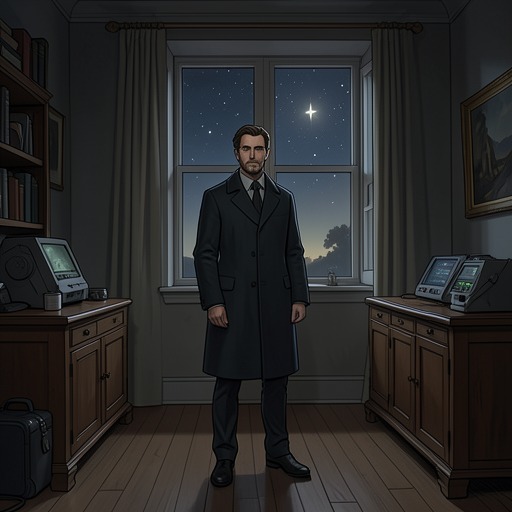
The box is identified by its mechanism and placement: it is hand-cranked and sits on top of Morisaki’s desk. In the scene where it first draws attention, Morisaki’s hands stop; his eyes turn toward the object, and the intercom sounds immediately afterward. The passage does not explain what he had been doing or why the box has interrupted him, but its sequence makes the pause meaningful. Before any memory is shown, the music box is already distinct from the surrounding work: Morisaki stops and looks at it.
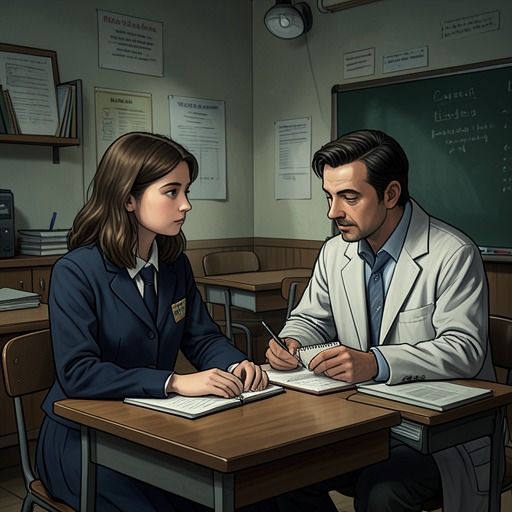
The desk returns as a significant setting in Morisaki’s dream of an earlier illness. While he is laid up with a fever, Lisa sits beside the bed and quietly plays the hand-cranked box. Later in the dream, she sets it on the desk, next to a paper bag filled with pills. The object is therefore situated between two intimate but different details: Lisa’s presence at Morisaki’s bedside and the medicines associated with illness. The scene does not describe the melody, so the box’s significance rests not on a named tune but on the remembered act of Lisa playing it.
Lisa and the Remembered Scene
The fever dream gives the box its clearest connection to Lisa. Morisaki has opened his eyes to find her beside him, playing; their exchange turns from his unusual illness to Lisa’s own understanding of mortality. She tells him that everyone dies someday and that the difference is only whether death comes earlier or later. As she speaks, she puts the music box on the desk beside the pills. The object remains within this difficult conversation, but it does not solve or soften its subject. Its quiet presence belongs to an ordinary bedside moment, while the words and medicine make the limits of life unavoidable.
That remembered scene also gives the music box a role distinct from a simple token of romance. Lisa is not only attached to Morisaki’s hopes for the future: in the dream, she speaks plainly about death while he tries to imagine a future in which her illness might be relieved. The box marks her presence in the scene without making the memory itself a promise that she can be saved. Its association with Lisa is tender, but the tenderness is framed by illness and by the difference between Morisaki’s hope and Lisa’s acceptance of mortality.
A Keepsake Carried Forward
Morisaki later touches the music box softly in his pocket. At this point, he has spent ten years thinking only of Lisa and believes he will see her before long. Asuna appears to notice the gesture: Morisaki looks up at the sky, perhaps guessing that she has understood what touching the object means to him. The narration leaves that recognition tentative, but the action itself is clear. The box is no longer simply on a desk, available to be seen; Morisaki has brought it with him and keeps it close enough to touch.
That shift in placement makes the box a compact expression of the distance between remembering Lisa and reaching her. Morisaki’s long concentration on her is stated directly, while the gesture with the box is small and private. He does not explain it in words. Instead, the object makes his attachment visible to Asuna, or at least allows her to infer something from it. The box thus connects his inward preoccupation with another person’s observation, without turning his history into a spoken account.
Destruction and Narrative Significance
The object’s final appearance reverses the care of that quiet gesture. As Morisaki runs, the eyes of the Shakuna Vimana move again, and his head snaps backward. His right eye is completely blinded, blood trickles from his left, and the music box falls from his hand. As he staggers forward, he crushes it beneath his foot. The sequence places the destruction amid immediate bodily injury and danger; it does not present the breakage as a deliberate act or establish that the box causes what follows.
After crushing it, Morisaki turns back toward the Shakuna Vimana and asks whether the girl was not enough, wondering if he had needed to pay more. The question gives the moment a new force without explaining the box’s exact role in any exchange or price. What is concrete is the contrast: the object that had carried Lisa’s remembered presence is now broken as Morisaki confronts the cost of what he is trying to do. Its destruction makes the material world interrupt his private bond with her. The music box cannot preserve itself against the violence around him, and its ending leaves Morisaki’s attachment intact but no longer embodied in the keepsake he had carried.