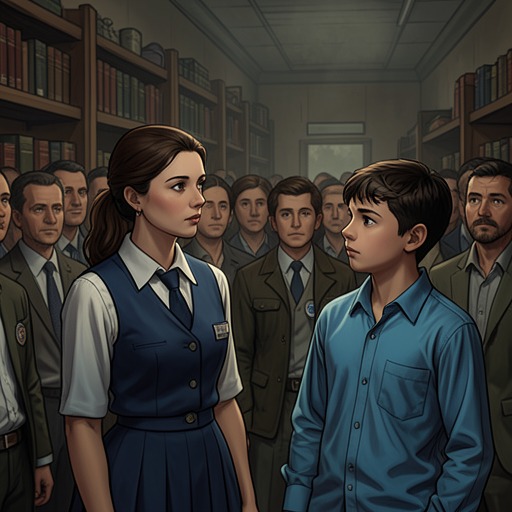
Risa Mizuno
5 Centimeters per SecondRisa Mizuno is a former colleague of Takaki Tohno who becomes his partner through a gradual courtship marked by quiet conversation and ordinary acts of care. Her sincerity and reserved manner offer Takaki a rare sense of ease, but their relationship also exposes a painful imbalance: while she describes loving him more with each passing day, he hesitates to take the next step and later receives her admission that she has grown tired of trying to reach him.
Identity and Introduction
Risa first reappears in Takaki’s life on a Sunday afternoon at Shinjuku Station, during a break in the rainy season. Wearing glasses and a beige, broad-brimmed sun hat, she recognizes him and recalls that he works for XX Systems. Takaki does not immediately recognize her; he only gradually places her as someone from Yoshimura’s department. Her prompt gives the encounter a small asymmetry from the beginning: she remembers him clearly, while he needs help identifying her.
Risa is two years younger than Takaki. At first glance, her glasses and long black hair make her seem plain, but Takaki’s impression changes as he looks more closely: her features are strikingly symmetrical. Her modest way of dressing, reticence, and embarrassed gestures make her seem uncomfortable with being seen as pretty. The narration presents her not as a dramatic or forceful presence, but as someone whose appeal becomes clearer through attention and familiarity. She speaks slowly, never shouts, and has a sincere, genuine personality; Takaki finds that being with her helps him relax.
A Courtship Built from Ordinary Meetings
After recognizing each other, Risa and Takaki go for coffee at a cramped underground café near Shinjuku Station’s East Gate. They talk for a couple of hours, exchange contact information, and part. Once alone, Takaki realizes how unusual it has become for him to speak with someone for so long without a particular objective. Their conversation has covered unremarkable subjects—workplace gossip, where they live, and their student days—yet its ease leaves him with a warmth he has not felt in a long time. He wonders whether the end of their work project has made it easier for them to relax together.
Their contact develops through reciprocal invitations rather than a sudden declaration. A week later, Takaki asks Risa to dinner after finishing overtime early; they meet in Kichijōji and part after ten at night. The following week, she invites him to a restaurant, and the week after that they meet on a weekend for a movie and a meal at his suggestion. The narrative describes this as a courteous, slow, careful process. It gives their relationship a rhythm of mutual initiative: neither person carries every encounter, and closeness grows through repeated time spent together.
Their dates follow the Chuo Line, which connects Risa’s condo in Nishi-Kokubunji with her workplace. Takaki senses her affection in small, physical details: their shoulders brushing on the train, her gestures over a shared meal, and the way she walks beside him. Both appear to understand that the other would probably welcome a more explicit commitment. Yet Takaki cannot decide whether to take that step. Watching Risa walk toward the opposite platform at Kichijōji Station, he thinks that he has fallen too quickly before, only to burn through his feelings and lose the person. His hesitation is therefore tied to his fear of repeating a pattern, even as it leaves Risa’s affection unanswered in action.
Shared Domesticity and Growing Importance
As Takaki’s work becomes busier and he grows more isolated at the office, the time he spends with Risa becomes increasingly precious to him. Once every week or two, he visits her condo after work, usually meeting her at half past nine. Sometimes he buys a small bouquet on the way. Because the florist near his company closes at eight, he leaves the office at seven to buy flowers, hides them in a station coin locker, and returns to work until half past eight. He then carries the bouquet through the crowded Chuo Line, taking care not to crush it. The elaborate small detour makes the gift a private pleasure as well as a gesture of affection.
They also spend some Saturday nights together, more often at Risa’s apartment but sometimes at Takaki’s. Their belongings begin to cross the boundary between the two homes: each apartment has two toothbrushes, Takaki keeps several pairs of underwear at Risa’s, and cooking utensils and spices accumulate at his place. Magazines he had never read before appear there too. These changes make their closeness tangible in domestic objects and routines. Takaki describes the feeling as warmth; for a time, their relationship offers him a shared everyday life even while his professional world narrows.
Separation and the Final Message
The later account shows that Risa and Takaki have stopped speaking after his transfer the previous year. In her final text, she tells him that she still loves him and thinks she probably always will. She continues to regard him as kind and wonderful, and as someone she admires but cannot quite reach. Her words preserve affection even as they name distance: admiration has not brought them into emotional accord.
Risa also describes what being with Takaki has done to her. Over three years, she says, she loved him more every day; his words and each line of his texts could delight or sadden her. She became jealous over small things and recognizes that she caused him trouble. After trying for about half a year to communicate what she felt in different ways, she says she has grown tired of it. The message turns the earlier courtship’s careful gestures and conversations into a measure of what remained unsaid: a relationship could be warm and mutually attentive in its routines, yet still leave one person unable to make her feelings understood.
Takaki is typing when he reads her message and thinks that he no longer has to come there. The text does not elaborate on that thought, but it places his sense of an ending beside Risa’s direct account of exhaustion. Her role in the story is therefore both intimate and revealing: through her, Takaki experiences companionship and domestic closeness, while her final words make visible the cost of his indecision and the emotional distance that persisted beneath their shared routines.