Shun
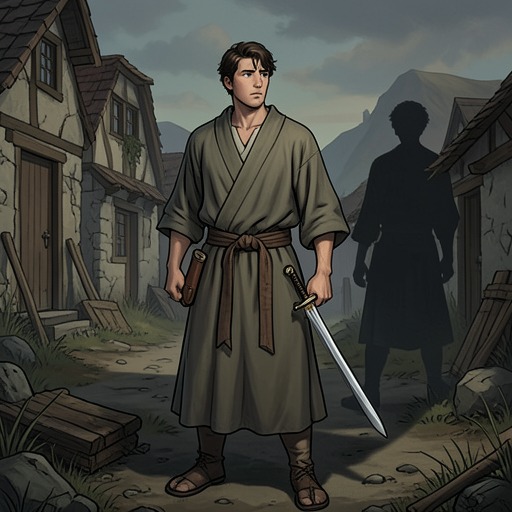
5 Centimeters per SecondShun is a gifted young man from Agartha whose longing for the surface sets his life against the laws of his homeland. He enters Asuna’s story first as her rescuer, then as the boy who tells her where he came from; later, Shin’s account reveals the talent and illness behind his forbidden journey. Shun’s brief presence joins tenderness to transgression: he shields Asuna from danger, yearns to see the stars, and dies after going where Agarthans are not meant to survive.
Identity and Background
Shun is Shin’s elder brother and comes from Agartha, a place Asuna has never heard of when he first names it to her. The conversation begins with a simple disclosure of origin, but it places their meeting across a boundary larger than distance. Asuna initially wonders whether Agartha is another country; for Shun, it is home, and the surface is the place he has risked leaving it to see.
Shin later explains that Shun knew Agarthans could not survive long on the surface, yet broke the law and went there anyway. The matriarch gives this choice a history within their family: Shun had a natural gift, while a karmic illness strengthened his yearning for the surface. The evidence thus connects his desire not only to disobedience but also to a condition that sharpened his longing. It does not make his decision safe or lawful; it makes the conflict between what he wanted and what his people forbade him to do part of his character.
Rescue and First Meeting with Asuna
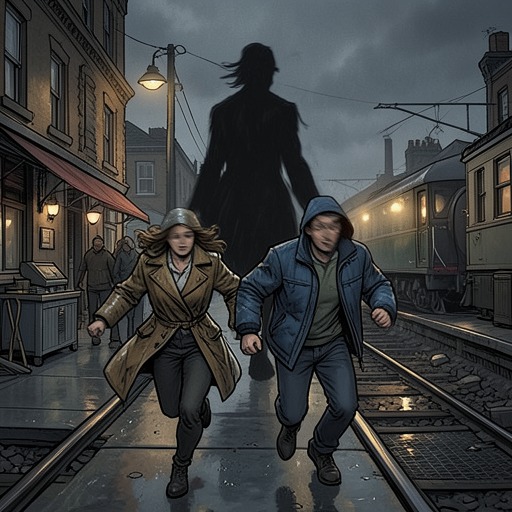
Shun first appears to Asuna at the moment she is in immediate danger from a monster. The next thing she knows, she is in his arms, roughly ten meters away and beyond the creature’s reach. He has carried her out of range. Once she is standing, he positions himself between her and the attack, turning his body into a shield rather than retreating to safety.
His manner makes the rescue strikingly gentle. Shun looks back over his shoulder with a reassuring smile and tells Asuna that everything is all right, as if speaking to a child. When she wonders who intervened and why, he introduces himself cheerfully as Shun and says it is good to meet her. His smile leaves a strong impression on her: she notices both how often he smiles and how handsome he looks. Their first connection is therefore made through action before explanation; his instinct to protect comes before Asuna knows his name or origin.
Longing for the Surface
Shun’s wish to see the surface sky is presented as a persistent desire, not a passing curiosity. He has always wanted to witness it, and the stars above the surface become the image toward which his longing gathers. That yearning is especially consequential because he understands the danger: as Shin later says, Shun knew that they could not survive long there. The sky he wants is not simply a view but something forbidden, beautiful, and perilous at once.
After telling Asuna about Agartha, Shun lies back down rather than replaying the conversation. Asuna means to return the next day, partly because she wants to ask him more. The prospect of another meeting gives their brief acquaintance a possible continuation, but Shun’s story does not grant them that ordinary future. Near the end of his life, he speaks to the cat beside him, praises its name, and asks it to take Asuna somewhere better because he cannot. He closes and then opens his eyes before making that request. These are the last words he says to anyone; when he steps forward, anything he says afterward is only to himself.
Shun and Shin
Shin’s memories and later explanation preserve two sides of his brother: the admired child with an exceptional gift and the person whose yearning took him beyond the law. Shun could see through the eyes of the Quetzal Coatls at the age of six. The matriarch says he became the youngest person in history to receive a public duty. His ability was not merely a private distinction; it had brought him recognition in Agartha from an unusually young age.
The same account underscores the contrast between the brothers. The matriarch rebukes Shin for being unable to see through the eyes of the Quetzal Coatls or sense the breath of the clavis, while remembering Shun’s natural aptitude. Shin’s response is pride in his brother. In a later recollection, he remembers Shun as his whole world. Their teacher had left them the house where they lived, and a room in an upstairs corner was called the Topside room because the teacher had conducted research on the surface there. That room makes the brothers’ connection to the surface part of their shared surroundings, even as Shun alone becomes the one who goes there.
Death and Narrative Significance
Shun’s death is confirmed by Shin, who explains both the danger and the breach of law: his brother knew the surface was unlivable for them for long, and still went out. The explanation is blunt, but it does not reduce Shun to a cautionary example. The matriarch’s account of his illness and gift, Shin’s pride, and Shun’s final concern for Asuna complicate any simple judgment of him as merely reckless. His forbidden choice remains dangerous; its emotional meaning lies in the longing and attachments that accompany it.
His final request also shapes what he leaves behind. Unable to take Asuna to a better place himself, Shun asks the cat to do so for him. The gesture extends his protective conduct beyond the moment when he can act directly: first he carries Asuna out of the monster’s reach, and later he tries to entrust her welfare to another. For Shin, Shun is both the celebrated older brother whose gift set him apart and the loss that explains why he broke the rules. For Asuna, the gentle rescuer becomes the source of her first knowledge of Agartha. Shun’s role is brief, but his longing for the stars and his care for others give that absence lasting force.