Takaki Leaves Tanegashima for Tokyo
5 Centimeters per SecondTakaki Tohno’s departure from Tanegashima for university in Tokyo is both a geographical move and a personal parting: on a windy day in March, Kanae Sumida sees him off and tells him she has loved him for a long time. He leaves without knowing how to answer her or even whether he returned her smile. The scene gathers the book’s recurring tensions between movement and belonging, and between feelings clearly recognized and words that arrive too late to change what happens.
Background and the Move to Tokyo
After graduating from high school on Tanegashima, Takaki moves to Tokyo to attend university. He rents a small apartment about a thirty-minute walk from Ikebukuro Station, choosing its location for the convenience of the commute. Although he had lived in Tokyo between the ages of eight and thirteen, the city he knew then was Setagaya; beyond that familiar area, the metropolis feels like unknown territory.
The move renews an earlier pattern of displacement. Before third grade, Takaki had moved with his parents from Nagano to Tokyo. The buildings streaming past the train window had seemed alien beside Nagano’s rural scenery, and the thought of living amid an endless stretch of buildings had nearly made him cry. A few years later, leaving Tokyo for Tanegashima had also felt like rejection; after arriving on the island, he found himself homesick for Tokyo. By the time he leaves the island for university, he can tell himself that he has transferred schools twice and learned to make a home in new places. More importantly, this time he is going of his own free will.
The Farewell to Kanae Sumida
Takaki tells only Kanae the time of his departure. The two meet in the parking lot of the small island airport, a place that looks more like a ferry terminal than an airport. They are wearing casual clothes rather than their school uniforms, and the brisk wind stirs Kanae’s hair, the power lines, and the leaves of the Phoenix palms. Their conversation repeatedly trails off. Kanae cries throughout, yet smiles when they say goodbye.
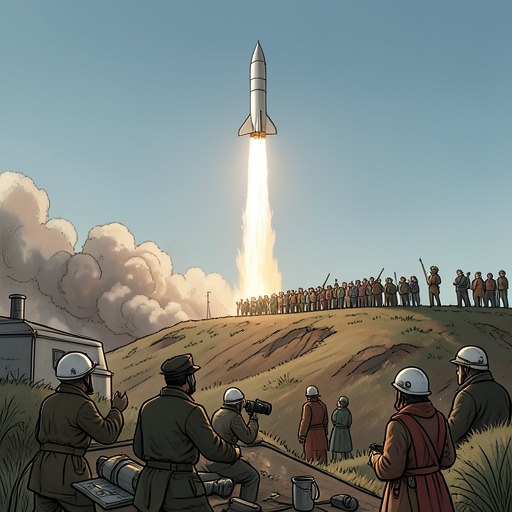
Kanae gives the parting words Takaki cannot forget: “I was in love with you for a very long time, Tohno. Thank you for everything,” she had said. The confession makes explicit what Takaki had already sensed about her attachment to him. At seventeen, when they watched a rocket launch together, he had understood why she was drawn to him and recognized the moment she tried to confess; he also understood that he did not let her say it. Even with that clarity, he had been unable to act. At the airport, her directness and her tears meet a silence whose meaning Takaki cannot later reconstruct: he does not remember whether he managed to return her smile.
Tokyo as Arrival and Unfamiliar Ground
The city Takaki returns to is not the refined place preserved in his childhood memory. Its residents seem coarse and indifferent to him, and he notices people spitting in the street and roadsides strewn with cigarette butts, plastic bottles, magazines, and discarded lunch containers. He cannot understand why the streets are so littered. Yet he accepts that this is where he will live, and the apartment with its still-unpacked boxes becomes the first material sign of a life he has chosen to begin.
During the four years at university, Takaki spends much of his time studying, working part-time, seeing films alone, and wandering around the city. He rarely stays on campus unless classes require it; sometimes he passes the university and reads in a small park on the way to Ikebukuro Station instead. The crowd initially overwhelms him, but he gradually grows accustomed to it. He makes some friends at school and work, loses touch with most over time, and forms closer bonds with a handful. Those years do not seem especially eventful to him, though some of his values change slowly while others become more firmly held.
Memory, Regret, and the Meaning of Leaving
A decade later, Takaki’s memories of Kanae remain vivid: her height, voice, smile, tearful face, and the island’s colors, sounds, and smells return together. The emotion resembles regret, but he believes that what he did then was all he could manage. He can recall the clarity with which he perceived her feelings and his own inability to respond, but understanding the moment did not give him the power to alter it. The farewell therefore resists a simple reading as either a fulfilled confession or a cleanly resolved parting: Kanae speaks, Takaki leaves, and the question of whether he smiled back remains unanswered.
The departure also sets up a contrast between choosing a destination and feeling at home there. Takaki initially treats his move to Tokyo as a decision he has made for himself, yet years later the city’s routines can still reduce him to a passenger among other passengers. On the late-night train from Nakano toward Shinjuku, he imagines the line of lights crawling across the planet and feels as if he is looking down at himself from above. When he steps onto the platform, he looks back at the seat he occupied, unable to shake the impression that his exhausted, suit-clad body might still be there. His departure from Tanegashima thus begins a new period of independence without resolving the deeper dislocation that has accompanied his moves between Nagano, Tokyo, and the island.