
History as Rote and Ruin
A Boy and His DogExplores the novella's meditation on how the past survives in a broken world: through broken films, memorized legends, flooded books, and the museum-cities of the downunder.
increasing Bearing strength in each event
 decreasing
Bearing strength in each eventdecreasingThe Sprocket-Slipped Past
The Sprocket-Slipped Past
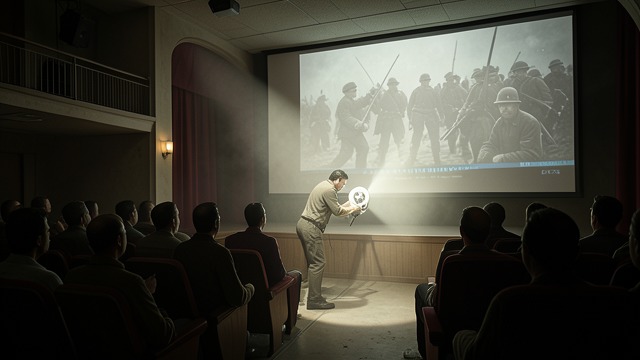
The Eighty-Six-Year-Old Film
Raw Deal, made in 1948, slips sprockets and has to be re-threaded mid-show. The past is still playing, but barely, worn, damaged, in need of constant repair. It is the perfect emblem of the wasteland's relationship with history.
The Propaganda Monster
The middle film, Smell of a Chink, preserves the war like a fossil: gut-spilling, napalm, greyhounds on fire. The audience watches it as entertainment. The wasteland has not learned from history; it has repackaged it as pulp.
The Thousand Recitations
The Thousand Recitations
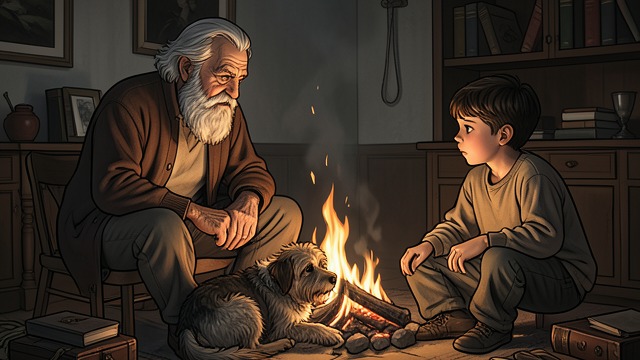
The Word-for-Word Dog
Blood tells the story of Ginger, Ahbhu, and the experiments exactly the same way every time, as it was told to him. Vic knows it by rote, wrote is for writing; rote is for memory. The history of the skirmisher dogs survives as pure recitation.
The Meaning of the Mantra
Rote is the wasteland's form of scripture: fixed, repeated, believed. Vic's doubt gives way to acceptance not because the story is proven but because the teacher is trusted. History, in this world, is faith.
The Useful Remains
The Useful Remains
The Reading That Saves
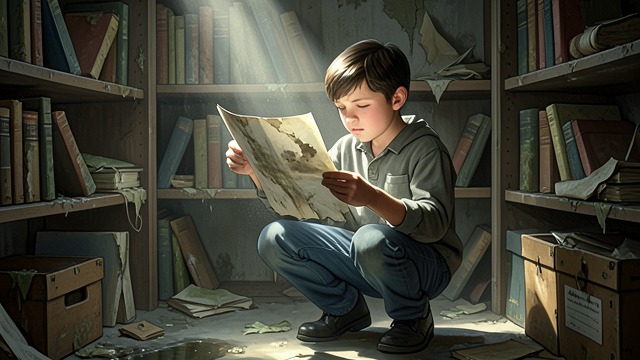
Vic can read because Blood taught him, and reading saves him from canned beets. Literacy in the wasteland is reduced to label-reading and scavenging, the difference between liking and hating what you eat.
The Diminished Archive
Books survive in waterlogged libraries, and Vic studies photographs of towns like Topeka without knowing they are accurate. The archive of human knowledge survives as garbage: half-understood, half-decayed, still oddly useful.
The Frozen Museum
The Frozen Museum
The Town as Photograph
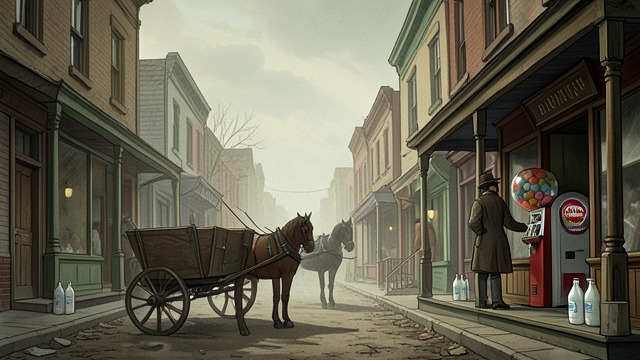
Topeka looks for all the world like a photo out of one of the water-logged books, a town preserved at the moment before the First War. The downunder is the past curdled into a diorama: horses, gumball machines, milk bottles, and all.
The Cost of Immobility
Topeka's history is preserved by stopping time, and stopping time stops life. The museum-city is sterile for exactly the same reason it is perfect: nothing changes. The downunder is the wasteland's past made into a cage.
The Fading Question
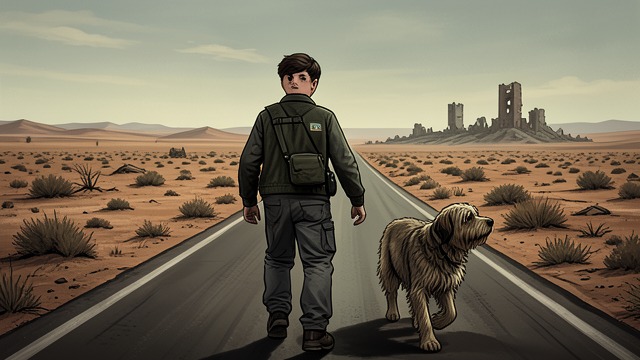
The Fading Question
The Voice That Stops
'It took a long time before I stopped hearing her calling in my head... Do you know what love is?' Memory in the wasteland fades by degrees; even the most haunting voice eventually stops. The final page is the story's last reflection on history: the past is what you can no longer hear, and what you can still feed.
The Last Lesson
Vic carries only the usable past, Blood, the road, the way to find food, and lets the rest go. In a world of rote and ruin, survival is the art of forgetting at the right time.
the triple feature at the Metropole
the theater evening, in Vic's memory
scattered through the story's early passages
Vic's first view of Topeka
the ending, after the fire
