
The Legend of the Skirmisher Dogs
A Boy and His DogRecounts Blood's origin myth, the pre-war experiments that gave rise to telepathic dogs, their lineage, and their militarization, and the role of this rote history in the partnership.
increasing Bearing strength in each event
 decreasing
Bearing strength in each eventdecreasingGinger the Narcotics Shepherd
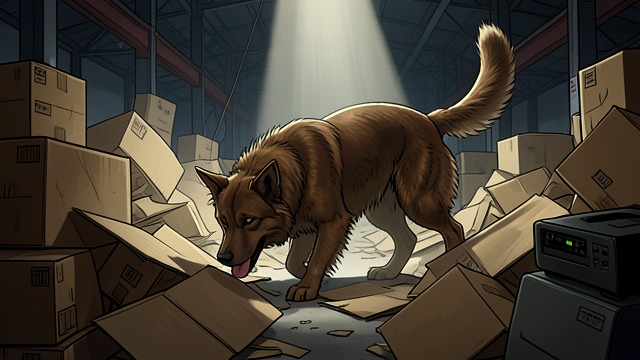
Ginger the Narcotics Shepherd
The Scent of Marijuana
In Cerritos, a breeder named Buesing raised guard dogs for the Los Angeles Police Department. His four-year-old German shepherd Ginger could smell marijuana through cellophane, foil, and brown paper, finding five plants hidden among 25,000 boxes in seven minutes. The legend is Blood's genealogy told as theology.
The First Ancestor
Ginger's nose is the founding miracle of the skirmisher bloodline, a gift of scent raised to the level of proof. Everything Blood claims about himself descends from this test.
The Cetacean Experiments
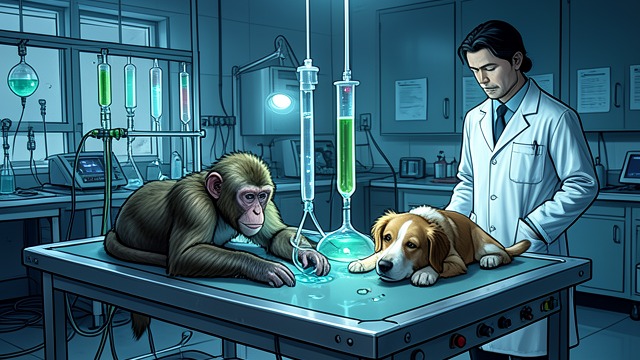
The Cetacean Experiments
Dolphin Fluid on the Operating Table
In Santa Barbara, researchers drew dolphin spinal fluid and injected it into Chacma baboons and dogs, following it with altering surgery and grafting. The breakthrough their work produced was a two-year-old male Puli named Ahbhu, the first animal to communicate sense-impressions telepathically.
The Bridge Between Species
This is the secret history at the center of the world: human beings taught animals to speak mind to mind, and then the world burned. The experiment is named in the canonical record as the Tylus program, and it made possible every dog in the wasteland.
Breeding for War
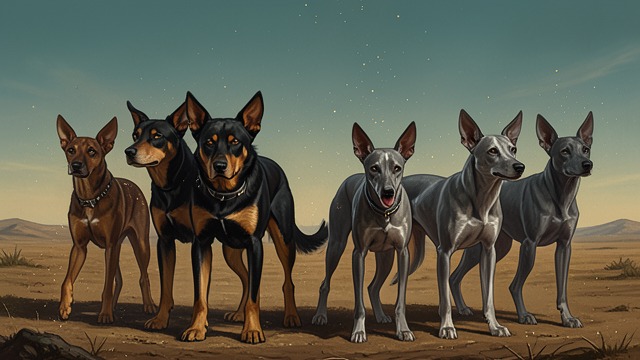
Breeding for War
The Shock Commandos
Cross-breeding and continued experimentation produced the first skirmisher dogs just in time for war: telepathic over short distances, trainable to track gasoline, troops, poison gas, or radiation when linked with human controllers. Dobermans, greyhounds, akitas, pulis, and schnauzers bred true toward ever greater telepathy.
The Weapon That Survived
When the war ended the world, the weapons were what remained. The skirmisher dogs lost the ability to hunt for themselves, a hereditary domestication, and so the wasteland partnership was born: humans who need to be found, dogs who cannot find food.
Blood's Rote Recitation
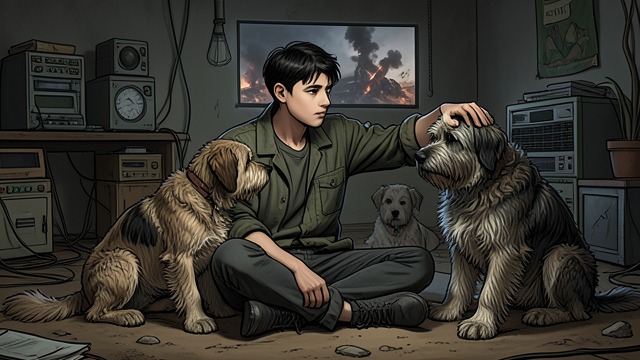
Blood's Rote Recitation
History Word for Word
Blood tells this story the same way every time: a thousand recitations, identical wording, as it was told to him. Vic knows it by rote. Reading, writing, arithmetic, everything Vic can do, the dog taught him, and this history is the dog's own claim to a soul.
The Weight of a Teacher
Vic's relationship to the story is complicated: he mostly disbelieves it, yet he cannot argue with his teacher. The animation of the war-film dogs on the Metropole screen makes the legend feel momentarily real, and sets up every later proof of Blood's gifts.
The Namesake Puli
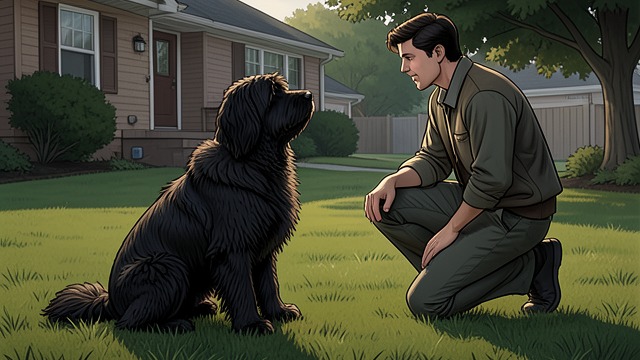
The Namesake Puli
From Legend to Living Room
Ellison's essay reveals the source of the name: a Puli he adopted from the West Los Angeles Animal Shelter for two dollars, whom he named Ahbhu after the boy-turned-dog in The Thief of Bagdad. In the novella's invented history, Ahbhu was the first telepathic dog; in the essay, he is simply a dog of extraordinary personhood.
The Layering of the Myth
The two Ahbhus mirror each other across fact and fiction. The real dog gave the fiction its name and temperament; the fictional dog gave the real one a kind of immortality. The essay closes the loop between invention and love.
over sixty-five years before the story, in pre-war Los Angeles
the same pre-war era, north of Los Angeles
just before the Third War
during the theater evening, in Vic's memory
in the essay, fifty years later in Los Angeles
