
The Essay Frame: Blood's True Story
A Boy and His DogExamines the autobiographical essay that frames the novella, the rescue of Ahbhu, the decades of companionship, and the grief that gives the fiction its emotional ground.
increasing Bearing strength in each event
 decreasing
Bearing strength in each eventdecreasingThe Two-Dollar Rescue
The Two-Dollar Rescue
The Beaten Puppy
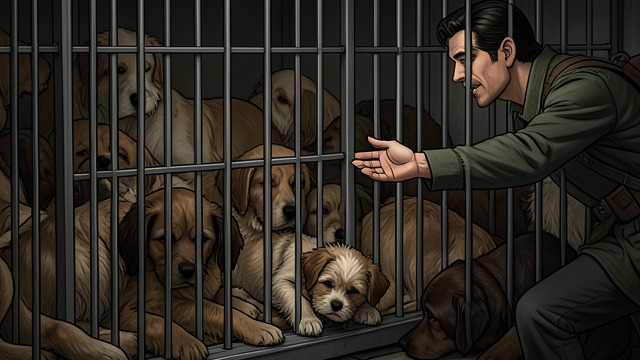
At the West Los Angeles Animal Shelter, Ellison saw a man surrender a weeks-old Puli. Inside the cage, three older dogs had the little creature on the bottom of a pile. Ellison shouted that he would take him, two dollars, the best money ever spent.
The Need Behind the Rescue
The impulse had roots: as a boy, Ellison had lost a beloved dog to a neighbor's cruelty while his father worked; he had crept to the woman's yard and buried her rug beater. Despite all the stories of the apocalypse and its survivors, the essay insists that the deepest grievance is an old, undignified memory of loss.
Naming the Thief of Bagdad
Naming the Thief of Bagdad
The Boy Who Became a Dog
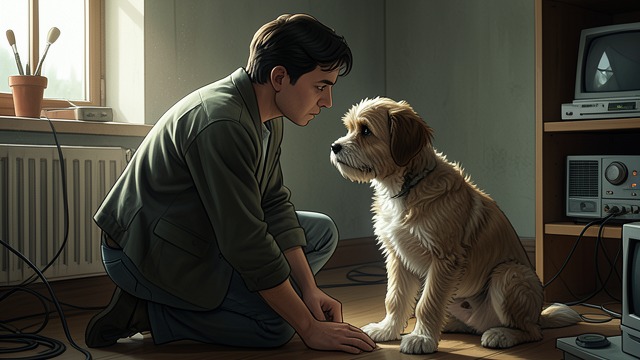
Staring at the Puli, Ellison remembered the 1939 film The Thief of Bagdad, in which the evil vizier transforms the little thief Ahbhu into a dog, with the actor's intelligent face briefly overlaid on the canine one. The puppy's gaze carried that same intelligence. The name arrived whole.
The Name as a Program
The name did more than label; it forecast the relationship. Ahbhu was never a pet to Ellison, he was a person, a specific creature who chose his own circle. The naming is the founding act of a friendship that would eventually write itself into science fiction.
The Barometer of Bums
The Barometer of Bums
The Judge at the Door
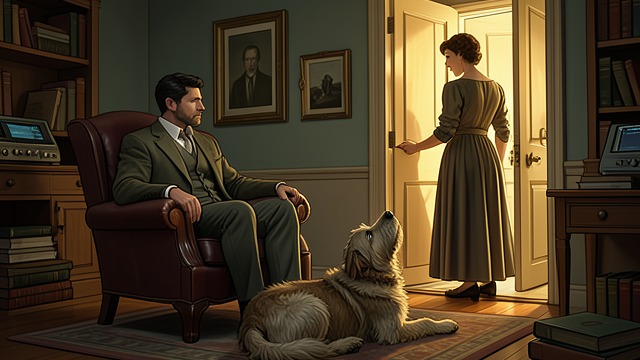
Ahbhu's approval was a social instrument: people who charmed Ellison but failed Ahbhu always turned out to be wrongos. The dog lay at the feet of those with good vibrations and ignored the rest, a furry lie detector in the author's living room.
His Own Society
Women from unsatisfactory affairs returned to visit the dog, not the man. One beautiful actress sent her driver to collect Ahbhu for Sunday romps at the beach. The dog had a social life independent of his owner, proof of the personhood the essay insists upon.
The Earthquake Terror
The Earthquake Terror
The Fearless One Fears
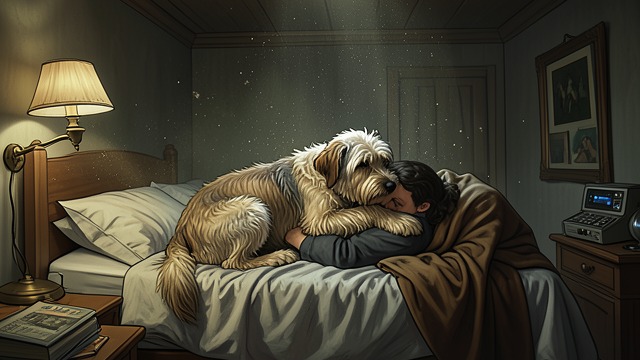
Ahbhu feared nothing, he attacked the Pacific Ocean and strutted past vicious cats. But the big Los Angeles earthquake terrified him; he jumped onto the bed and threw his forelegs around Ellison's neck, nearly strangling his owner with love.
The Sign of Decline
The quake was the first crack in the illusion of eternal pupness. Soon came the vomiting, the sleeping too much, the inability to hold down even Hungarian meals prepared by the Magyars up the street. The diagnosis, cancer in stomach and liver, turns the essay's light sharply toward grief.
Death Without Strangers
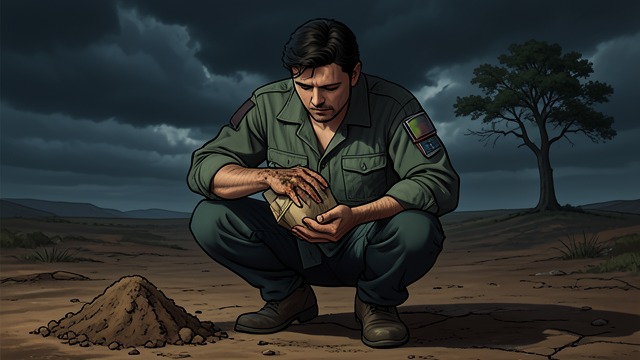
Death Without Strangers
The Final Request
Ellison signed the euthanasia papers and asked for time alone with him. On the steel table, the pot-bellied bouncing ball of hair was suddenly thin, trembling, afraid, but still a puppy. They had not done much crying at one another, so the crying had to be done now.
Doing It Himself
He remembered a scene from Viva Zapata in which a condemned friend asks Emiliano to do the execution himself. Ahbhu's look said the same thing: don't leave me with strangers. So Ellison held him through the needle, wrapped him in a sheet, drove him home, and dug the grave for hours with his hands. The essay's grief is the hidden fuel of all the wasteland's ferocity.
the day Ellison visited the shelter, eleven years before the essay
the drive home from the shelter
across the eleven years in Los Angeles
the year before Ahbhu's death, during the Los Angeles earthquake
the day the essay opens, at the veterinarian's office
