Metropole Theater
A Boy and His DogIdentity and Setting
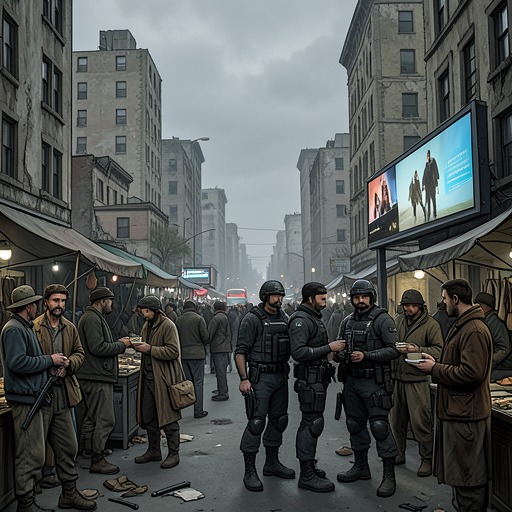
The Metropole Theater stands in a bombed-out section of a ruined Los Angeles, a relic of the pre-war world that has been repurposed by the roverpak known as Our Gang. Unlike the other packs that must labor for their survival—the Dragons keeping an entire power plant running for tribute, Ted's Bunch minding the reservoir, the Bastinados working like fieldhands in the marijuana gardens, the Barbados Blacks losing members yearly to radiation pits—Our Gang has found a smarter way. They are movie-oriented kids who have taken over the turf where the theater stands, and they provide a service the whole city depends on: keeping the films running. No one tries to bust their turf, because everyone needs the movies, and as long as Our Gang keeps them going, they are tolerated even by solos like Albert and Blood.
The theater itself is a place of careful ritual and uneasy truce. Admission costs a can of Oscar Mayer Philadelphia Scrapple for Albert and a tin of sardines for Blood. Weapons must be checked at the door, in a little alcove beside the ticket booth, where guards armed with bren guns watch over the proceedings. The checking process is not without friction: when Albert notices water leaking from a broken pipe onto his guns, he demands the checker—a kid with big leathery warts covering his face and lips—move his weapons to dry ground. The checker initially refuses, but a look at the guards, who are understrength and not looking for action, convinces him to comply. Albert's Browning .22 long is moved to the other end of the gun rack, and his .45 is pegged beneath it.
The Sanctuary and Its Rules
The Metropole operates under a fragile code born of catastrophe. Albert recalls a get-it-on at the old Loew's Granada on the South Side, where ten or twelve rovers and their mutts ended up dead, the theater burned down, and a couple of good Cagney films were lost in the fire. After that, the roverpaks reached an agreement: movie houses were sanctuaries. It is better now, but there is always somebody too messed in the mind to come soft, and even on neutral ground like the Metropole, there is always some hardcase on the muscle. A Doberman growls as Albert and Blood move into their row, stepping on feet; someone curses, and Albert ignores him.
The theater is jammed when they arrive for the triple feature. The oldest film is Raw Deal, made in 1948, eighty-six years ago, starring Dennis O'Keefe, Claire Trevor, Raymond Burr, and Marsha Hunt. It slips sprockets and has to be stopped constantly for re-threading, but it is a good movie about a solo who was japped by his roverpak and is out to get revenge—gangsters, mobs, punching and fighting. The middle flick, Smell of a Chink, was made during the Third War in '92, twenty-seven years before Albert was even born; it is mostly gut-spilling and hand-to-hand combat, including a scene of skirmisher greyhounds equipped with napalm throwers jellyburning a town. Blood enjoys it, claiming some phony shuck about these dogs being his ancestors, a claim both he and Albert know is made up.
The main feature is a beaver flick made in the late 1970s, called Big Black Leather Splits. It starts with two blondes in black leather corsets and boots laced up to their crotches, with whips and masks, getting a skinny guy down and performing on him. All around, solos are playing with themselves. Albert is about to join them when Blood leans across and says, real soft, the way he does when he is onto something unusually smelly, "There's a chick in here."
The Discovery of the Mystery Solo
Blood's claim seems impossible. Almost every seat is taken with solos or their dogs; if a chick had slipped in, there would have been a riot, and she would have been ripped to pieces before any single guy could have gotten into her. Albert looks around without being conspicuous, but sees nothing. Blood concentrates, his body tense as a wire, his eyes closed, his muzzle quivering. Albert knows it is just barely possible: he has heard that they make really dumb flicks in the downunders, clean stuff from the 1930s and '40s with married people sleeping in twin beds, Myrna Loy and George Brent kind of flicks, and that once in a while a chick from one of the strict middle-class downunders will come up to see what a hairy flick is like. But it has never happened in any theater he has ever been in, and the Metropole is an especially unlikely place for it, given the twisty trade that frequents the place.
Blood insists. "Third row in front of us," he says. "Aisle seat. Dressed like a solo." When Albert asks how he can whiff her when no other dog has caught her, Blood answers with a hint of pride: "You forget who I am, Albert." The mystery solo sits through Raw Deal again, which makes sense if it is a girl: most solos and all roverpak members leave after the beaver flick, the theater empties, the streets have time to clear, and she can make her way back to wherever she came from. Albert sits through Raw Deal again himself while Blood sleeps. When the mystery solo gets up, Albert gives him or her time to retrieve any checked weapons and start away, then pulls Blood's big shaggy ear and says, "Let's do it."
The Aftermath and the City Beyond
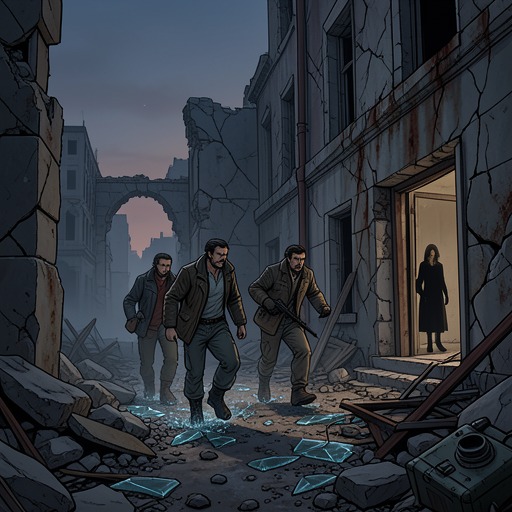
Albert retrieves his guns and checks the street—empty. He starts off, loading the Browning from his bandolier, following Blood's nose. The section of the city around the Metropole is crummy, in really bad shape, but Our Gang does not have to repair anything else to get their livelihood. Albert reflects on the irony: the Dragons have to keep an entire power plant going, Ted's Bunch minds the reservoir, the Bastinados work the marijuana gardens, the Barbados Blacks clean radiation pits, and Our Gang only has to run that movie house. Whoever their leader was, however many years ago the roverpaks started forming out of foraging solos, he had been a flinty sharp mother who knew what services to deal in. The theater is the key to their survival, and the pursuit of the mystery solo—who Blood insists is a her, and who turns right—leads Albert away from the sanctuary and into the next stage of his journey, toward the downunder and the woman who will become Quilla June.
The Metropole Theater thus functions as both a haven and a threshold. It is a place where the old world's culture survives in flickering, damaged reels, where the rules of the wasteland are briefly suspended, and where the novel's central mystery is first detected. It is also a reminder of what has been lost: the films are relics, the theater is a shell, and the sanctuary is only as strong as the agreement that maintains it. The discovery of the woman in the audience breaks the equilibrium of Albert's solitary life and sends him on the path that will lead him into the Topeka downunder, where he will find a world even more suffocating than the blasted surface—a world of canned people, artificial food, and the weight of the earth pressing down, a world he will desperately want to escape.