Bob Cratchit
A Christmas CarolBob Cratchit is the underpaid, devoted clerk of Ebenezer Scrooge and the warm-hearted father of Tiny Tim, whose family's humble Christmas celebration becomes the moral center of the story and a catalyst for Scrooge's redemption.
Identity and Background
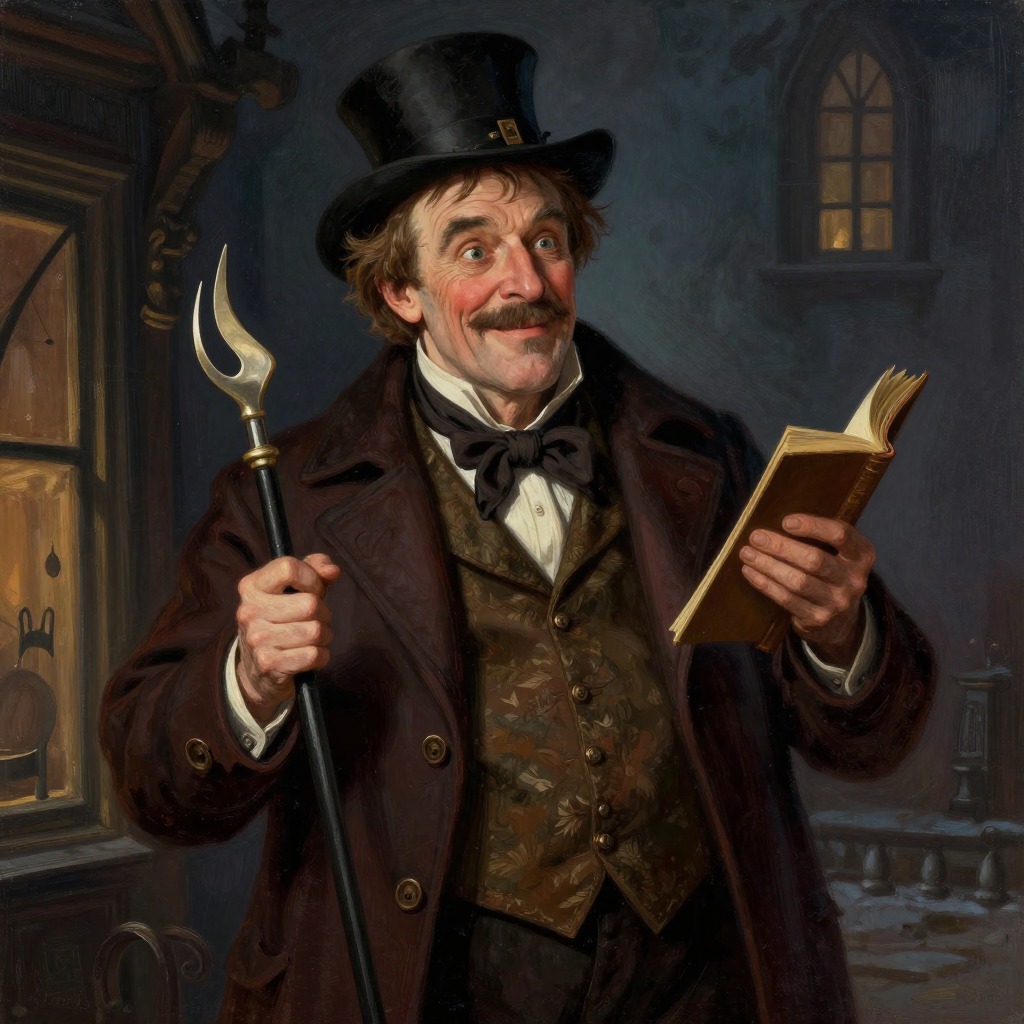
Bob Cratchit works as a clerk in the counting-house of Scrooge and Marley, where he is confined to a dismal little cell described as a "tank" and forced to copy letters in bitter cold. His fire is so small that it looks like a single coal, and he cannot replenish it because Scrooge keeps the coal-box in his own room; whenever the clerk approaches with the shovel, the master predicts that it will be necessary for them to part. Cratchit earns only fifteen shillings a week—a sum Scrooge later derisively calls "fifteen 'Bob' a week"—and supports a wife and several children on that meager wage. He is a man of modest means but strong imagination, as shown when he tries to warm himself at a candle and fails. Despite his poverty, he is cheerful and good-natured, returning the Christmas greetings of Scrooge's nephew Fred with cordiality even as he shivers in his threadbare clothes.
Life and Plot Trajectory
On Christmas Eve, Cratchit works late in the counting-house while Scrooge begrudges him the following day off. When Scrooge grudgingly grants the holiday, Cratchit promises to be early the next morning and then, after the office closes, runs down a slide on Cornhill twenty times in honor of Christmas Eve before hurrying home to Camden Town to play blindman's buff with his children. On Christmas Day, he carries Tiny Tim home from church on his shoulder, his threadbare clothes darned and brushed to look seasonable, and presides over the family's modest feast with beaming joy. He proposes a toast to "Mr. Scrooge, the Founder of the Feast," which his wife receives with indignation, calling Scrooge "an odious, stingy, hard, unfeeling man." Cratchit gently insists on the toast for the sake of Christmas Day. After the meal, he tells the family about a possible situation for his son Peter that would bring in five-and-sixpence weekly, and the family listens to Tiny Tim sing a plaintive song about a lost child traveling in the snow.
Key Actions and Objectives
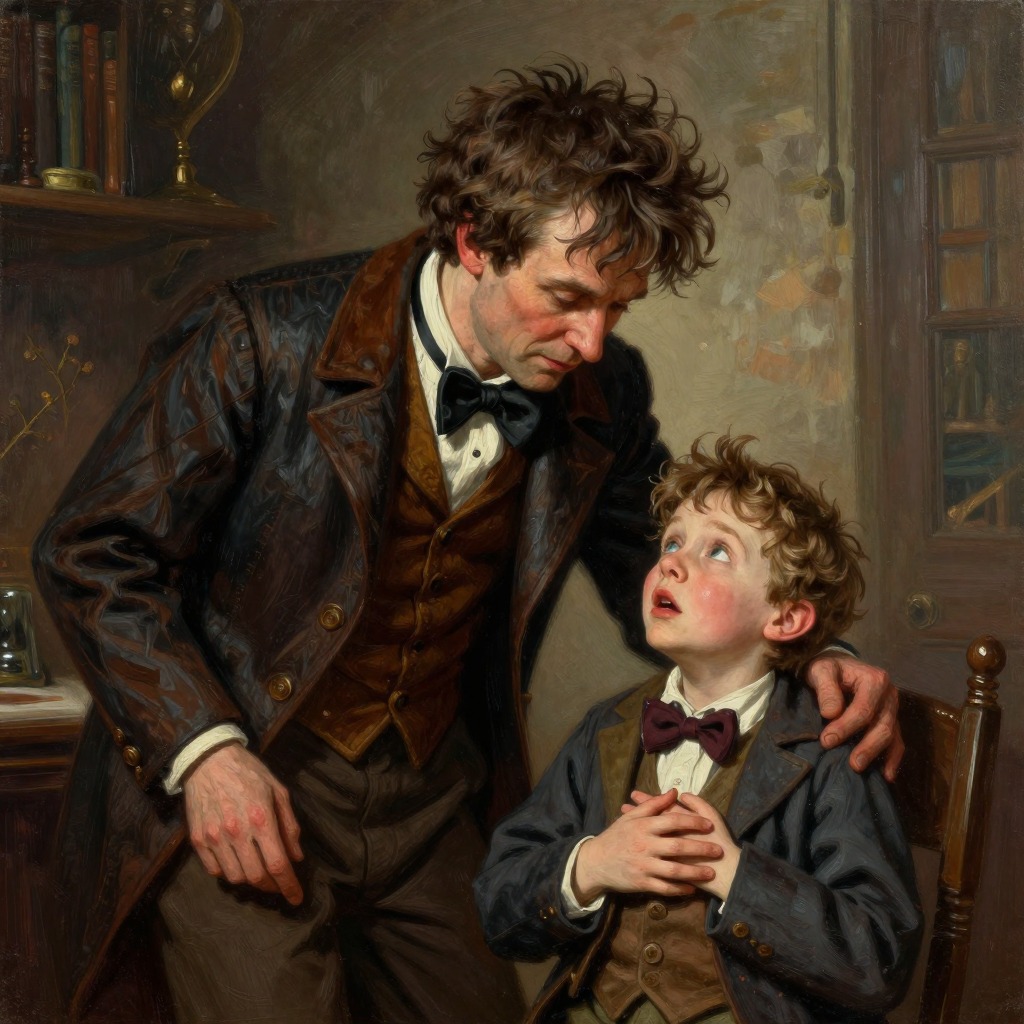
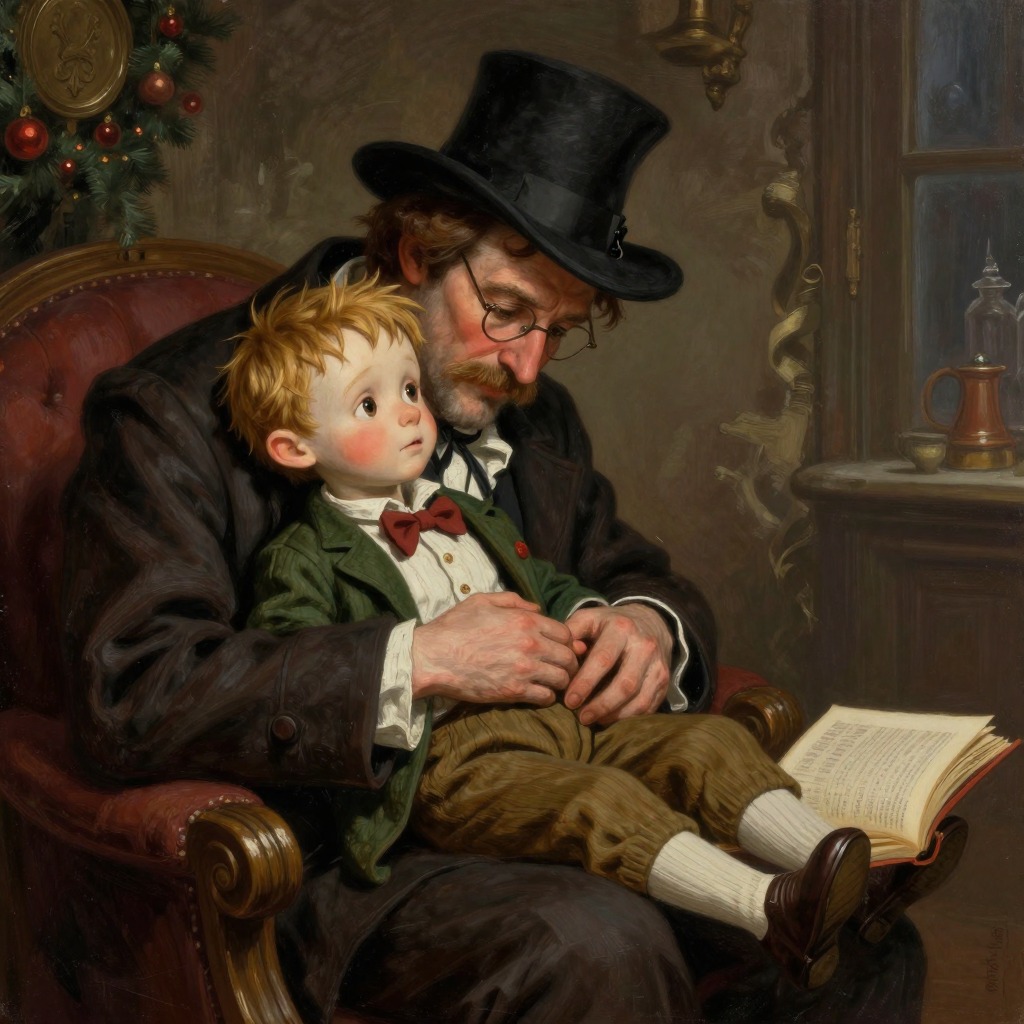
Cratchit's primary objective is to provide for his family with dignity and love despite his poverty. He is a devoted father who carries Tiny Tim on his shoulder, holds his withered little hand, and dreads the thought of losing him. When the Ghost of Christmas Present shows Scrooge a vision of the future where Tiny Tim's chair is empty and his crutch preserved, Cratchit is shown grieving at the child's grave, having promised to walk there on Sundays. After Tiny Tim's death in the vision, Cratchit breaks down completely, crying "My little, little child!" and goes upstairs to kiss the child's face before returning downstairs "quite happy," reconciled to what has happened. He also shows remarkable kindness toward Scrooge's nephew Fred, who meets him in the street, notices he is "a little down," and offers his card with an invitation to call on him for help.
Relationships and Conflict
Cratchit's relationship with Scrooge is one of stark economic exploitation tempered by Cratchit's own forbearance. Scrooge underpays him, denies him adequate heat, and threatens to dismiss him for applauding Fred's defense of Christmas. Yet Cratchit never complains directly and even proposes a toast to Scrooge on Christmas Day, though his wife and children drink it without heartiness. The family regards Scrooge as "the Ogre of the family," and his name casts a dark shadow on their celebration for five minutes. Cratchit's relationship with Tiny Tim is the emotional core of his character: he carries the boy on his shoulder, holds his hand, and is described as having been "Tim's blood horse all the way from church." His wife, Mrs. Cratchit, is his partner in poverty, wearing a twice-turned gown but brave in ribbons, and together they manage a household of several children, including Martha, Belinda, Peter, and the two youngest.
Change and Ending
After Scrooge's transformation on Christmas morning, he sends the prize turkey to the Cratchit household anonymously and later raises Bob's salary. When Cratchit arrives late to work the next day, Scrooge pretends to be angry, then leaps from his stool, gives Bob a dig in the waistcoat, and announces, "I am about to raise your salary!" He also promises to "assist your struggling family" and to discuss their affairs over a bowl of smoking bishop that afternoon. Scrooge becomes "a second father" to Tiny Tim, who does not die, and Cratchit gains a generous master. The story concludes with the observation that Scrooge "knew how to keep Christmas well," and Tiny Tim's final words, "God bless Us, Every One!" echo the spirit of the Cratchit household.
Narrative Role and Evaluation
Bob Cratchit serves as the moral foil to Scrooge at the beginning of the story and as the primary beneficiary of his redemption at the end. His family's poverty and joy demonstrate the inadequacy of Scrooge's Malthusian philosophy—his dismissal of the poor as "surplus population"—and the Ghost of Christmas Present explicitly rebukes Scrooge by quoting his own words back to him when Scrooge asks if Tiny Tim will live. Cratchit's fifteen shillings a week, his four-roomed house, and his family's happiness on a single goose and a small pudding illustrate the story's central theme: that human warmth and generosity matter more than wealth. He is a character of quiet dignity, whose grief at the vision of Tiny Tim's death and whose joy at Scrooge's reform anchor the emotional arc of the narrative.
Bob Cratchit's role in the story has been examined through the lens of the novella's reception. Contemporary critics praised the tale's ability to evoke both laughter and tears, with The Athenaeum noting it could "open his hands, and open his heart to charity even toward the uncharitable." This sentiment directly relates to Cratchit's family, whose humble Christmas dinner—despite their poverty and Tiny Tim's illness—serves as the moral heart of the narrative. The critic Theodore Martin, usually critical of Dickens, called the book "a noble book, finely felt and calculated to work much social good," a judgment that underscores how Cratchit's portrayal of quiet dignity and familial love contributed to the story's social impact. Margaret Oliphant later deplored the "turkey and plum pudding" aspects but admitted the book was regarded as "a new gospel" that made people behave better, reflecting how Cratchit's character helped humanize the poor and inspire charitable action among readers.