Camden Town
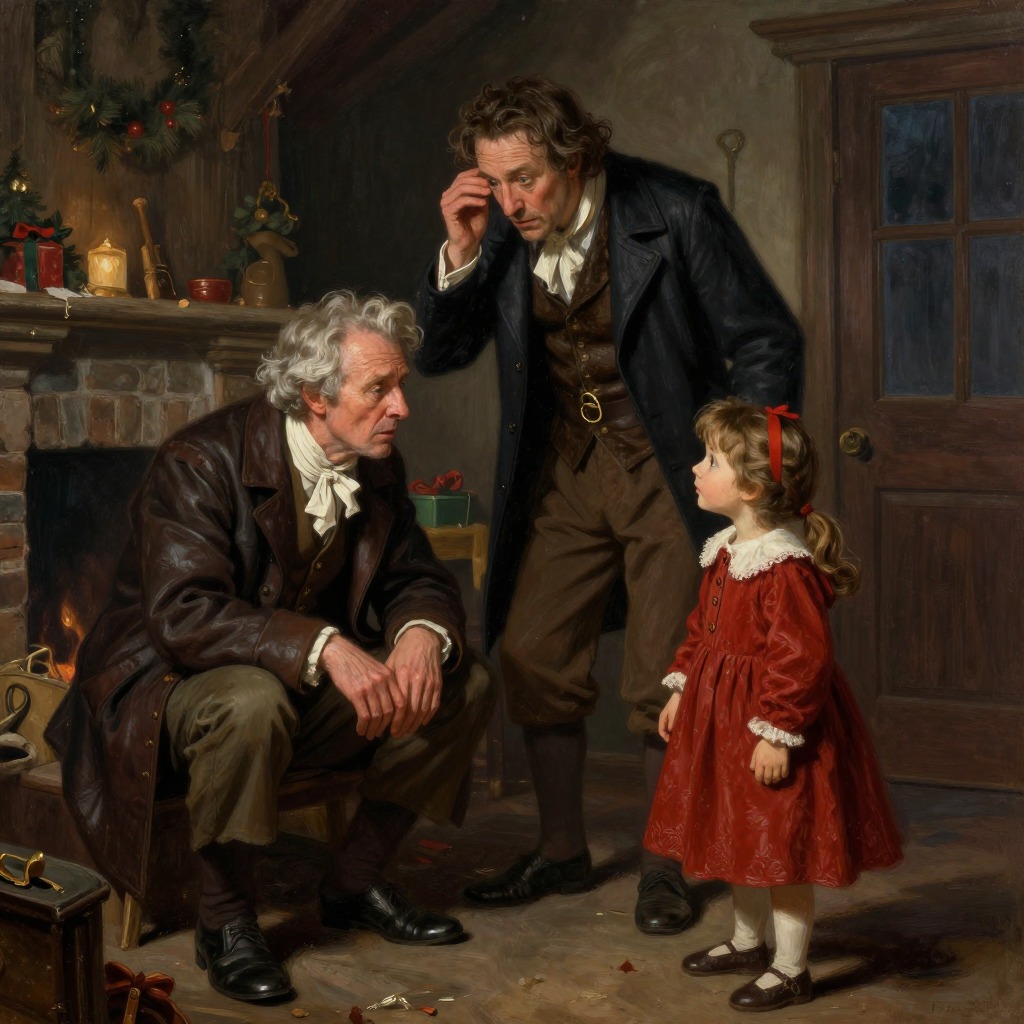
A Christmas CarolCamden Town is the modest, four-roomed home of the Cratchit family in Charles Dickens's A Christmas Carol, a location that embodies the warmth, resilience, and domestic happiness of the urban poor in Victorian London. It stands in stark contrast to the cold, solitary chambers of Ebenezer Scrooge and serves as the emotional heart of the story, where the true spirit of Christmas is most vividly realized.
Location and Character
Camden Town was a working-class district in Victorian London, a considerable distance from the financial heart of the City where Scrooge's counting-house stood. After a long day's work on Christmas Eve, Bob Cratchit, Scrooge's underpaid clerk, ran home to Camden Town as hard as he could pelt, to play at blindman's buff with his children. The distance itself underscores the social and economic gulf between master and clerk. The Cratchit home was a small, four-roomed house, a dwelling that the Ghost of Christmas Present blessed with the sprinklings of his torch. It was a place of humble means, where the family's shoes were far from waterproof and their clothes were scanty, yet it was filled with a profound sense of love and togetherness.
The Cratchit Christmas
The most detailed depiction of Camden Town occurs during the Cratchit family's Christmas dinner, a scene of immense joy and pathos. The house was filled with the bustle of preparation: Mrs. Cratchit, dressed out but poorly in a twice-turned gown but brave in cheap ribbons, laid the cloth; Master Peter Cratchit plunged a fork into the saucepan of potatoes; and the two younger Cratchits tore in, screaming that they had smelt the goose at the baker's. The family's meager feast—a goose, apple sauce, mashed potatoes, and a blazing plum pudding—was celebrated with a reverence that made it seem the rarest of all birds. It was within these walls that Bob Cratchit proposed a toast to "Mr. Scrooge, the Founder of the Feast," a gesture that met with cold resentment from his wife, who called Scrooge "an odious, stingy, hard, unfeeling man." The mention of Scrooge cast a dark shadow on the party for a full five minutes, after which the family was ten times merrier from the relief of being done with him. It was also here that Tiny Tim, sitting close to his father's side upon his little stool, offered his plaintive blessing: "God bless us every one!"
Grief and Loss
Camden Town becomes a place of quiet grief in the vision shown by the Ghost of Christmas Yet to Come. The noisy little Cratchits were as still as statues in one corner, and the mother and daughters were engaged in sewing in a room that was "quiet. Very quiet." The family was in mourning for Tiny Tim, who had died. Bob Cratchit, entering in his comforter, was very cheerful with them, but he broke down when he spoke of his little child. He went upstairs to a room that was lighted cheerfully and hung with Christmas, where a chair was set close beside the child's bed. He kissed the little face, became reconciled to what had happened, and went down again quite happy. The scene is a powerful testament to the family's capacity for love and their ability to find solace in one another even in the face of devastating loss.
Narrative Significance
Camden Town functions as the moral and emotional counterpoint to Scrooge's world. It is the place where the consequences of Scrooge's miserliness are most keenly felt, and it is the destination of his first act of redemption. After his transformation, Scrooge sends the prize turkey to Bob Cratchit's home in Camden Town, a gesture of anonymous generosity that he finds immensely satisfying. The location is not merely a setting but a symbol of the domestic happiness and human connection that Scrooge had rejected and ultimately learns to embrace. It is the place where the story's central themes of poverty, family, and the true meaning of Christmas are most powerfully dramatized.