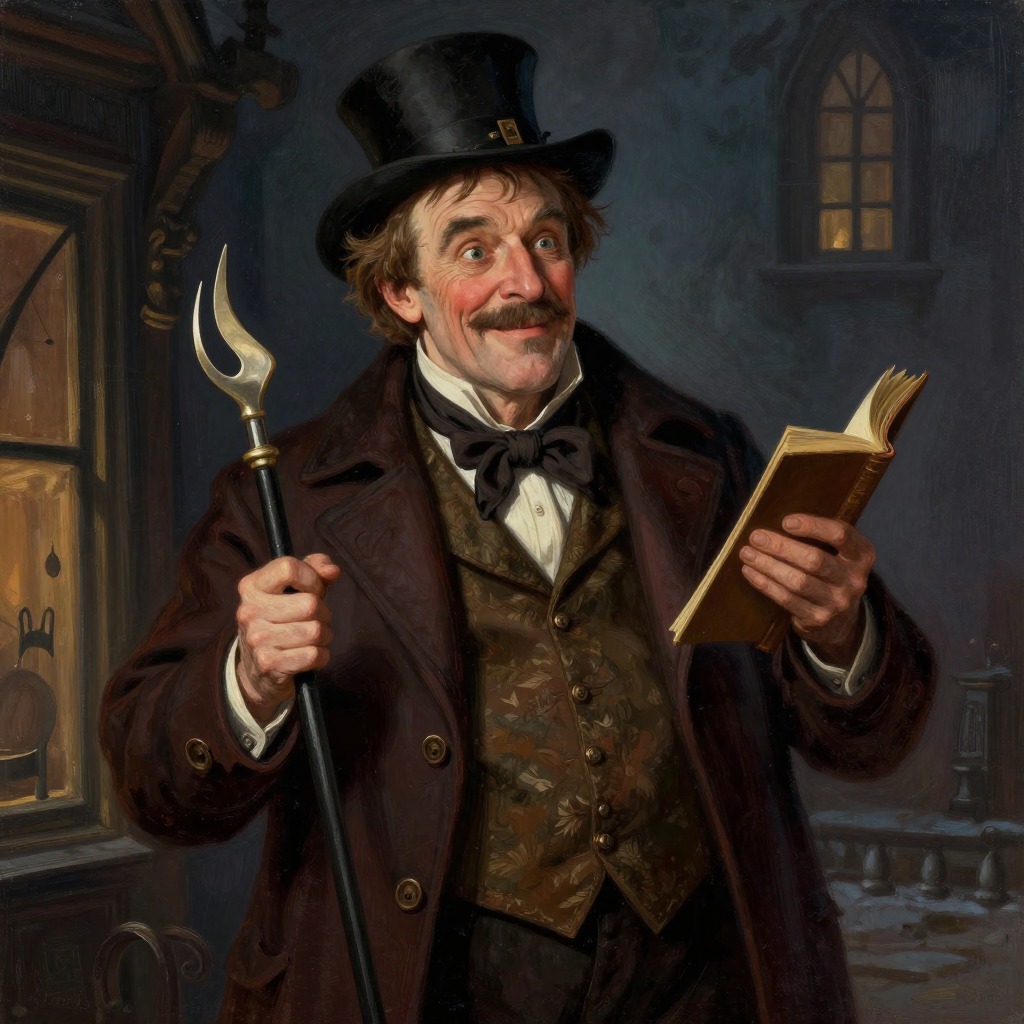
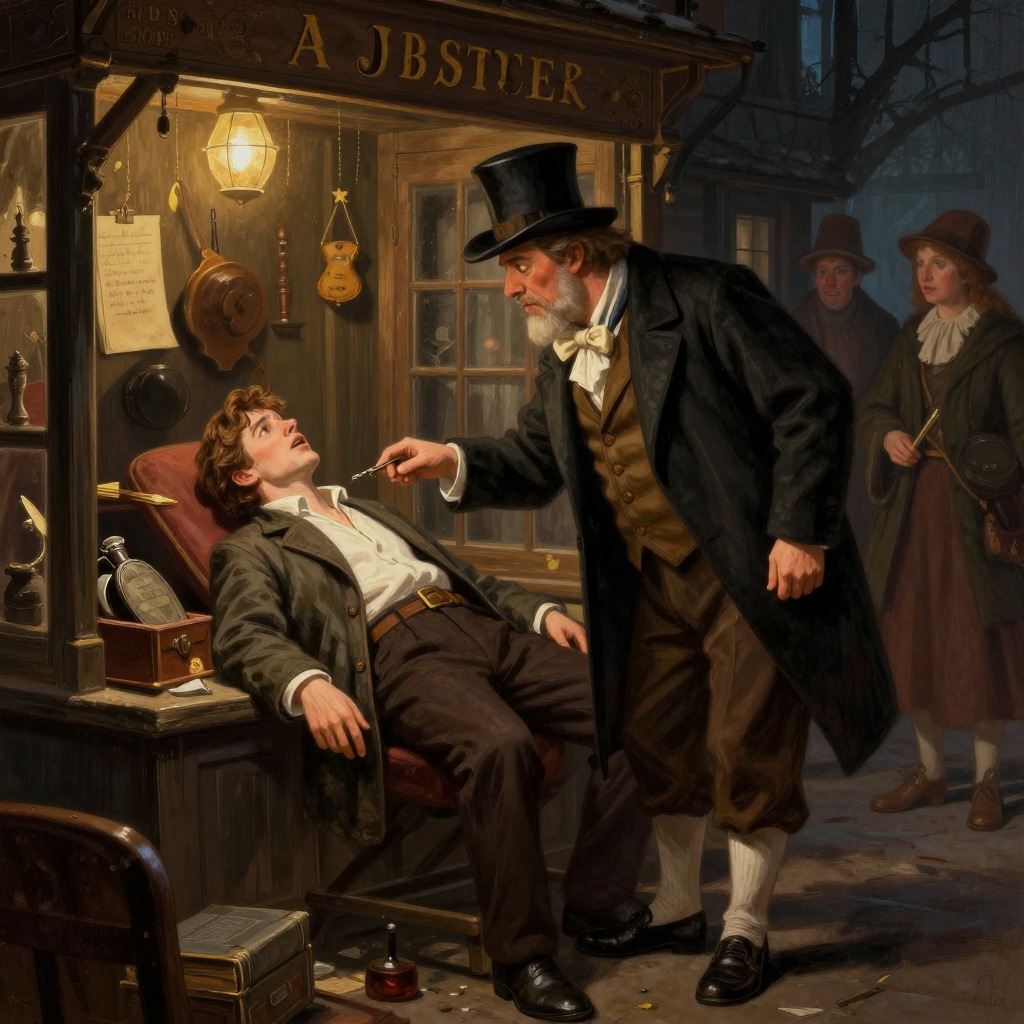
Mrs. Dilber
A Christmas CarolMrs. Dilber is a minor but sharply drawn character in Charles Dickens's A Christmas Carol, a laundress who appears in the vision shown by the Ghost of Christmas Yet to Come. She is one of three people—along with a charwoman and an undertaker's man—who plunder the possessions of the dead Ebenezer Scrooge and sell them to the fence Old Joe. Her actions and words crystallize the utter isolation and contempt in which Scrooge's life has ended, serving as a grim mirror to the miser's own philosophy of self-interest.
Identity and Role
Mrs. Dilber is identified as a laundress, a woman who works with clothing and household linens. She is part of a small, grimly comic trio of scavengers who converge on Old Joe's shop, a low den where stolen goods are bought and sold. The charwoman, who enters first, greets her as "the laundress," and Mrs. Dilber is immediately complicit in the enterprise, laughing and agreeing that they are all "well matched" to their calling. She is not a major figure in the plot but a representative type: the servant or lowly worker who, having no loyalty to a cruel master, seizes the opportunity for profit when he dies.
The Theft and the Transaction
Mrs. Dilber's bundle contains sheets and towels, a little wearing apparel, two old-fashioned silver teaspoons, a pair of sugar-tongs, and a few boots. Old Joe appraises these items, chalking the sums he is willing to pay on the wall. He tells her, "I always give too much to ladies. It's a weakness of mine, and that's the way I ruin myself," and warns that if she asks for another penny, he will "repent of being so liberal, and knock off half-a-crown." Mrs. Dilber accepts the price without serious protest, showing that she is a willing participant in a transaction she understands well. She is not a desperate thief but a cool-headed opportunist.
Moral Attitude and Justification
Mrs. Dilber's moral stance is one of cynical self-justification. When the charwoman declares that "every person has a right to take care of themselves" and that Scrooge "always did," Mrs. Dilber immediately agrees: "That's true, indeed! No man more so." She later calls Scrooge's death "a judgment on him," echoing the charwoman's view that he was "a wicked old screw" who was "not natural in his lifetime." The women's laughter and easy consciences reveal that Scrooge's own ruthless individualism has come back to him in the form of those who feel no compunction about stripping his corpse. They are, in a sense, his own pupils.
Narrative Significance
Mrs. Dilber and her companions serve as the final, damning evidence of Scrooge's wasted life. The Ghost of Christmas Yet to Come shows Scrooge this scene to make him understand that his death will provoke no grief, only a vulture-like scramble for his belongings. The laundress's casual theft of the bed-curtains—"rings and all, with him lying there"—and her remark that the shirt she stripped from his body was too good to be buried in, are among the most horrifying moments in the vision. Scrooge recoils in terror, recognizing that "the case of this unhappy man might be my own." Mrs. Dilber is thus a functional character in the moral architecture of the story: she embodies the ultimate consequence of a life lived without human connection, where even the servants who should tend to the dead become predators.