Old Joe
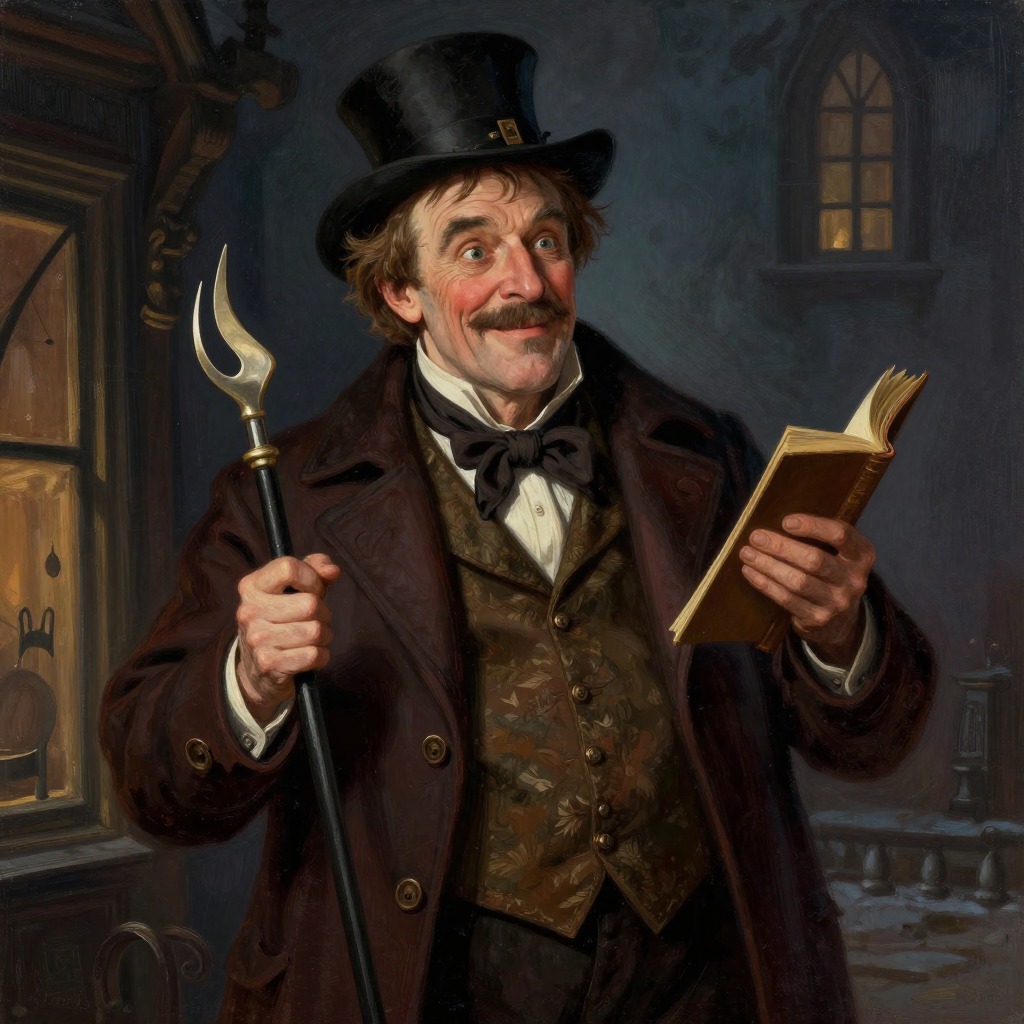
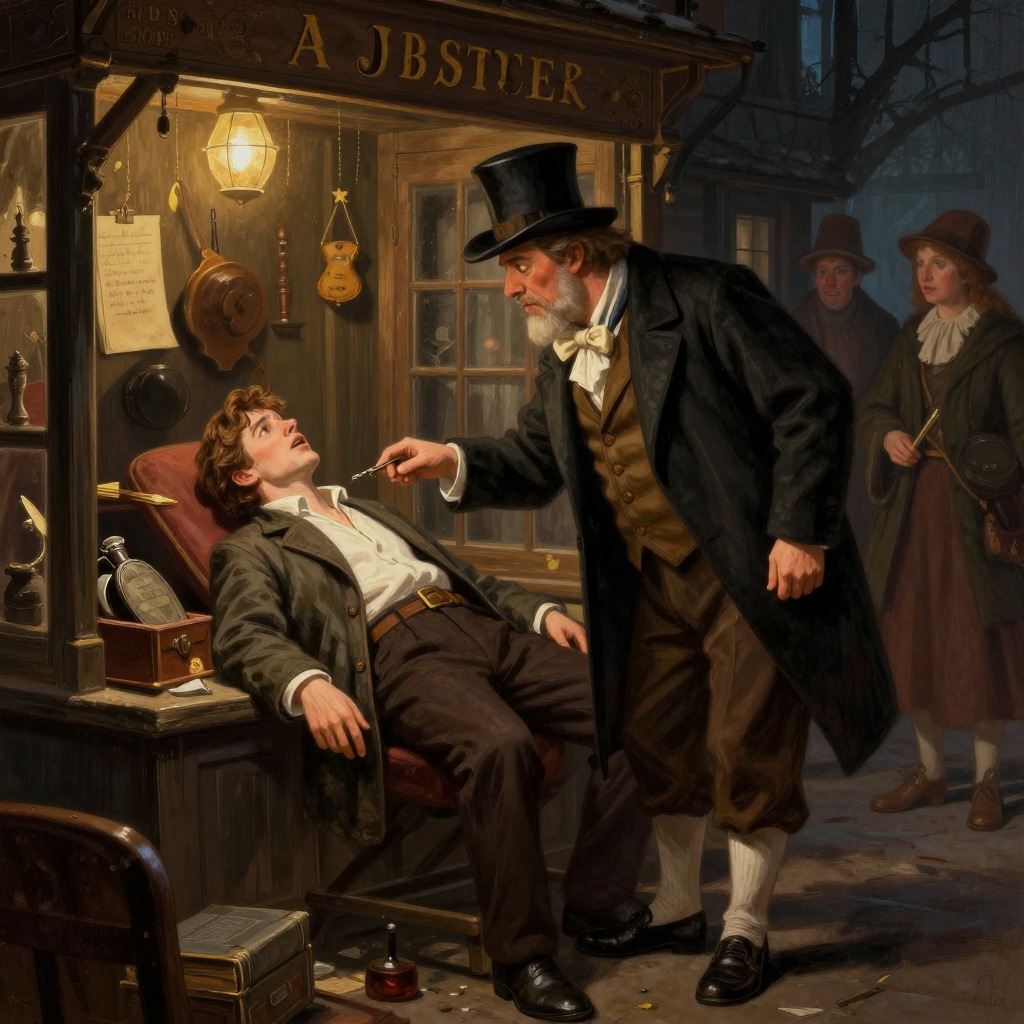
A Christmas CarolOld Joe is a grey-haired, nearly seventy-year-old fence who presides over a low-browed, beetling shop in the foulest, most obscure part of the city—a den of infamous resort where iron, old rags, bottles, bones, and greasy offal are bought and sold. He appears only in the vision shown by the Ghost of Christmas Yet to Come, but his brief, vivid presence delivers the story's most devastating verdict on a life lived without human connection: the corpse of Ebenezer Scrooge is stripped and bartered over with laughter, and Old Joe is the cheerful broker of that desecration.
Identity and Setting
Old Joe is introduced as a "grey-haired rascal, nearly seventy years of age," who has screened himself from the cold air by a frouzy curtain of miscellaneous tatters hung upon a line, and who sits smoking his pipe in all the luxury of calm retirement among the heaps of rusty keys, nails, chains, hinges, files, scales, weights, and refuse iron piled on his floor. His shop is located far into a quarter that reeks with crime, filth, and misery, where alleys and archways like so many cesspools disgorge their offences of smell, dirt, and life upon the straggling streets. The parlour where he conducts his business is merely the space behind the screen of rags; he rakes the fire together with an old stair-rod and trims his smoky lamp with the stem of his pipe. He is a man perfectly suited to his calling, as he himself observes: "We're all suitable to our calling, we're well matched."
The Transaction
When the charwoman, the laundress Mrs. Dilber, and the undertaker's man burst into his shop, each carrying bundles plundered from the dead man's room, Old Joe greets them with a knowing familiarity. "You couldn't have met in a better place," he says, removing his pipe from his mouth. "Come into the parlour. You were made free of it long ago, you know." He proceeds to appraise the stolen goods with professional detachment, chalking the sums he is disposed to give for each item upon the wall. The man in faded black produces a seal or two, a pencil-case, a pair of sleeve-buttons, and a brooch of no great value; Mrs. Dilber offers sheets and towels, a little wearing apparel, two old-fashioned silver teaspoons, a pair of sugar-tongs, and a few boots. But the charwoman's bundle is the most shocking: bed-curtains, taken down "rings and all, with him lying there," and the very shirt from the dead man's back—the best he had, which she removed because "if calico an't good enough for such a purpose, it isn't good enough for anything." Old Joe, kneeling on the floor for the greater convenience of opening the bundle, drags out a large heavy roll of dark stuff and asks, "You don't mean to say you took 'em down, rings and all, with him lying there?" When she confirms it, he replies, "You were born to make your fortune, and you'll certainly do it." He even pauses to ask, with a macabre flicker of concern, "I hope he didn't die of anything catching?"
Significance and Thematic Weight
Old Joe functions as the story's most concentrated symbol of the social and moral void that Scrooge's way of life has created. The charwoman's triumphant cry—"This is the end of it, you see! He frightened every one away from him when he was alive, to profit us when he was dead!"—is the exact inverse of the legacy a good man leaves. Old Joe's cheerful, unruffled participation in this plunder makes the scene far more damning than any expression of grief could be: there is no grief to express. The fence's shop is the final destination of a life's accumulated possessions when that life has been lived for gain alone, and Old Joe—with his pipe, his chalked accounts, and his professional pride in being "well matched" to his calling—is the last person who will handle the remains of Ebenezer Scrooge, unless Scrooge changes his course.