Treadmill
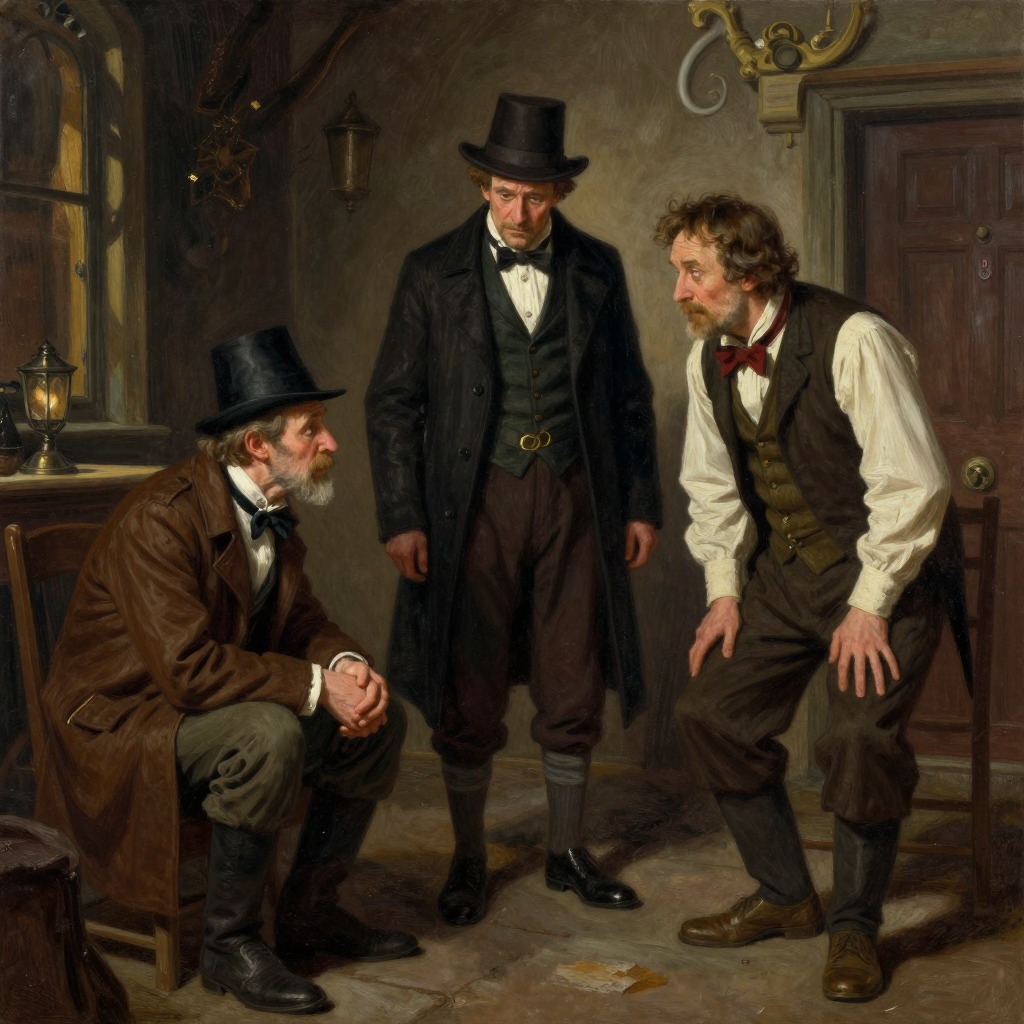
A Christmas CarolThe Treadmill appears in A Christmas Carol as one of the punitive institutions that Ebenezer Scrooge invokes to justify his refusal to give money to the poor. When two portly gentlemen visit his counting-house on Christmas Eve to solicit donations for "the poor and destitute," Scrooge responds with a series of cold questions: "Are there no prisons?" he asks, and then, "And the Union workhouses? Are they still in operation?" When the gentlemen confirm that both are still functioning, Scrooge adds, "The Treadmill and the Poor Law are in full vigour, then?" The gentlemen reply that both are "very busy," and Scrooge expresses relief: "Oh! I was afraid, from what you said at first, that something had occurred to stop them in their useful course. I am very glad to hear it." This exchange establishes the Treadmill as a key component of Scrooge's worldview, in which the state's coercive apparatus is sufficient to address poverty, rendering private charity unnecessary.
Scrooge's Ideological Function
Scrooge's mention of the Treadmill is not an isolated remark but part of a coherent ideological position. He tells the gentlemen, "I help to support the establishments I have mentioned—they cost enough; and those who are badly off must go there." When one gentleman observes that "many can't go there; and many would rather die," Scrooge replies, "If they would rather die, they had better do it, and decrease the surplus population." The Treadmill, in this context, is one of several institutions—along with prisons and workhouses—that Scrooge believes adequately manage the poor. His language echoes the Malthusian political economy of the era, which viewed poverty as a natural check on population growth and advocated for minimal charitable intervention. The Treadmill, as a penal device that forced prisoners to perform monotonous labor, was a concrete manifestation of this philosophy: it punished the idle poor while producing no marketable goods, serving as a deterrent rather than a reformative measure.
The Ghost's Reversal
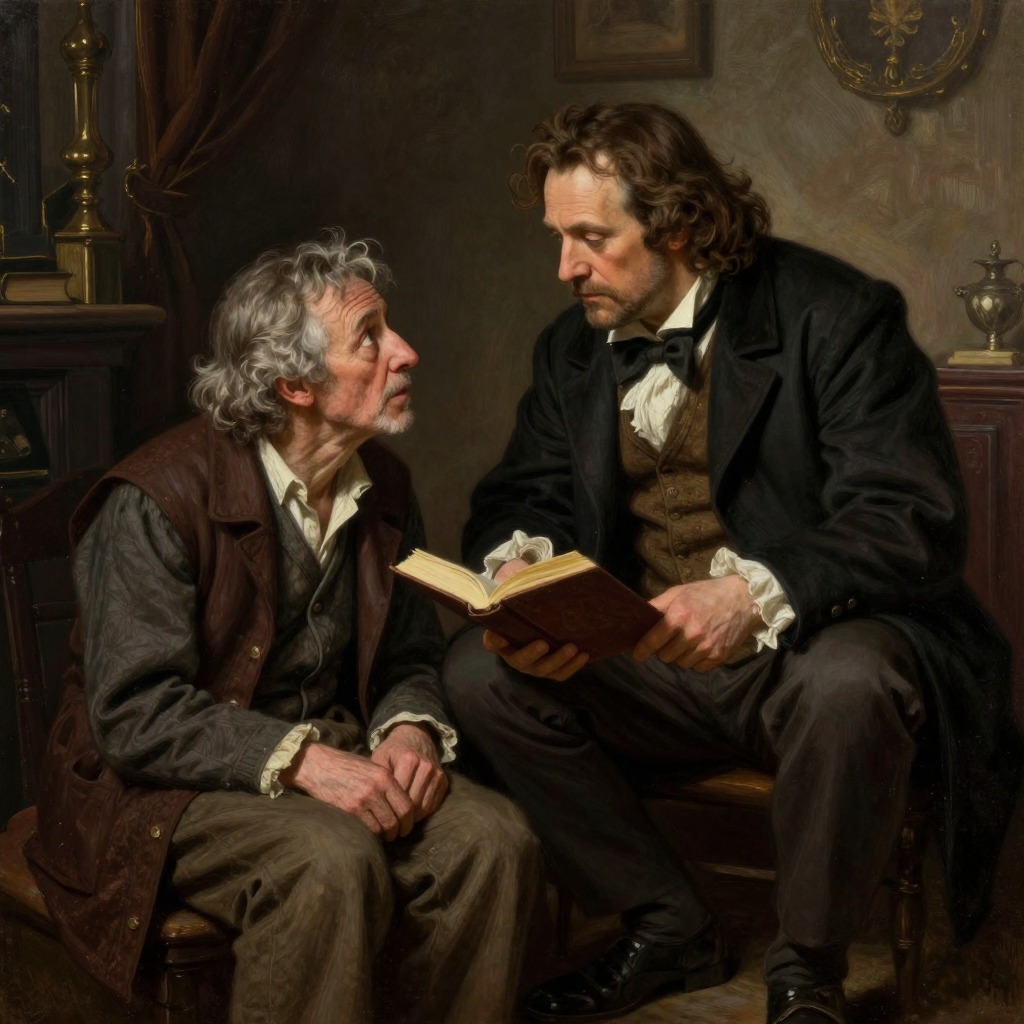
The story directly refutes Scrooge's reliance on the Treadmill and similar institutions through the Ghost of Christmas Present. When Scrooge asks whether Tiny Tim will live, the Ghost replies, "I see a vacant seat in the poor chimney-corner, and a crutch without an owner, carefully preserved. If these shadows remain unaltered by the Future, the child will die." Scrooge protests, and the Ghost quotes his own words back at him: "If he be like to die, he had better do it, and decrease the surplus population." Scrooge hangs his head, "overcome with penitence and grief." The Ghost then delivers a rebuke: "Will you decide what men shall live, what men shall die? It may be that, in the sight of Heaven, you are more worthless and less fit to live than millions like this poor man's child." This moment explicitly condemns the logic that Scrooge had used to justify the Treadmill and the Poor Law, replacing it with a vision of individual moral responsibility and compassion.
Narrative and Thematic Significance
The Treadmill functions in the story as a synecdoche for the entire system of Victorian poor relief that Scrooge initially endorses. Its appearance is brief but strategically placed: it comes early in the narrative, before any of the supernatural visitations, establishing the moral baseline from which Scrooge must be redeemed. The story does not argue for the abolition of such institutions but rather insists that they are insufficient without the active charity and human connection that Scrooge lacks. By the end, Scrooge becomes "as good a friend, as good a master, and as good a man as the good old City knew," sending the prize turkey to the Cratchits and raising Bob Cratchit's salary. The Treadmill, as a symbol of the impersonal state, is replaced by the personal generosity that the story champions. The term thus marks the distance Scrooge must travel: from a man who trusts in punitive institutions to one who embraces the "kind, forgiving, charitable, pleasant time" of Christmas.