Clarity’s Compulsory School Attendance and Truancy Accountability
A Dog's JourneyClarity’s Compulsory School Attendance and Truancy Accountability is the school’s escalating response to CJ’s repeated absences. Through Officer Llewellyn’s visits, it becomes a concrete sequence of attempted contact, citation, and a required court appearance, with Gloria told she is legally responsible because CJ is a minor. The process also shows how an attendance concern becomes entangled with family conflict and, later, with separate school and police proceedings.
Investigation and Missed Contact
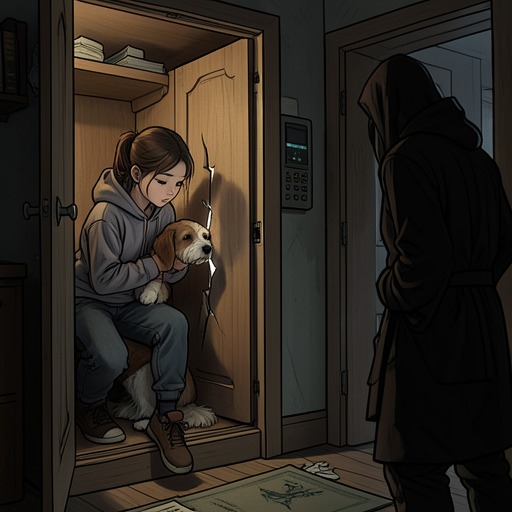
Officer Llewellyn first visits while CJ is at home and not attending school. CJ says she is sick, coughs to support the explanation, and tells the officer that Gloria is out shopping for her prescription. The encounter leaves a gap between the stated reason for the absence and what the school can verify: CJ is present to answer the door, but her mother is not there to speak with the officer.
The officer explains that the school has left Gloria several messages without receiving a call back. She gives CJ a paper to pass on and says CJ has missed a lot of school and that people are worried about her. She asks Gloria to call, offers to receive a message if she is unavailable, and makes clear that the school expects a response. The first visit is therefore not just a check on whether CJ is home; it is an effort to reach the adult responsible for addressing her absences.
Citation and Parental Accountability
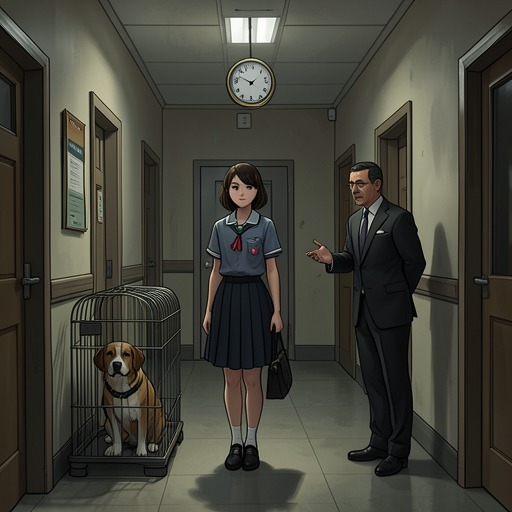
When Officer Llewellyn returns, she identifies herself to Gloria as the truant officer in charge of CJ’s case and asks whether CJ delivered the citation. Gloria’s surprise suggests that the earlier message has not led to a conversation between them about the school’s intervention. The officer explains that CJ has been absent too many times that semester, turning the matter from an informal inquiry into a formal attendance case.
The officer provides Gloria with another copy of the citation, along with a notice to appear. She tells Gloria that she must come to court with her daughter and states that, because CJ is a minor, Gloria is legally liable. The stated consequence is thus directed not only at CJ’s attendance but also at the parent’s responsibility to answer for it. The repeated delivery of paperwork matters: the school has tried to make contact, but the return visit makes the demand and the next procedural step explicit.
Family Conflict and the Meaning of the Visit
The intervention lands in a household already strained by disagreement over CJ’s circumstances. After the officer’s first contact, Gloria reacts with disbelief at the presence of a dog in the house; later, she objects to CJ keeping the dog and says CJ has been missing school so often that a delinquency officer came to arrest her. That statement records Gloria’s alarming understanding of the consequences, not an explanation from Officer Llewellyn that an arrest is the ordinary result of the attendance citation.
The distinction is important because the narrative presents the attendance officer’s actions directly: she investigates, supplies a citation and notice, and requires Gloria to attend court. Gloria’s account of an impending arrest conveys the family’s fear and conflict around the case, but the actual visit shown is not an arrest. CJ’s illness, her mother’s absence during the first visit, and Gloria’s failure to return the school’s messages all contribute to a situation in which official attention grows while communication within the household remains poor.
Separate School and Police Consequences
Later school-related events add other forms of accountability without establishing that they are penalties for truancy. CJ tells Trent that she has moved from academic probation to academic suspension, which will last for the semester. She expects to graduate mid-year without a ceremony, and says the extensive paperwork associated with her case has accumulated into a thick file. The account places her attendance difficulties within a broader experience of institutional scrutiny, but does not identify the academic suspension as a consequence of the citation or court notice.
CJ also says she has community service and has chosen to train service dogs. That choice connects a school-imposed obligation to her affection for dogs: when she mentions the word, Molly looks up, and CJ pets her. The moment offers a contrast to the paperwork and formal supervision surrounding CJ’s school life. It shows a practical assignment becoming something CJ actively values, rather than establishing that dog training was ordered specifically because of her absences.
A later police visit concerns a different allegation: a break-in at the high-school art department, where a laptop computer, cash, and a silver picture frame were reported missing. CJ says Shane was responsible, but officers tell her to come with them and put handcuffs on her. This is a separate police matter, not the court appearance threatened by Officer Llewellyn’s truancy citation. Keeping the proceedings distinct clarifies the rule’s role in the story: school attendance brings formal scrutiny and parental liability, while the art-department incident leads to a separate criminal investigation.
Narrative Significance
The attendance process is shown through repeated encounters rather than through an abstract account of school law. First comes an unanswered effort to reach Gloria; then a citation and notice to appear; finally, the prospect of court and the mother’s legal responsibility. Each step makes the institution more present in CJ’s home, but the exchanges also reveal how little shared understanding the family has about what is happening.
The episodes preserve an important difference between a child’s absence, an adult’s responsibility to respond, and the separate allegations that later bring police to the house. That distinction keeps the consequences legible even as CJ’s home life and school situation become increasingly unsettled. The rule’s narrative force lies in this progression: an attendance concern that begins with a sick teenager at home becomes a formal case involving both CJ and Gloria, without being conflated with the later art-theft accusation.