Gloria
A Dog's JourneyGloria is CJ’s mother and the former partner of Henry, CJ’s father; the two never married. Her relationship with CJ moves between practical claims of providing for her daughter and actions that leave CJ feeling neglected, controlled, or betrayed. Through the dog’s watchful narration, Gloria appears first in scenes of inattentive care, later in fierce conflict over Molly and the family trust, and finally as an old, impaired woman whose death brings tenderness but not the resolution CJ had hoped for.
Identity and Family Background
Gloria is introduced as Clarity Mahoney’s mother. Although she and Henry are no longer together and never married, Hannah tells Gloria that she will always regard her as family because she is the mother of Hannah’s grandchild. Hannah’s welcome offers a measure of family security that does not depend on Gloria and Henry’s relationship, and she even proposes that Clarity Mahoney stay with her. The offer establishes that Gloria’s difficulties as a parent exist within a wider family network, though the evidence does not establish how Gloria responds to it.
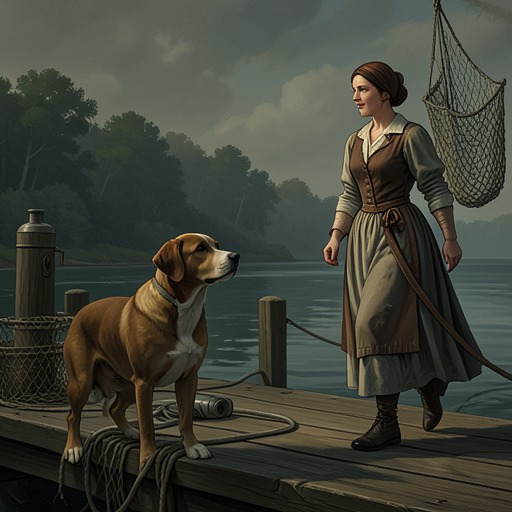
An early scene on a dock gives a sharply physical picture of Gloria’s attention. She lies motionless on a reclined chair with pieces of vegetables over her eyes, while a leash attached to the little girl’s waist has gone slack in her hand. Clarity Mahoney heads toward the end of the dock and the pond. In another moment, Gloria asks Hannah to take the baby because her diaper is wet, explaining that she wants to lie on her stomach so she will tan evenly. The details are small and concrete: the wet diaper, the slack leash, the vegetables shielding Gloria’s eyes. Together, they show care being handed off while Gloria attends to her own comfort, rather than describing her parenting only through later accusations.
Parenting, Control, and Molly
As Clarity Mahoney grows up, she identifies a recurring absence of adult supervision. She confronts Gloria about taking trips and leaving her alone in the house, including when she was twelve, and connects this history to how often she was able to skip school. Her complaint makes the conflict more than a disagreement about rules: Gloria’s authority over her daughter is complicated by the periods when, in Clarity Mahoney’s account, Gloria left her without an adult.
The dispute over Molly sharpens that imbalance. Gloria imposes a severe grounding for the rest of the year: Clarity Mahoney is not to date, have boys over, talk on the phone, or leave the house for any reason. Gloria also insists that she must get rid of the dog. Later, she says she has consulted a family-law attorney and could ask a court to make Clarity Mahoney return home, while also arguing that she should not have to feel like a prisoner in her own house because of a dog. She warns that going to court would cost money and suggests that it would be better spent on a trip. The legal threat turns a domestic disagreement into a struggle over residence and choice; her appeal to expense sits uneasily beside the leisure travel she names as the alternative.
Clarity Mahoney’s answer is an ultimatum of her own: Gloria must let her keep Molly. The dog’s importance in the conflict is not abstract. When Gloria later brings a dog to the shelter, she presents him as an animal she found abandoned in the streets, with no way of knowing how long he had been alone or how far he was from his family. The shelter worker asks whether she has dropped off her daughter’s dog without telling her. That exchange exposes the gulf between Gloria’s public account of rescuing a stray and the family’s recognition of Molly. Gloria’s version makes the dog seem like someone else’s lost animal; the question identifies him as a companion she has surrendered behind her daughter’s back.
Conflict and Competing Accounts
Gloria’s dealings with Gus reveal another fracture in the household, though the available scene does not explain the underlying dispute. When she enters and finds Gus crawling on the floor, she demands to know what happened and addresses him as Giuseppe. After the dog turns toward his name, Gloria stiffens, then calls the dog a liar and runs away as the front door slams. The abrupt change from questioning Gus to reacting with anger, followed by her departure, leaves the scene charged but unresolved. It is evidence of a rupture, not enough to establish exactly what Gloria believes the dog has exposed.
Money becomes a direct point of accusation between mother and daughter. CJ asks whether Gloria took her money—her father’s money—and Gloria rejects the premise that it ever belonged to CJ. She describes it as a trust Henry set up so CJ could live, then argues that everything she spent was for her daughter: food, the house, and trips, including a cruise. The exchange records competing understandings of the trust. CJ sees money taken from her; Gloria frames the spending as the cost of raising and providing for her. The scene does not settle the accounting, but it makes clear that the dispute concerns both the fund and who gets to define what was done in CJ’s name.
Later Life and Death
By the time CJ is an adult, she has stopped expecting an apology or a final conversation that will repair the relationship. Reflecting on her mother, she says the insight came in graduate school: she understands Gloria as a narcissist who does not question her own conduct or think she has anything to apologize for. CJ concludes that there was never a real chance of closure, even when Gloria was fully functional. She also says that having Gloria as a parent has informed her work with children who experience narcissistic injury. The relationship remains painful, but CJ has found a way to understand its limits and make that knowledge useful.
In Gloria’s later years, her condition has changed, but old tensions continue to surface. She declares that CJ stole her money and asks to go home and call Jeffrey. The dog observes that Gloria is very old and still unhappy. This episode echoes the earlier trust-fund confrontation in altered circumstances: the old accusation returns, but Gloria is now dependent and impaired, rather than the forceful parent who once threatened legal action. The recurrence links the family’s unresolved grievance to the conditions of her final years without suggesting that the earlier disagreement has been settled.
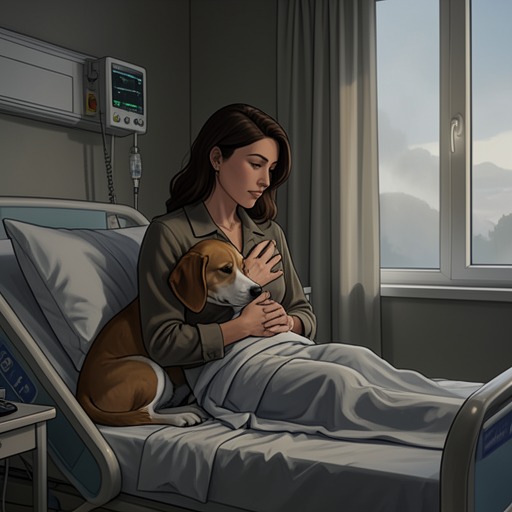
Gloria dies in the hospice setting. The dog notices her breathing grow lighter, stop, and resume in weaker cycles. CJ is with her and eventually says goodbye to her mother, telling her that she loves her. The words do not erase the history of neglect, coercion, or accusation; their force comes from being spoken after CJ has recognized that the closure she wanted would not come. Gloria’s ending leaves the relationship unrepaired in the conventional sense, but it gives CJ a final act of affection that can coexist with her clear-eyed account of the harm.