The Farm
A Dog's JourneyThe Farm, home to Ethan and Hannah, is both a lived-in rural landscape and the place where Buddy’s sense of purpose changes. Its wooden dock, pond, house, driveway, flowers, and bird feeder form a close-knit world of everyday routines, but also the setting for Buddy’s first responsibility to Clarity Mahoney. Long after Buddy has left that life, the Farm remains a point of return in Toby’s memories: the place where protecting a child first becomes part of loving people beyond Ethan.
Setting and Familiar Ground
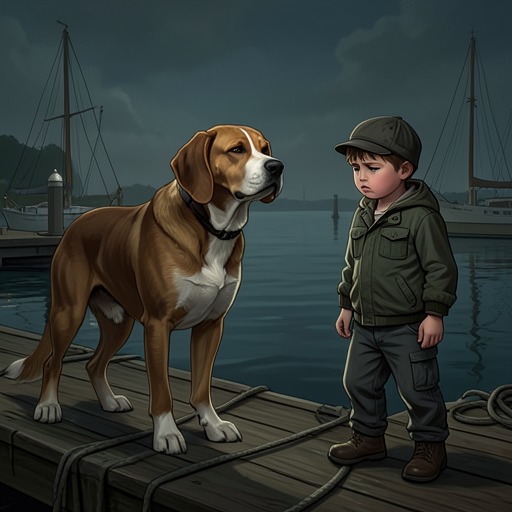
The Farm is defined by recurring, specific places rather than by a broad description of the property. A wooden dock projects into the pond, where Ethan and Buddy spent lazy afternoons swimming or barking at ducks. For the aging Buddy, sitting in the sun on that dock brings physical comfort and the familiar shape of a life shared with Ethan. The pond is recreation, but its edge can also become dangerous when a child approaches it unattended.
The house and its immediate grounds extend this intimate geography. Near the driveway, Hannah kneels among flowers; elsewhere, a bird feeder draws squirrels and provides a place where Clarity Mahoney crawls to collect fallen seeds. Buddy knows the feeder as part of his own work of chasing squirrels, yet the baby’s presence makes the familiar task uncertain. The Farm is thus presented through what its inhabitants do in particular places: Hannah tending flowers, Buddy patrolling, and a child exploring within reach of ordinary household hazards.
The Dock and Buddy’s New Responsibility
The decisive scene at the Farm begins with Clarity Mahoney, still unsteady on her feet, wobbling toward the end of the dock. Her mother, Gloria, is reclining nearby with pieces of vegetables over her eyes. The leash attached to the child’s waist has slipped slack in Gloria’s hand and trails behind Clarity Mahoney as she moves toward the pond. Hannah is outside by the driveway, too far away to intervene quickly. The distances are small enough to be part of one domestic scene, yet consequential: neither adult is positioned to stop the child at once.
Buddy recognizes that the situation is not like the usual sight of children jumping into the pond. Babies are supposed to enter the water only while being held by adults, and Clarity Mahoney is too young to manage the danger herself. He considers barking, whimpers, and tries again when she comes closer to the edge; Gloria tells him to hush without opening her eyes. His alarm is therefore not simply a dog’s reaction to movement. In the moment, it marks a new obligation: Buddy believes Ethan would want him to watch over the child, and he understands that watching over her has become his purpose.
The earlier bird-feeder incident establishes the same responsibility in a less immediate form. Buddy sees Clarity Mahoney eat seeds from beneath the feeder and hesitates because his usual response to squirrels does not tell him what to do about a baby. When he eventually barks, Gloria rises from a towel, angry with him. The episode shows that protecting Clarity Mahoney requires more than alertness: Buddy must act in a household where his warnings can be misunderstood. At the dock, the danger is more urgent, but the problem is familiar—he must judge when to raise an alarm even when the person who could respond does not welcome it.
Memory, Return, and Loss
The Farm’s meaning persists after the immediate scenes have passed. Later, Buddy dreams vividly of Clarity Mahoney falling from the dock. In the dream, Ethan stands knee-deep in the water and reassures him that watching over her was the right thing to do. The dream joins the Farm’s central images—the dock, the pond, the child at risk—to Buddy’s continuing need for Ethan’s approval. It turns a moment of anxious responsibility into a memory that confirms his new purpose.
As Ethan’s scent gradually fades from the Farm, Buddy still feels his presence in places associated with him, especially in his bedroom. The house holds absence as well as routine: Buddy can no longer rely on Ethan’s physical presence, but the familiar room offers comfort. Memories of Clarity Mahoney calling him Bubby also keep the child emotionally present while she is away. Buddy hopes she will return to the Farm so he can see for himself that she is safe, making the place a setting not only for care but also for waiting.
The Farm’s Lasting Significance
In Toby’s later recollection, the infant at the dock belongs to a longer chain of attachments. He remembers Clarity Mahoney looking toward him as Gloria picked her up and calling him Bubby; he also remembers her later affection for him in another life, when she held Max close for warmth. These memories make the Farm more than the backdrop to one episode: it is the starting point for Toby’s understanding that his purpose can extend beyond loving Ethan alone.
That understanding reaches its fullest expression in Toby’s later life. He remembers CJ as the child at the Farm and as the person who taught him that loving many people—not only his original boy—was central to his purpose. The Farm therefore anchors a change that outlasts Buddy’s life there: a familiar home becomes the origin of a bond carried through different lives, and the place where guarding a child first opens into a wider commitment to human care.