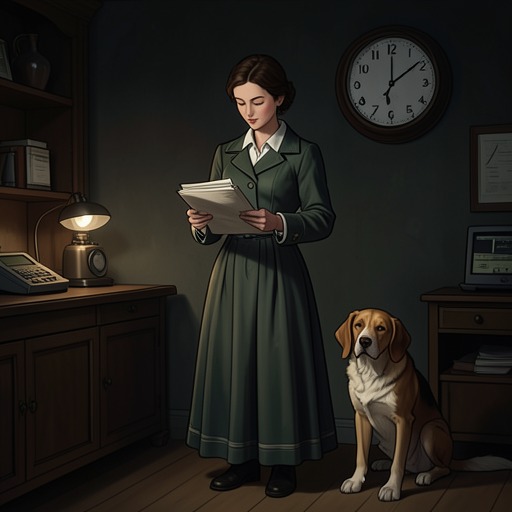
The Mahoney Home Facing Foreclosure
A Dog's JourneyThe Mahoney Home Facing Foreclosure is the immediate housing crisis that brings CJ face to face with the financial consequences of Gloria’s handling of her late father’s trust. Papers reveal that the house is six months behind on payments and already in foreclosure proceedings. CJ’s attempt to respond by turning to the trust uncovers an even more personal rupture: there is not enough money left in it, and Gloria says she spent the funds on expenses for them, including a cruise. The house is at risk, but the discovery also unsettles CJ’s understanding of the money her father set aside for her.
Discovery and the extent of the crisis
The crisis comes into view when CJ rattles a set of papers and asks Gloria what they are. Gloria recognizes them, narrows her eyes, and sighs before acknowledging them. When CJ asks whether the house is in foreclosure, Gloria says she does not know because the papers are too confusing. CJ reads the specific arrearage aloud: the documents say they are six months behind. Gloria initially responds with disbelief, asking whether that much time could really have passed. The exchange presents the foreclosure not as a distant possibility but as a process already underway, while showing that Gloria has not—or cannot—give CJ a clear account of the paperwork.
CJ then makes the consequence explicit: if they do nothing, they will lose the house. Gloria offers a possible source of money, saying Ted could lend her some. The suggestion does not resolve the crisis; it prompts CJ to ask who Ted is. The scene supplies no further explanation of him, no terms for a loan, and no indication that the proposed money is obtained. Instead, the papers and Gloria’s uncertain answers leave CJ to look for another solution.
The trust and the proposed solution
CJ turns to her father’s trust because she believes it contains a provision allowing withdrawals when they truly need the money, with surgery as her example. To her, the threat of losing the house qualifies as that kind of need. She raises the trust as a practical response to the foreclosure, not as a settled answer: her suggestion depends on there being funds available to withdraw. The distinction matters because the mortgage papers make the household’s need urgent, while the trust is no longer the resource CJ expects it to be.
Gloria does not initially answer CJ’s proposal; she looks at the television, and CJ has to ask whether she is listening. Asked why they are behind in the first place, CJ says there was not enough in the trust. That statement changes the scene’s focus. The immediate question is no longer only how to meet the overdue payments, but why the money CJ thought might help is missing. The house and the trust become linked: the financial shortfall threatening their home also exposes a history of spending that CJ did not understand.
Disclosure and family conflict
CJ becomes very still when the implication lands. The dog narrating the scene can hear her heartbeat and nuzzles her hand in concern, but CJ ignores the gesture as she presses Gloria to explain whether she took the money from the trust—money CJ understands as her own and as her father’s. The physical stillness, the audible heartbeat, and the unanswered nuzzle register the shock without changing the focus from CJ’s demand for an account. Her question turns a discussion of household finances into a confrontation about entitlement, responsibility, and trust between mother and daughter.
Gloria rejects CJ’s description of the funds as hers. She says the trust was established by CJ’s father so CJ could live, and that everything Gloria spent was for CJ. She names food and the house among those expenses, then points to their trips and the cruise. CJ singles out the cruise, challenging the idea that a leisure trip can be treated as a necessary use of money set aside for her. Gloria answers by invoking CJ’s future motherhood, suggesting that becoming a mother will give her a different understanding. The exchange leaves the two women with opposing interpretations: CJ sees money taken from her father’s trust and the home now endangered; Gloria presents the spending as support for her daughter and their shared life.
Consequences and significance
The foreclosure scene establishes an immediate material stake—the possible loss of the house—while making its cause inseparable from a family dispute over the trust. The six-month arrearage gives the danger a concrete measure; the foreclosure proceedings make it more than a warning about future finances. Yet the available conversation does not show whether Ted lends money, whether CJ or Gloria makes a payment, or whether the house is ultimately saved. Its resolution here is disclosure rather than rescue: CJ learns that the trust cannot supply the funds she hoped to use and that Gloria regards its past expenditures as having served CJ.
The papers thus do more than announce debt. They force CJ to connect a present housing emergency with choices made in the past, including a cruise she regards as an invasion of the trust. Gloria’s claim that the money was spent for her daughter does not settle the disagreement; it sharpens it. The threatened home is both a practical need and the point at which their different accounts of family provision become impossible to keep separate.