Toby Becomes a Hospice Dog
A Dog's JourneyToby’s transition into hospice work begins with a lesson in stillness and becomes a new form of care. Trained by Margaret to lie quietly beside sick people, he is tested among the residents and approved to accompany her to work. There he learns to comfort many people rather than devote himself to one, and eventually to stay beside them as they die.
Background and Assessment
After Toby settles into his new home among women, Margaret begins teaching him the command Be Still. At first he takes her attempts to hold him down as an invitation to wrestle. He tries licking her and squirming, searching for the response she wants; when he finally stops, she praises him and gives him a treat. Over several days he works out that the command means to lie down and remain still. The training asks him to exchange the eager movement of a young dog for patience, even when he is waiting for a reward.
Margaret then takes him through other parts of the building. He is asked to lie still in people’s laps and beside a woman resting on a couch. Toby would rather lick her face, but he obeys, and several women gather around to watch. One approves Margaret taking him to work to see how he does; another predicts that he will upset everyone and chew everything. The disagreement makes the visit a practical test, not an assumption that a friendly puppy will automatically suit the setting.
First Visits to the Hospice
The next morning Margaret puts a collar on Toby, leads him on a leash to her car, and takes him to the hospice. He rides in the front seat, still too small to put his nose out of the window. Inside, the quiet, soft-floored place resembles the earlier visits where he sat with CJ on a couch, but its residents are sick, and some lie unmoving in their beds. Margaret carries him from person to person as they pet or hug him, or simply gaze at him.
Here stillness has a particular purpose. Toby senses the familiar illness odor he associates with Trent, but does not give an alert: he knows that Pray is the command to signal, and no one gives it. Instead, Margaret tells him to Be Still. The distinction shows the limits as well as the value of his trained responses. His task on these visits is not to diagnose or announce what he smells; it is to remain calm and let people have his company.
Afterward, Margaret takes him into a walled yard. Toby runs to release his pent-up energy, then shakes and drags a rope with a rubber ball attached, wishing for another dog to play with. People watch through the windows, and he puts on a show for them. His quiet bedside presence and lively play outside become complementary parts of the same work: he can settle beside someone who is ill, then give the watching residents an uncomplicated reason to look up and enjoy themselves.
Approval and a Shared Purpose
Over the following days Toby adjusts as Margaret comes and goes. Fran, Patsy, and Mona also take him to visit people lying in beds. They tell him to Be Still, and he lies beside each person. Some residents want to play, some pet him, and others sleep; Toby senses joy in their company even when they do not actively engage with him. The visits recall times when CJ’s friends cried on the couch and he lay with them, but hospice broadens that familiar comfort beyond a single household.
Toby’s working life is shared among caregivers rather than centered on Margaret alone. Patsy’s cinnamon scent and faint smell of dog, and the difference between her clothes and Margaret’s flowing garments, become details by which Toby recognizes the people who take him around. Fran calls him an old soul in a young dog’s body. He understands praise through its approving tone, even when people do not say the words Good dog. For Toby, their attention and the residents’ joy confirm that quiet companionship is meaningful work.
The change is also a development in his understanding of love. Previously, Toby had devoted himself to one person at a time: first Ethan, then, as he came to care for baby Clarity, CJ as well. At the hospice he has no particular person to care for. His purpose is to love each of the many people he visits, and the happiness they receive makes that multiplicity feel like fulfillment rather than divided loyalty. Toby’s identity as a good dog now rests on being present for a community.
Comfort at the End of Life
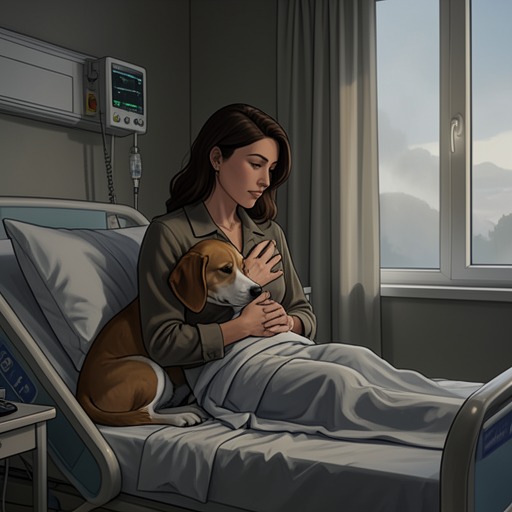
Toby’s role deepens when he senses that a resident named Bob is nearing death. He lies quietly beside Bob as the warm waters rise around him and his pain ebbs. Fran finds Toby there, checks on Bob, covers his head with a blanket, and praises Toby. The moment confirms for him that comfort matters not only during illness but also in a person’s final breaths.
Afterward, Toby makes a practice of going into the rooms of people whose time is close and lying on their beds beside them. Sometimes families are gathered around; sometimes the dying person is alone, though usually a caregiver is nearby. His presence offers company without requiring conversation or movement. It is a continuation of the stillness Margaret taught him, now understood not merely as obedience but as a way to avoid hurting someone and to remain with them as they leave life.
That work is not welcomed by everyone. One man, seeing Toby near his mother, calls him a death dog and orders him away. Toby feels the man’s anger and leaves, unsure what he has done wrong. The reaction marks the tension in his new purpose: for some, a dog beside a dying relative is a comfort; for others, the same presence is bound up with fear and loss. Toby’s hospice role nevertheless emerges clearly from the contrast between those responses and the people who find joy in his visits.