Animal-control shelter
A Dog's Way HomeThe Animal-control shelter is the place where Bella’s separation from Lucas becomes a period of enforced waiting. Seen through Bella’s perspective, it is not an abstract institution but a building of unfamiliar animal smells, loud barking, crates, and strict handling. The shelter briefly contains her, but its most important role in the story is to test her trust that Lucas will return—and to make their reunion the event that ends her confinement.
Setting and Arrival
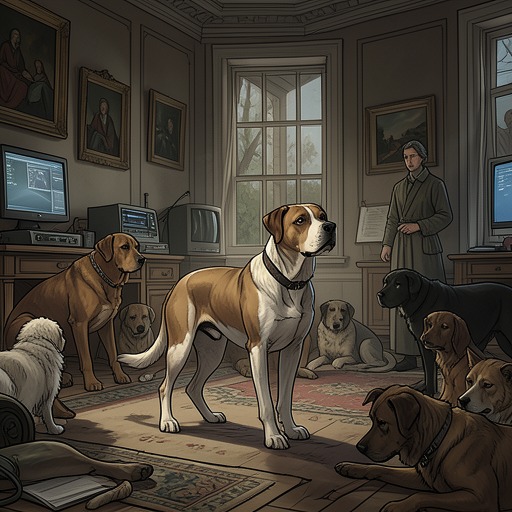
After Bella is taken away in a truck, she is brought to a building where the odors of many animals are strong and the dogs’ barking carries through the interior. The man bringing her in, whom the narrative identifies as Chuck, first leads a small dog inside and then takes Bella through the building on a stiff leash. Her route separates her from the small dog: she is placed in a different room among larger dogs kept in high-sided crates. The space is organized around containment, and Bella has no way to understand why she has been brought there or how long she will remain.
The shelter is presented through what Bella can register and interpret. She hears the dogs and understands their distress, but not the institutional reason for their confinement. Her own explanation is relational: she wants to be with Lucas and believes that behaving well may bring him back to her. The building’s unfamiliarity is therefore measured against the routines she knows from home, rather than against any account of shelter policy or procedure.
Confinement and Routine
Bella’s collar is removed before she is put into a crate of a size she has never encountered. There is a soft bed and a bowl of water, and she drinks, holding on to an ordinary action while the surrounding noise continues. The dogs bark persistently. Bella feels drawn to join them, but follows the learned commands she associates with being a good dog: No Barks and Sit. She imagines that good behavior will help Lucas find her and take her home.
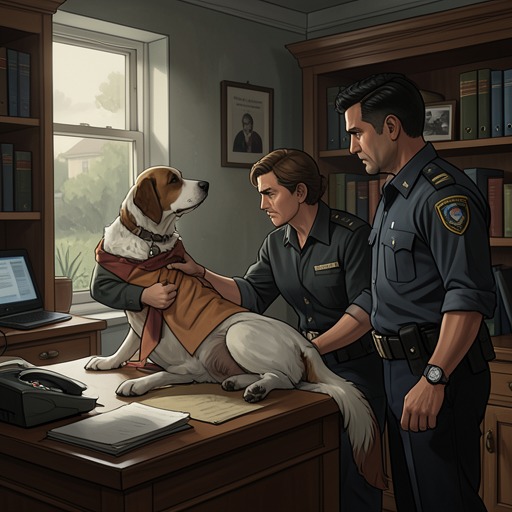
A younger woman soon takes Bella out of the crate on a stiff leash. Bella does not understand the reason for the equipment, which prevents her from licking and pawing as she would naturally do. The scene emphasizes the difference between Bella’s way of seeking contact and the shelter’s controlled handling. Meanwhile, a woman says she will file an objection; Chuck responds mockingly. The exchange indicates that Bella’s custody is contested, though the shelter itself remains, for Bella, a place whose rules and human disputes are difficult to comprehend.
Bella is eventually returned to the same crate. She experiences the other dogs’ fear and anxiety as overwhelming, and paces and pants while thinking about Lucas. Each time the door opens, someone other than Lucas appears. Some dogs approach visitors, while others retreat; Bella wags but otherwise waits. She observes dogs being brought in and taken away without understanding what is happening to them. Her expectation remains fixed on a particular person, not on the shelter’s repeated movement of animals through its doors.
Release and Reunion
After an interval in the crate, a woman takes Bella into a small room. Bella is stiff and lethargic, and initially shows little interest in the scents around her. The woman puts Bella’s collar back on. With the familiar collar in place, Bella settles onto a soft pad, but she does not know where she is or what will happen next. The small room becomes a pause between the shelter’s general holding space and the reunion she has been waiting for.
When Lucas enters, Bella scrambles up and leaps toward him, and he staggers back and sits down as she reaches him. She presses against him and tries to lick him through the collar; he puts his arms around her. The return of her person transforms her understanding of the wait: Lucas has come for her, and she can leave with him. She also recognizes that the woman has helped bring Lucas to her. The reunion resolves the immediate separation, though it does not make the shelter experience itself reassuring.
Narrative Significance
The shelter’s significance comes from the contrast between its practical order and Bella’s emotional certainty. Crates, leashes, doors, and the movement of dogs define the place for its human handlers; for Bella, the central question is whether Lucas will come. Her effort to remain quiet and sit properly turns familiar training into a strategy for restoring the bond that confinement has interrupted. The sequence lets readers see how a routine intended to manage animals can feel, from the animal’s viewpoint, like an unintelligible separation.
The shelter also marks the difference between physical care and belonging. Bella receives a bed and water, and staff members handle her and eventually return her collar, but these provisions do not satisfy her longing to be with Lucas. Her relief arrives only when he appears and takes her back into his arms. In that sense, the Animal-control shelter is less a permanent destination than a temporary threshold: Bella enters it as a dog removed from her home and leaves it reunited with the person she has been trying to reach.