Bella
A Dog's Way HomeBella is a dog whose sense of self is shaped by two connected impulses: to remain with Lucas, the person she recognizes as home, and to care for others in distress. The novel gives those impulses a distinctive vocabulary—Go Home, Tiny Piece of Cheese, and the repeated question of whether she is a good dog—while showing that her journey is more than a search for one person. She repeatedly offers comfort and protection, even when doing so slows her return, and finally reaches Lucas again after a long separation.
Identity and First Bonds
Bella begins life in a den shared with Mother Cat and other cats. When people enter the den to capture animals, Bella feels an unexpected attraction to a woman reaching toward her. Rather than flee with the adult cats, she runs into the woman’s arms. The moment marks an early turn from the den that has been her birthplace toward human companionship.
Lucas later picks Bella up and takes her away from the den. She understands that she is leaving Mother Cat behind, but her attention settles on Lucas and on the desire to be with him wherever he goes. Their bond becomes her central orientation: during periods together, she is happy, and she dreams of feeding cats or playing ball with him. The ordinary activities matter because they become evidence, in Bella’s understanding, of shared life and belonging.
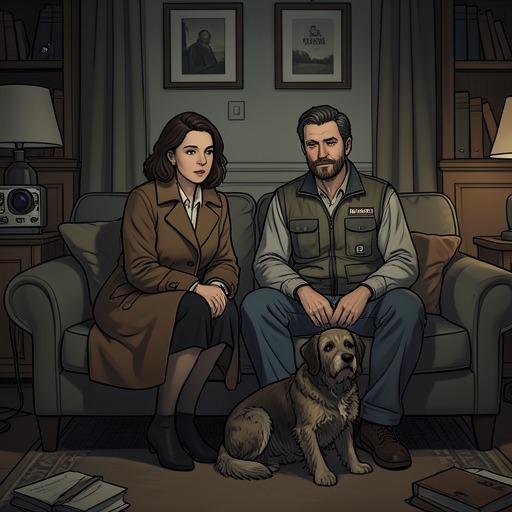
Separation is difficult for her to interpret. When Lucas says he is going to work, Bella understands the phrase as meaning a long absence and wonders why a good dog would be left behind. She loves Terri, who spends time with her and takes her on short walks, but their days do not include the cat-feeding and park visits associated with Lucas. Bella’s attachment is thus expressed not as a rejection of Terri, but as a persistent expectation of Lucas’s return and of the routines they shared.
Care in Human Spaces
Bella’s capacity to respond to sadness extends beyond her household. At the Veterans Affairs hospital, Ty takes her into rooms where people sit in chairs, many of them older. They welcome her, pet her, and call her by name. She is offered small portions of food, but the visit is also organized around contact: people stroke her ears, and Bella settles where they can reach her. The hospital’s human community receives her as a reassuring presence despite the absence of other dogs in the rooms.
Ty introduces Bella to Mack, who is sitting in a wide chair. Bella recognizes in Mack a sadness resembling Terri’s and climbs up to be near him. Mack hugs her for a long time. The scene makes her comfort-giving concrete: she does not need to know the cause of another person’s distress in order to answer it through closeness. Her behavior is not limited to a formal role; it grows from the response she has already learned to make when someone she loves is sad.
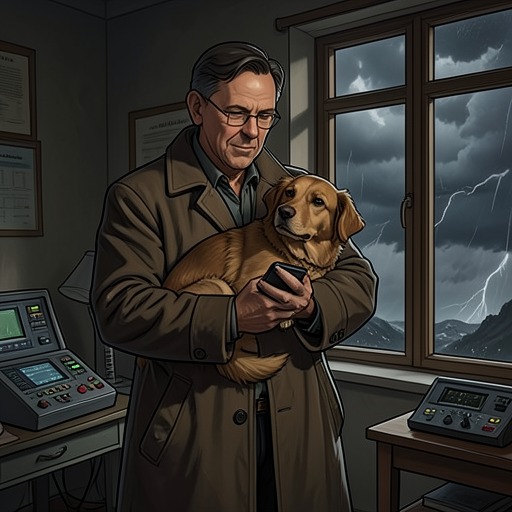
Bella also appears to recognize Terri’s seizures before they happen. After Lucas reads that some dogs can sense seizures, Terri agrees that Bella seemed to know what was happening. The evidence presents this ability as something the family notices in their daily life, rather than as training Bella has received. Her care for Terri and her comfort of hospital patients therefore share a pattern: attention to changes in others becomes one of the ways Bella participates in human life.
Separation and the Journey Home
When Lucas arranges for Bella to leave with Audrey, he puts her in a crate in the car and lays her dog blanket inside. He gives her a Tiny Piece of Cheese through the grate, a familiar gesture that Bella accepts without understanding why they are parting. Lucas tells her that this may be goodbye and that he wants her to know she will always be his dog, explaining that he has no other way to protect her. Bella senses his grief, but the departure makes her feel like a bad dog again. The familiar treat remains, while the security it usually signals is gone.
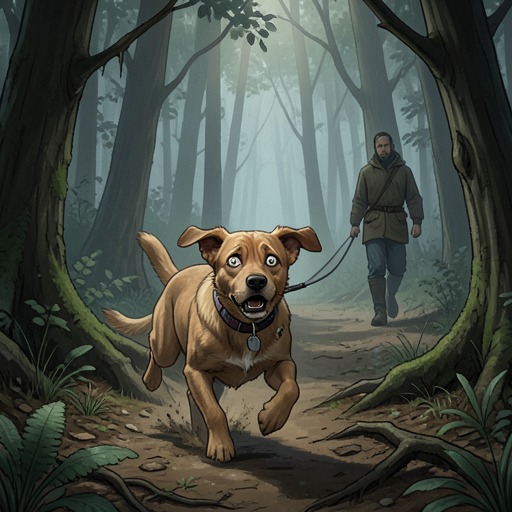
In the yard where she is staying, Bella cannot simply climb the fence. She works out a route using the slide: imagining the ball games she and Lucas used to play helps her see how to reach the top, and she runs up and over. She leaves the houses and dogs behind and sets out toward the trees, guided by the purpose she calls Go Home. Escape is a decisive change in her circumstances, but it does not alter her aim. The journey begins in a concrete act of problem-solving and continues through her repeated effort to orient herself toward Lucas.
Companionship and Survival
Along the way, Bella encounters Big Kitten, an orphaned cougar cub. Bella recognizes that the frightened young animal needs help and connects this responsibility to the protection Mother Cat once gave her. She stays with Big Kitten despite knowing that concern for the cub will slow her progress. For several days they share a deer carcass, play, and sleep near one another; Big Kitten also brings back a small rodent for them to share. When Bella moves on, the cub follows, often keeping to cover and catching up when Bella waits.
Their companionship develops through different needs and abilities. Big Kitten is wary of human smells and prefers to remain hidden, while Bella continues to navigate by the route toward Lucas. When four coyotes track them, Bella recognizes the danger before Big Kitten does. Later, winter changes the terms of their travel: deep snow slows Bella, while Big Kitten moves across it with greater ease. Big Kitten begins finding and bringing food, including deer, elk, and smaller animals. In the snowbound partnership, the cub who first depended on Bella becomes the more capable provider, and Bella follows her to food and shelter.
Bella’s concern also reaches beyond her immediate companions. When she detects a man buried beneath dense ice, she keeps digging because she understands that he needs to be saved. She remains with the man, his dog, and another person as help approaches, treating her presence as a responsibility rather than leaving once the immediate digging is done. Elsewhere, at Sylvia’s swimming pool, Bella dives in when kittens fall into the water. She lifts one to the edge for Chloe and returns for two more, including one that has gone under. Bella frames this work as continuous with her earlier life: caring for cats is something she and Lucas simply do.
Loss, Return, and Meaning
Bella also stays with Axel, a homeless veteran she accompanies in the park. After his death, she waits beside him, expecting him to move, and later thinks of Lucas through the habits that define their bond: the doorway, her sleeping place, and the small treat he used to give her. She howls in grief and receives a distant canine cry in response, but no person comes. The episode brings her longing for Lucas into sharp focus without erasing the care she gave Axel; both relationships remain part of her experience.
Eventually, after a long car ride, Bella recognizes the scents of home and understands where she needs to go. On reaching her former street, she finds that the low houses across from her home, including the cat den, have been replaced by taller buildings. She scratches at the door and barks for Lucas, but the woman who opens it is not him, and Bella cannot find his or Terri’s scent inside. The familiar location has changed, making clear that returning to a place is not the same as finding the people who made it home.
Bella nevertheless continues searching and ultimately rejoins Lucas and Olivia. In the closing scene, she lies between them, thinking of the people and animals whose care helped her survive: Big Kitten, Axel, Gavin and Taylor, and Mack. She understands the journey as having been in service of Go Home, and her return restores the relationship that has guided her from the beginning. The final affirmation that she is a good dog answers the fear attached to every separation: she was not abandoned because she failed to deserve love. Her lasting significance lies in the way loyalty and care travel together—she keeps moving toward Lucas while repeatedly making room for others along the way.