Cougars
A Dog's Way HomeIn the novel, Cougars enter Bella’s journey not as a distant wilderness symbol but as animals whose survival changes the course of her own. She finds an adult female dead among the rocks and a frightened cub nearby. Bella’s decision to stay with the young animal turns a chance encounter into a practical, reciprocal companionship: Big Kitten needs protection, but as winter deepens she also becomes the more capable hunter.
The Adult Female and the Orphaned Cub
Bella discovers the adult female while following the scent of blood away from men crossing the canyon. The animal is motionless, and Bella recognizes that she is dead. Although she has never encountered an animal like her, Bella notices similarities to a cat and signs that connect the female to motherhood. The resemblance to Mother Cat gives Bella a familiar point of reference for understanding what she has found, even though she cannot make sense of the death itself.
A movement in nearby bushes reveals another, much larger cat. The cub is partly concealed, watching Bella with wide eyes and a rigid, frightened posture. When one of the men shouts, she retreats into the brush. Her movements remind Bella of a kitten, despite her unusual size, and Bella realizes that the young animal is not an adult cat but a cub. Bella wonders whether she remains nearby because of the dead female, but cannot know for certain. The scene establishes both the cub’s immediate vulnerability and the limits of Bella’s understanding: she can read fear and dependence through behavior, while the cause and meaning of the loss remain beyond her.
A Companion in the Wilderness
After the men move away, Big Kitten follows Bella. She keeps close but hides when Bella turns to look at her, and eventually stops as if expecting Bella to come with her. Bella is trying to make progress toward Lucas, so following the cub means diverting from her own urgent purpose. She does so because she recognizes Big Kitten as afraid and in need of help. Remembering how Mother Cat protected her, Bella feels drawn to offer the same kind of care in return.
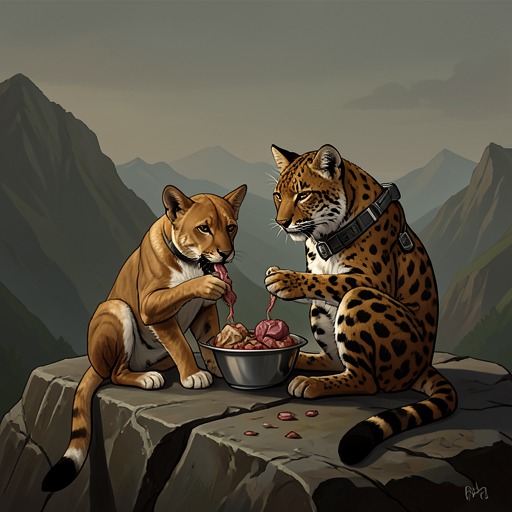
Big Kitten leads Bella to a place beneath trees where the adult female’s scent remains and a deer carcass is buried in the grass and dirt. For several days the two animals eat from the kill and play together. Big Kitten pounces; Bella knocks her onto her back, and their rough play ends with the cub dashing away. The cub sleeps much of the day, but is often alert around dusk. Once, she slips away and returns with a small rodent that the pair share. These details show a relationship built through ordinary survival as well as affection: food, play, and rest bind them into a temporary household.
When Bella’s impulse to travel resumes, Big Kitten follows. She dislikes the human scent along the trail and often stays out of sight in cover. Bella can still detect her nearby and waits when she loses track of her precisely. Caring for the cub slows Bella’s progress toward Lucas, a cost she recognizes, but she continues to make sure Big Kitten is safe. The cub’s dependence does not erase her own choices: she follows, hides, and moves through rough terrain with a skill that surprises Bella.
Predators and Human Attention
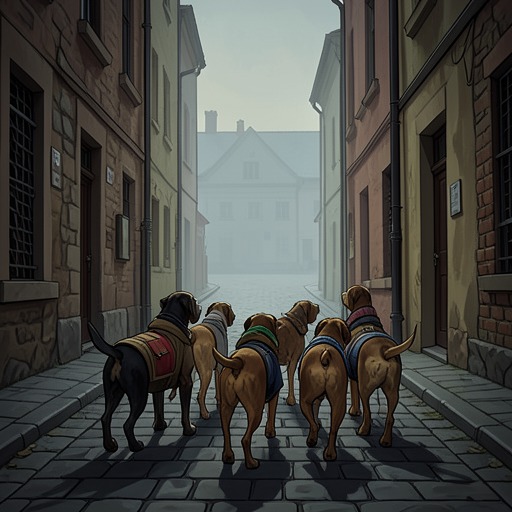
The companionship is tested when Bella detects a group of dogs whose scent signals to her that they are feral and tracking the pair. She identifies four coyotes, a female and three younger males, and recognizes that they are hunting rather than merely approaching out of curiosity. Big Kitten initially seems unaware of the danger, but when the coyotes come into view her eyes darken and she bares her teeth. Bella understands that even a large cub and a dog face a serious threat from a group of four. The encounter places their bond within a wider contest for survival: staying together matters, but it does not make them invulnerable.
People also intrude on the cub’s refuge. Men searching the area discuss the possible monetary value of the adult female, and their presence frightens Big Kitten into hiding. Later, men spot the cub in a tree and identify her as a young cougar. One raises a phone as the men look toward her. From Bella’s perspective, their attention does not make the cub safer; it makes her fear more visible. The novel thus contrasts the men’s interest in identifying or valuing the animal with Bella’s immediate concern for her companion’s distress.
Winter and a Reversal of Dependence
Snow changes the conditions of their journey. Bella struggles through deep drifts, while Big Kitten moves lightly, placing her hind paws into the impressions made by her forepaws. The difference is practical and consequential: Bella cannot keep pace when the cub sets off over the snow, and she feels trapped by the landscape. Big Kitten, however, returns after hunting and leads Bella to a young elk buried in the snow. Bella is astonished that the cub has brought down prey larger than either of them.
Their roles have shifted. Earlier, Bella chose to stay because she thought Big Kitten needed her protection; now the cub finds food and sets the direction of their movement. They eat the elk and return to temporary shelter. Afterward, Big Kitten continues to find prey at night often enough to keep them from starving, bringing back deer, elk, rabbits, and smaller mammals or burying larger food in the snow. The change is not simply a sign that Bella’s care has ended. Their survival becomes interdependent in a new way: Bella remains with the cub, while the cub’s hunting makes their continued journey possible.
Narrative Significance
The Cougars are portrayed through the particular lives of one dead mother and one surviving cub, rather than through general claims about the species. Their story unfolds through Bella’s limited, sensory understanding: she can distinguish fear, notice a mother’s traces, recognize a predator, and observe how snow alters movement, but she cannot fully explain what has happened. That viewpoint gives the cub agency without making her human. Big Kitten hides from people, follows Bella, hunts, and adapts to winter on her own terms.
The companionship also complicates Bella’s goal of reaching Lucas. Her care for Big Kitten delays her, yet it repeats the protection Bella once received from Mother Cat and reveals that her loyalty can extend beyond the home she seeks. In turn, the cub’s growing competence unsettles any simple division between protector and protected. The wilderness demands that both animals respond to changing dangers, and their shared passage makes care a reciprocal practice rather than a fixed role.