Kurch
A Dog's Way HomeKurch’s brief but consequential appearance after the avalanche establishes him as Dutch’s owner and as a man left severely injured, dependent on painkillers, and unable to resume caring for his dog. When Gavin brings Dutch back, Kurch refuses him; the scene makes that refusal more than a practical consequence of injury, as Kurch’s defensiveness and anger deepen the separation. Through Bella’s limited understanding of the human exchange, his rejection is shown as both a concrete loss for Dutch and a conflict over responsibility, guilt, and who is entitled to call an animal theirs.
Identity and Circumstances
Kurch is the person Dutch has been returned to after the avalanche. By the time Gavin and Taylor reach him, he is in bed and badly injured. Taylor reports that Kurch has broken nearly every bone in his body and is taking painkillers. Kurch supplies the immediate measure of how this injury shapes ordinary life: half his body is in a cast, he cannot feed himself, and even getting to the bathroom takes him an hour. His refusal to take Dutch therefore arises in a setting of severe physical limitation, not simply from an abstract disagreement about ownership.
Kurch’s situation is also marked by how little support or information his family appears to provide. Taylor speaks by phone with Kurch’s sister, who is surprised to hear why he is calling and did not know Kurch had dogs. Taylor senses that she sees Kurch more as a burden than a blessing. The exchange does not establish the full history of their family relationship, but it gives Kurch’s return to care a stark context: the person expected to take Dutch back is himself hurt and dependent, while his sister appears neither closely involved with his life nor aware of this responsibility.
Dutch’s Return
Gavin tells Kurch, “At any rate, I brought your dogs back.” The plural matters: Dutch is being returned among the dogs Gavin has brought, but Kurch immediately distinguishes Bella from his own animal. He looks at Bella and says, “That one’s not mine.” Gavin is shocked; Kurch dismisses the possibility that he knows her, saying he has never seen her before. Bella, unable to follow the human history behind the exchange, registers the practical fact that Gavin and Kurch are becoming increasingly furious with each other.
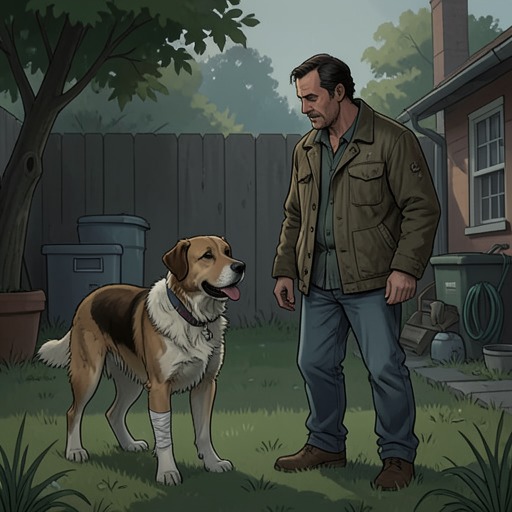
Dutch’s response makes the reunion emotionally legible even when its background is not. When Kurch reaches out with a cloth-wrapped hand and rests it on Dutch’s head, Dutch leans into the touch with his eyes half closed. Bella misses Lucas more intensely at that moment, as the sight of a dog accepting familiar affection sharpens her own longing. Yet Kurch’s gesture does not lead to a settled reunion. The warmth of Dutch leaning into his hand is followed by Kurch’s insistence that he cannot take the dog home.
Refusal and Confrontation
Gavin challenges Kurch’s refusal by reminding him that Dutch is his dog. Kurch answers in terms of immediate incapacity: “I’m saying there’s no way I can have Dutch right now. Sorry.” When Gavin presses him, Kurch points to his cast and the avalanche, emphasizing that he cannot presently manage even basic self-care. The text thus holds two truths in the same scene: Dutch is Kurch’s dog, and Kurch is in no condition to care for him. Kurch’s bluntness does not erase the force of the injury, but neither does the injury soften what Dutch is being told.
The argument grows more personal when Kurch accuses Gavin of hypocrisy. He brings up China, where Gavin had said he could not take a dog, and argues that whatever Gavin is doing with Bella could also be done with Dutch. The reference converts a practical decision about care into a challenge to Gavin’s consistency and his relationship with Taylor. Gavin’s response changes the temperature of the scene: he says that he understands Kurch very well after all, then turns away and calls Bella and Dutch to come with him. The exchange does not settle the disagreement over what Gavin could or should do; it shows how Kurch’s refusal has become entangled with judgment of another person’s choices.
Dutch Is Sent Away
Dutch hesitates when Gavin calls. He looks first at Gavin and then back at Kurch, with the sandwich forgotten. Kurch responds by ordering him out, saying that Dutch is making him feel guilty and that it is not his fault. His words expose the emotional pressure beneath his earlier practical explanation: Kurch knows Dutch’s presence makes the refusal harder to bear, but he directs that discomfort outward rather than offering reassurance or a gentler farewell. The scene ends not with a resolution between owner and dog, but with Kurch telling Dutch to go.
Narrative Significance
Kurch’s role is concentrated in a single painful decision: after surviving an avalanche, he cannot or will not take Dutch back. The narrative does not make the injury incidental. Kurch’s account of the cast, dependence, and difficulty reaching the bathroom gives his refusal credible material grounds, while his anger and accusation keep it from becoming a simple story of unavoidable circumstance. His actions leave room for both the reality of his incapacity and the hurt caused by his rejection.
Bella’s perspective further complicates the scene. She can read gestures and escalating anger, and she notices Dutch lean into Kurch’s hand, but she cannot explain the human dispute that follows. Her longing for Lucas surfaces beside Dutch’s moment of recognition, linking the scene’s argument over ownership to the book’s recurring distinction between belonging and the ability to remain with someone. Kurch’s last command makes that distinction immediate: Dutch recognizes him, yet is sent away all the same.