Sylvia
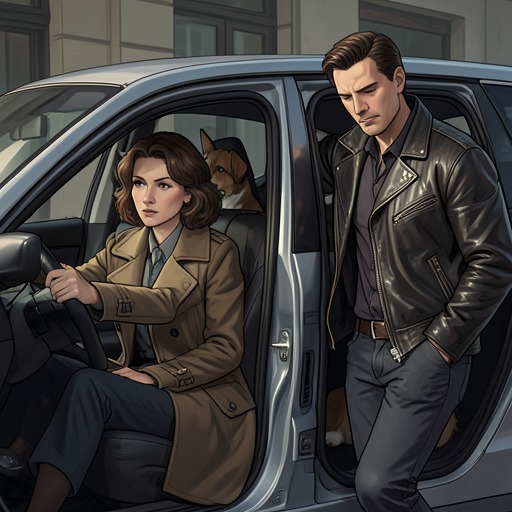
A Dog's Way HomeSylvia is Gavin’s mother, a woman whose home holds both the residue of difficult relationships and the possibility of care. Through Bella’s dog-centered perspective, Sylvia first appears as a returning family member’s mother and a sharp, smoky presence; later, her treatment by Mike prompts the dogs to intervene. Her household becomes a place where protection is enacted rather than merely promised: Sylvia expels Mike, Chloe’s kittens are kept safe, and, when Gavin and Taylor return, Sylvia speaks plainly about regretting things in her past and trying to become a better mother.
Identity and Household
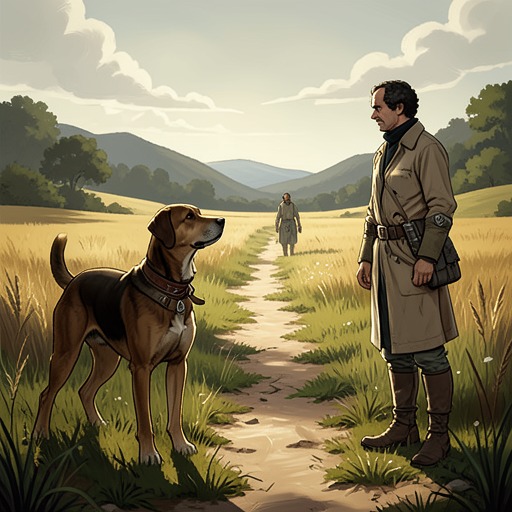
Sylvia lives with Chloe, a female cat, in a house with a nearly all-cement front yard. When Gavin and Taylor arrive with Dutch and Bella, Sylvia greets Gavin as her son: he calls her “Mom,” kisses her, and she remarks that it has been a long time since she saw the boys. Taylor is still unloading his suitcase while the dogs enter the house and investigate their unfamiliar surroundings.
Bella notices the smoky, dry smell indoors and the blankets covering most of the windows, which make the rooms gloomy. Sylvia smokes, though Bella initially understands the smoke only as something coming from her mouth and the burning object in her hand; she learns later that it is a cigarette. Outside, Sylvia sits by the pool with Gavin and Taylor. The scene establishes her home as a lived-in, imperfect place, shared with Chloe and soon with the visiting dogs.
Family Reunion and Separation
The dogs’ stay is shaped by Gavin and Taylor’s impending departure. The next morning, after the men get up near dawn and put their suitcase in the car, they tell Dutch and Bella that they will be away for half a year and miss them. Gavin embraces Dutch, while both men kiss and pet Bella. Bella cannot understand the explanation, but Gavin’s tears and the tone of the farewell recall her own last separation from Lucas.
The departure is not a choice the dogs can follow: Gavin and Taylor go through the gate and block Dutch from accompanying them. Sylvia remains behind to care for the dogs while her sons are away. Her role in their temporary home is therefore practical as well as familial, making her responsible for the animals who remain after the emotional farewell.
Conflict with Mike
Sylvia’s reference to Mike introduces a threat within the household. She distinguishes Chloe, who can look after herself, from Mike, and warns that when Chloe has kittens the dogs must behave. During a later argument, Sylvia and Mike quarrel about money and the possibility of a car being repossessed. Bella remembers an earlier encounter in which a man hurt Bella’s mother, and at first expects Sylvia might make Mike leave in a similar way. Instead, Mike raises his fist, pushes Sylvia against a table, and knocks over a vase of dead flowers; its sour water spills across the carpet.
Bella initially tries to follow the “No Barks” command, but the escalating violence unsettles Dutch, who snarls and barks. When Mike grabs Sylvia by the arms, Bella recognizes the resemblance to the earlier assault on her mother. Sylvia cries out, and her distress, together with Mike’s fury, finally draws Bella into the confrontation. She barks while Dutch lunges and snaps in front of Mike’s pants. Mike releases Sylvia, falls back into a chair, and the dogs continue barking until he stumbles out of the front door.
Sylvia calls them “Good dogs” and feeds them meat from the refrigerator. She then gathers clothes and other belongings that smell like Mike and throws them outside. The sequence makes the dogs’ intervention consequential: Mike leaves, and Sylvia acts to remove his things from her home. That night, however, she falls and sleeps on the living-room floor. Bella senses that she is ill, lies pressed against her, and tries to comfort her. Sylvia has driven Mike away, but the scene does not present that victory as an effortless recovery; it ends with her physically vulnerable and the dog keeping close beside her.
Chloe’s Kittens and Sylvia’s Home
A few days after Mike leaves, Chloe gives birth. Bella recognizes the familiar scent of milk and is reminded of the den where she lived with her kitten siblings and Mother Cat. Dutch approaches the cat bed but retreats when Chloe hisses; Chloe watches Bella approach without reacting. Sylvia’s earlier warning about the dogs and the kittens thus becomes part of a household arrangement in which the animals’ different temperaments matter.
When a cardboard box holding the kittens tips into the pool, Sylvia does not come outside in response to Bella’s bark. Bella dives in and carries the first gray kitten to the cement edge, where Chloe licks it. As more kittens fall into the water, Bella swims back to retrieve them, lifting one that has gone under and bringing it to its mother. Bella understands this rescue through her remembered life with Lucas, when caring for cats was simply something they did. Sylvia’s household consequently becomes the setting for a different kind of danger than the violence with Mike: the kittens are threatened by the pool, and Bella’s inherited familiarity with their care helps preserve Chloe’s litter.
Regret and Change
When Gavin and Taylor return, Sylvia comes out of her room as Gavin thanks her for caring for the dogs. She pauses before answering, “I’m not a great mother.” She explains that she never intended to have children, that she kept getting pregnant, and that she is trying to do better and be better. She also admits that she regrets things. Her words do not erase the history they imply, and the evidence does not specify what those regrets involve. Their importance lies in Sylvia’s willingness to name her shortcomings rather than claim that gratitude or the reunion settles them.
Across these scenes, Sylvia is neither reduced to the person Mike harms nor presented as an idealized parent. She can be cross and defensive, as when she warns the dogs about Chloe’s kittens, yet she also cares for Gavin and Taylor’s animals during their absence and remains present in the household after they return. Bella’s narration registers human relationships through gestures, smells, and bodily distress; Sylvia’s maternal role comes into clearest focus through what she does and finally says. Her confession gives the reunion an unresolved but forward-looking close: she acknowledges regret, and describes improvement as something she is still trying to achieve.