Taylor
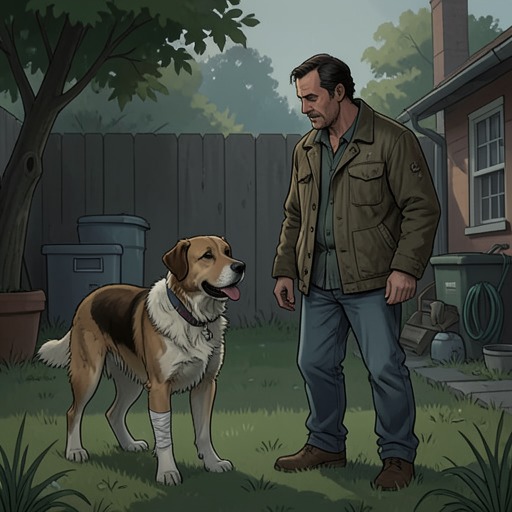
A Dog's Way HomeTaylor, called the tall man by Bella, is Gavin’s husband and partner in caring for Bella and Dutch. He enters the dogs’ story on a snow-covered slope, where he and Gavin help during an avalanche emergency, and becomes part of the household that takes them in afterward. His role is practical and relational: he shares the work of caring for two large dogs while negotiating with Gavin about responsibility, travel, and what kind of home they can offer.
Identity and Introduction
Bella first encounters Taylor as Gavin’s friend approaching over a rise in the snow. The two men are both breathing hard after making their way up the slope. Taylor’s arrival helps turn an isolated rescue into a shared effort, but his first response also registers the danger and uncertainty of what they have done: he points out that avalanche warnings were in effect and that the injured man had gone beneath the boundary rope. The scene introduces Taylor as alert to risk, even amid the immediate demands of helping someone in trouble.
Taylor notices that Gavin has two enormous dogs with him and asks about the decision not to involve animal control. Gavin explains that people had said to call them. Taylor does not simply treat the dogs as an incidental part of the rescue: their presence becomes an immediate practical question, because they are with the men in difficult conditions and must be brought somewhere safe. The dogs’ size, their leashes, and the authorities’ possible involvement all make their care part of the situation rather than an afterthought.
Rescue and Shared Care
After the rescue, Taylor and Gavin take Bella and Dutch to their house. Bella recognizes the arrangement through its simplest signs: Taylor lays pillows and blankets on the floor for the dogs to sleep on. The gesture establishes that they are expected to stay, not merely wait there temporarily. Bella compares the experience with an earlier stay elsewhere, while continuing to wonder why people will not let her find her way home. Taylor’s hospitality therefore provides safety without resolving her longing for Lucas.
The house itself becomes the setting for the couple’s everyday care. It has hard floors and several rooms, a backyard enclosed by a metal fence, and a wall opening filled with burned pieces of wood. Bella and Dutch have space to live there, and the couple provide food and treats. Later, when Taylor returns with treats, he observes that Bella has gained weight and that Dutch is still rotund. Gavin objects that feeding Bella without feeding Dutch would be unfair. Their exchange shows care as a shared routine requiring decisions about both dogs, including the small negotiations around food and fairness.
Taylor also participates in planning around the dogs’ future. When he and Gavin take another walk together, Taylor suggests visiting the cabin one last time before their planned trip to China. Gavin answers that the cabin is still snowy and that he prefers summer; Taylor replies that he will get used to cross-country skiing with practice. The exchange places Taylor within the couple’s shared plans, while showing that they do not always have the same preferences. The cabin is not merely a destination: with travel approaching, it is a final outing they are considering before a significant change in their routine.
Conflict over Dutch and the Future
The avalanche leaves Kurch badly injured and in a cast. When Gavin confronts him about what will happen to Dutch, the argument turns on responsibility. Gavin points to the restricted area and its warning signs; Kurch counters that he was injured and feels abandoned by other people. Taylor is not the focus of this confrontation, but its consequences shape the home he shares with Gavin: Dutch cannot return to the care Kurch is able to provide, and the couple must decide what to do instead.
Gavin’s later phone conversation with Taylor makes their joint decision visible. Gavin says that when Dutch got back into the car with him, it seemed as if the dog had chosen to come along, and he tells Taylor that the dogs are theirs now. He considers the prospect of damage to the couch and other furniture, joking that replacing it might have its attractions. The humor does not erase the commitment: Gavin is speaking to his husband about accepting the dogs as family, including the costs and disruption that may come with that choice.
Their planned six-month stay in China creates a further problem. Gavin does not want to leave Bella and Dutch in a kennel, and he raises the possibility of having his mother, Sylvia, care for them. In discussing Taylor’s reservations, Gavin refers to objections about Sylvia’s decorating and argues that a practical arrangement may be preferable to waiting for a perfect one. The conversation presents Taylor’s view through Gavin’s side of the call, so it does not give a complete account of Taylor’s response. It does, however, show that the decision belongs to the couple and that finding suitable care for the dogs matters to their travel plans.
Return and Narrative Role
When Bella and Dutch later return to Taylor and Gavin, Taylor is happy to see them and takes them out for a walk on leashes—their first in a long time. He comments on their weight with disgust, while Gavin argues that they should be allowed to readjust because they are probably confused and miss Sylvia. Taylor dismisses that explanation as deranged, and the disagreement carries a light comic note: both men are attentive to the dogs, but interpret their condition and attachment differently.
Taylor then proposes going to the cabin that weekend to hike before the snow arrives. His suggestion echoes his earlier plan for one last visit before China, connecting the couple’s shared outings with the continuing work of caring for Bella and Dutch. Across these scenes, Taylor is neither a rescuer defined only by one emergency nor a caretaker who speaks for the dogs’ feelings. He is one half of a household making space for them, sometimes joking and sometimes disagreeing with Gavin, while the practical consequences of their rescue remain part of everyday life.