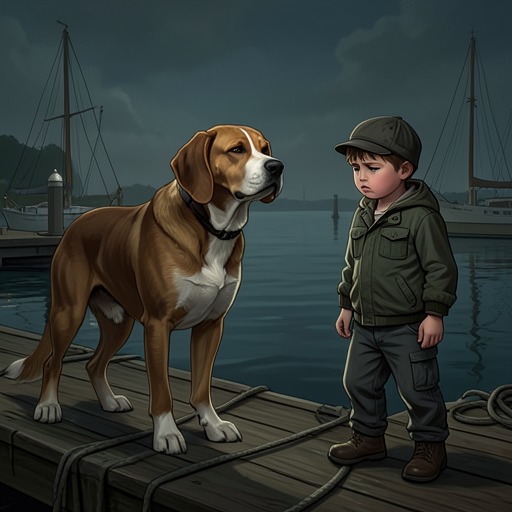
Buddy Is Euthanized Because of Cancer
A Dog's JourneyBuddy’s euthanasia ends his life amid the cancer affecting his rear leg, but the scene is shaped less as a medical decision than as a final exchange of care: Hannah understands what he is asking for, and he dies with her hands on him. His last thoughts gather the lives he has lived into a sense of purpose fulfilled, making the farewell both a death and a reckoning with the work of being a good dog.
Diagnosis and the decision
At Doctor Deb’s clinic, Buddy is examined gently. He likes the veterinarian’s hands and tolerates her checking his sore leg without pain. The news, however, is serious: amputation is possible, but Doctor Deb warns that large dogs often do poorly without a rear leg, and there is no guarantee the cancer has not spread. For a dog around eleven years old, surgery could make the little time remaining less comfortable; painkillers are her preferred course. She adds that tumors sometimes grow more slowly in older dogs, a factor Hannah can weigh, rather than presenting the decision as certain.
The scene gives the choice its practical stakes. Buddy’s age is approximate because he was a rescue, and the possible operation would remove the leg without resolving the uncertainty about the cancer. The question is therefore not simply whether treatment can be attempted, but whether it would ease or add to his suffering.
Buddy asks Hannah to understand
The next morning, Buddy struggles to stand and limps to Hannah’s bed. His stomach and throat hurt, and his leg throbs. He places his head beside her on the blanket and looks directly into her eyes, trying to communicate what he needs. Hannah reads his appeal as a request to end the pain: “Oh, Buddy. You’re telling me it’s time,” she says, and agrees.
Before leaving, Buddy stops to relieve himself and looks over The Farm in the sunrise. He notices the orange-gold light, water dripping from the eaves, and the smell of new growth beneath the wet ground. The vivid morning sits beside the decision to die: the world seems poised for spring even as Buddy knows his own life is ending. At the car, he refuses the rear door and shuffles toward the front; Hannah laughs a little and helps lift his hindquarters inside, honoring his preference for the front seat even when his failing leg makes the movement difficult.
The final visit
At the clinic, Buddy cannot jump down from the car. Hannah tells him to wait, then leaves; a few minutes later, Doctor Deb and an unfamiliar man carry him inside. Buddy tries to disregard the pain as they lift him, but it leaves him panting. On the cool metal bed, he can no longer wag and rests his head instead.
Hannah whispers, “You are such a good dog, a good dog,” while smiling and crying. Doctor Deb strokes Buddy and searches for a fold of skin near his neck. As Buddy feels the small pinch, he focuses on Hannah’s love. The pain in his leg recedes almost at once, replaced by a peaceful warmth that supports him like the water in the pond. Hannah’s touch gradually falls away as he floats away, happy. The scene follows the bodily passage from pain to release through Buddy’s sensations and his awareness of the people beside him.
A life gathered into a farewell
During the farewell, Buddy remembers Clarity and hopes she will soon find another dog to watch over her. His concern for her extends beyond his final moment: he believes everyone needs a dog, and that Clarity especially needs one. He then names the sequence of his lives—Buddy, Ellie, Bailey, and Toby—and recalls loving Ethan and caring for Ethan’s children, as well as loving Hannah. He understands himself as a good dog who has done what a dog is meant to do, and believes he will not be reborn again.
That conviction makes the death a culmination of the story’s recurring rebirths rather than an expectation of another turn. Buddy accepts the ending as complete because he considers his purpose fulfilled. His last experience is not framed as a medical procedure alone, but as the fading of pain within a bond of care: Hannah’s love remains present as his sense of her touch disappears.